.png)
Ever feel like you’re trying to fit your family’s life into a house that wasn’t designed for you? If you’ve asked yourself, what is a custom home, you’re already looking for something more—a home built from the ground up, on your land, designed exclusively around your vision. It’s the difference between a house you buy and a home you create.
For many Oklahomans, the dream of building a custom house isn’t about extravagance; it’s about creating a perfect fit. Imagine a floor plan that flows with your daily routine, not one you have to adapt to. With an experienced Oklahoma custom home builder like ACET Custom Homes, that dream becomes a clear, achievable reality. This guide will show you exactly what that means.
Defining a True Custom Home
The one thing that truly separates a custom home from a spec or production home is total control. A genuine custom build is a one-of-a-kind home, created for one specific client. You aren't just picking Model A or Model B from a catalog; you're starting with a conversation about your vision, your needs, and how you want to live.
This freedom makes the custom home journey so unique. It's about having a builder act as your guide to bring that vision to life, whether it's on a lot in Edmond or a sprawling piece of land in rural towns like Macomb or Elmore City.
Key Distinctions From Other Home Types
To truly appreciate what "custom" means, you need to understand the other options. In Oklahoma's new construction market, you'll generally find three types of homes, each offering a different degree of personalization.
Here’s a quick breakdown to highlight the main differences in flexibility, design, and process.
Custom Home vs. Other Home Types at a Glance
As you can see, building a custom home is a deeply personal path. It starts not with a set of blueprints, but with a clear idea of how you truly want to live.
The Real Benefits of Building Custom
When you decide to build a custom home, you're doing more than just picking out a floor plan. You're making an investment in a home built to deliver lasting value and a deep sense of personal satisfaction.
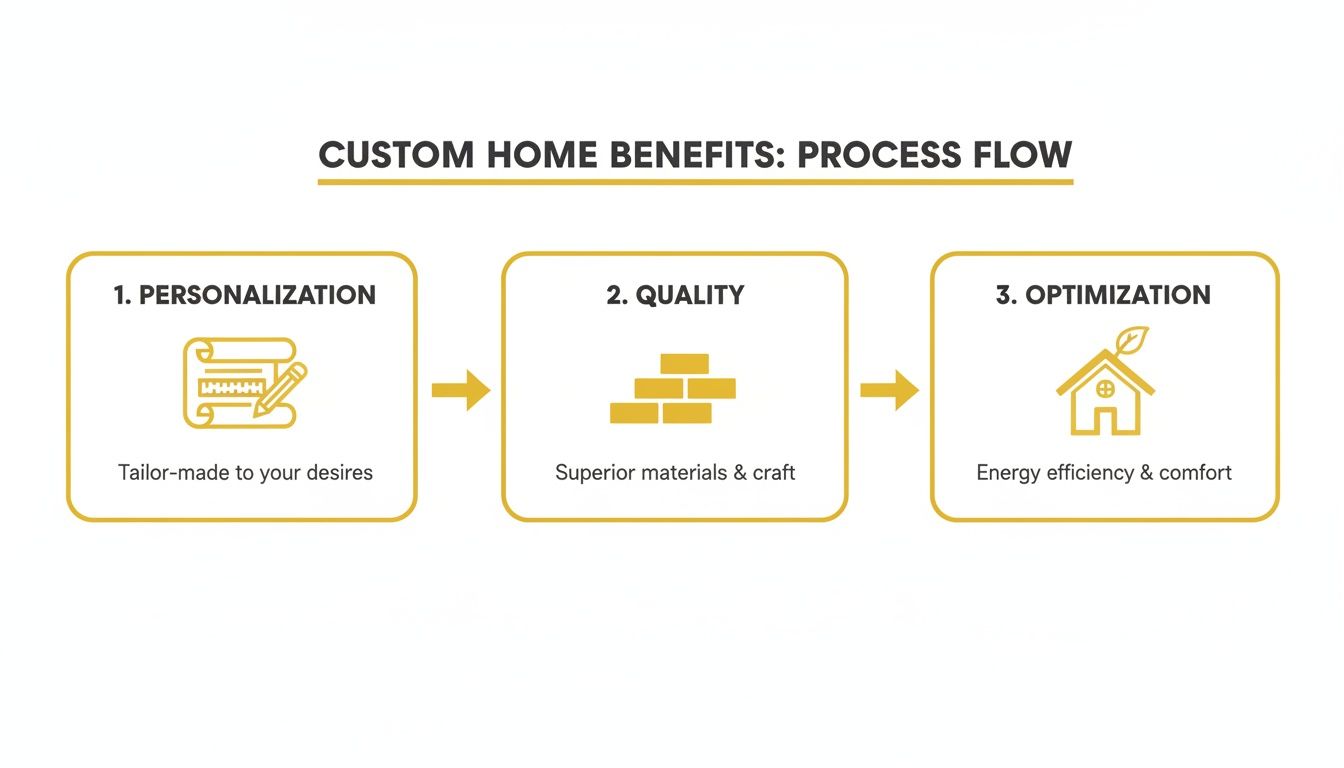
The biggest advantage is total personalization. This is your chance to control everything, from the home's architectural style right down to the color of the grout in the master shower. It’s about creating a space that genuinely works for your family's day-to-day life.
With an experienced builder in your corner, you also get direct say over the quality of your home. You’re not stuck with a standard builder's package. Instead, you can choose superior materials and construction methods specifically designed to handle Oklahoma's demanding climate—from the sweltering summer heat in Moore to the freezing winters up in Deer Creek.
Unlocking Complete Personalization
The real emotional payoff of a custom home comes from living in a space designed just for you. For one of our clients in Guthrie, that meant a sprawling covered patio with an outdoor kitchen, perfectly positioned to capture the sunset. For another family in Norman, it was a main-level guest suite with its own private entrance, giving their aging parents both comfort and independence.
These are the kinds of tailored solutions you just won't find in a pre-built house. Personalization means:
- A layout built for your life: Need a quiet home office tucked away from the main living area? How about a huge walk-in pantry for your love of cooking? It's your call.
- Finishes that reflect your style: From the specific type of stone on the fireplace to the hardware on your kitchen cabinets, every single detail is your choice.
- Solving unique family needs: Whether it’s a dedicated craft room, a storm shelter integrated right into the foundation, or wider doorways for accessibility, your home is built to serve you.
Quality and Durability You Control
Building custom gives you the power to put long-term durability first. Instead of buying a house and wondering what’s behind the drywall, you’re part of the team making the critical decisions that ensure your home stands strong. With over 15 years of experience building in Oklahoma, we know just how important a properly engineered foundation is to handle our state’s reactive clay soils.
A custom home allows you to invest in what matters most—whether that’s a stronger foundation, more efficient insulation to lower energy bills, or windows built to withstand Oklahoma's severe weather. It's about building for peace of mind.
Buyer-driven projects are a resilient part of the housing market. In the United States, custom home starts consistently make up a significant portion of all single-family homes built each year. This trend shows how much buyers with specific visions value a home built just for them. You can find more insights on this custom homebuilding trend on nahb.org.
Site Optimization and Energy Efficiency
A custom home is designed from the ground up to maximize the potential of your specific piece of land. Unlike a production home dropped onto a generic lot, a custom design considers the land’s unique topography, sun exposure, and views.
For our clients building near Shawnee or Chickasha, this might mean positioning the home to catch natural breezes or orienting windows to minimize the harsh summer sun, which can dramatically slash cooling costs.
When you optimize your home for its site, you get tangible benefits:
- Enhanced Energy Efficiency: By designing for the lot, you can incorporate passive solar design principles, install high-performance windows, and use superior insulation that goes far beyond standard building codes.
- Maximized Views and Outdoor Living: Your home can be perfectly situated to capture the best views and create a seamless flow between indoor and outdoor living spaces.
- Improved Resale Value: A home thoughtfully designed for its specific location is inherently more valuable and appealing to future buyers. It’s not just a house; it’s a legacy.
Your Custom Home Building Journey, Step by Step
Building a custom home is an incredible adventure, but it can feel like a huge undertaking without a clear map. The best way to approach it is to see the journey as a series of manageable steps. When you break it down, turning that dream into a real, livable home becomes an exciting and rewarding experience.
This guide will walk you through the entire process, milestone by milestone. We’ll cover everything from the initial spark of an idea to the final walkthrough, sprinkling in practical advice we’ve picked up over 15+ years of building beautiful homes all across Oklahoma.
Step 1: Define Your Vision and Budget
Before a single shovel hits the dirt, you need to know what you want to build and what you can afford. This first step is all about dreaming big while keeping your feet planted in financial reality. A great way to start is by making a list of your must-haves, nice-to-haves, and absolute deal-breakers.
Think through a few key questions:
- How do you live? How many bedrooms and bathrooms do you really need? Is a dedicated home office non-negotiable?
- What’s your style? Do you love the clean lines of a Modern Farmhouse or the timeless look of a Traditional home? Start gathering photos to find what speaks to you.
- What’s the budget? Getting pre-approved for a construction loan is a crucial early step. This sets a realistic budget from the get-go.
Step 2: Secure Your Land
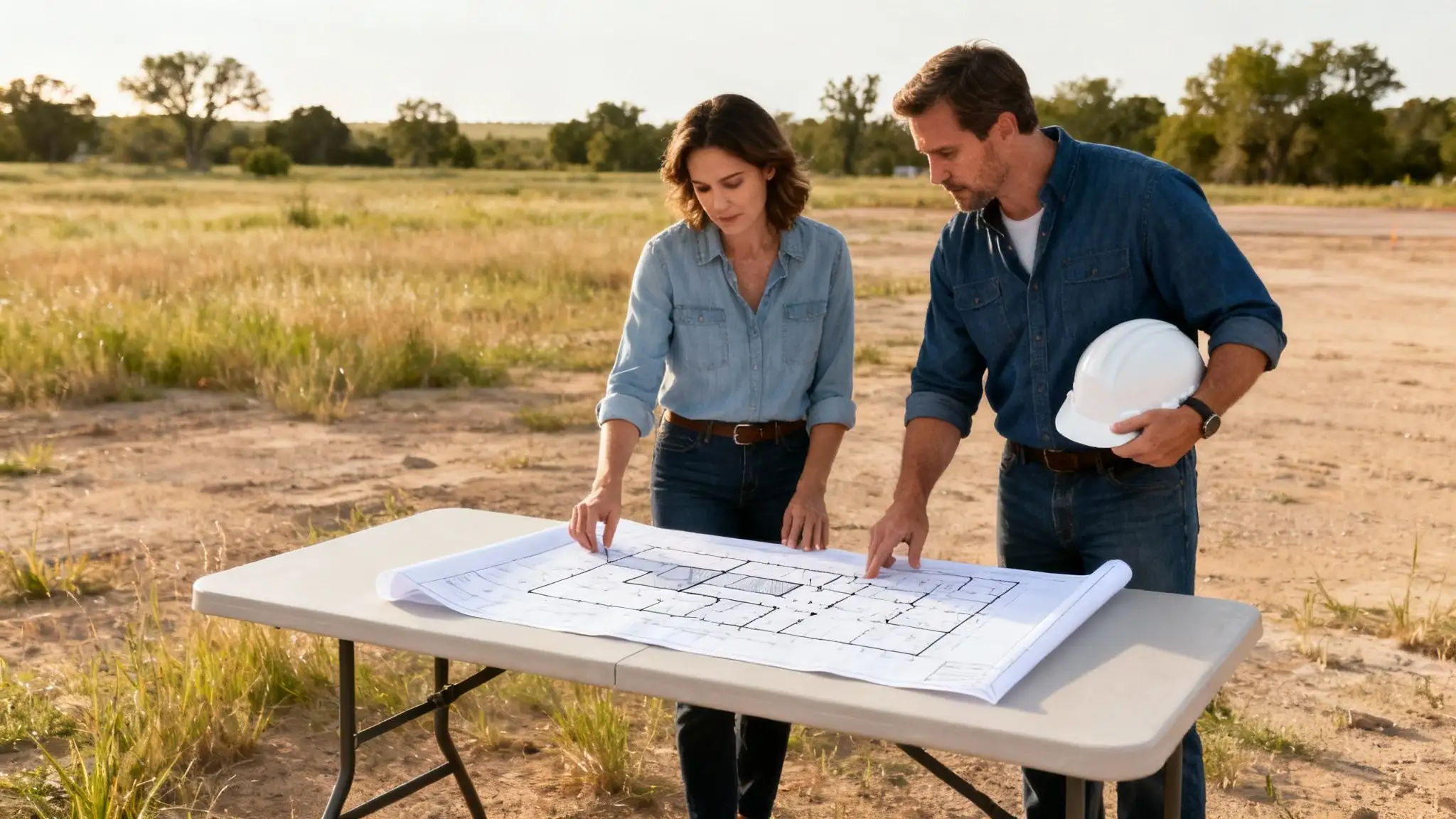
Unlike buying a pre-built home, a true custom build starts with your own piece of land. Whether you already own a lot in Edmond or you’re searching for the perfect acreage out near Macomb, the land itself is a core part of the equation.
A site evaluation is absolutely critical here. An experienced builder will walk the property to analyze topography, check soil composition, and map out access to utilities. For example, Oklahoma’s expansive clay soil often requires a specially engineered post-tension foundation to prevent shifting and cracking—a detail that protects your investment for decades.
Step 3: Assemble Your Expert Team
Your builder is the single most important member of your team. Think of them as the project manager who brings every moving part together.
Choosing a design-build firm like ACET Custom Homes can make this whole process smoother. We bring the architect, interior designer, and construction manager together under one roof. This integrated approach encourages collaboration, helps ensure your design stays on budget, and radically simplifies communication.
Step 4: Finalize the Design and Get Approvals
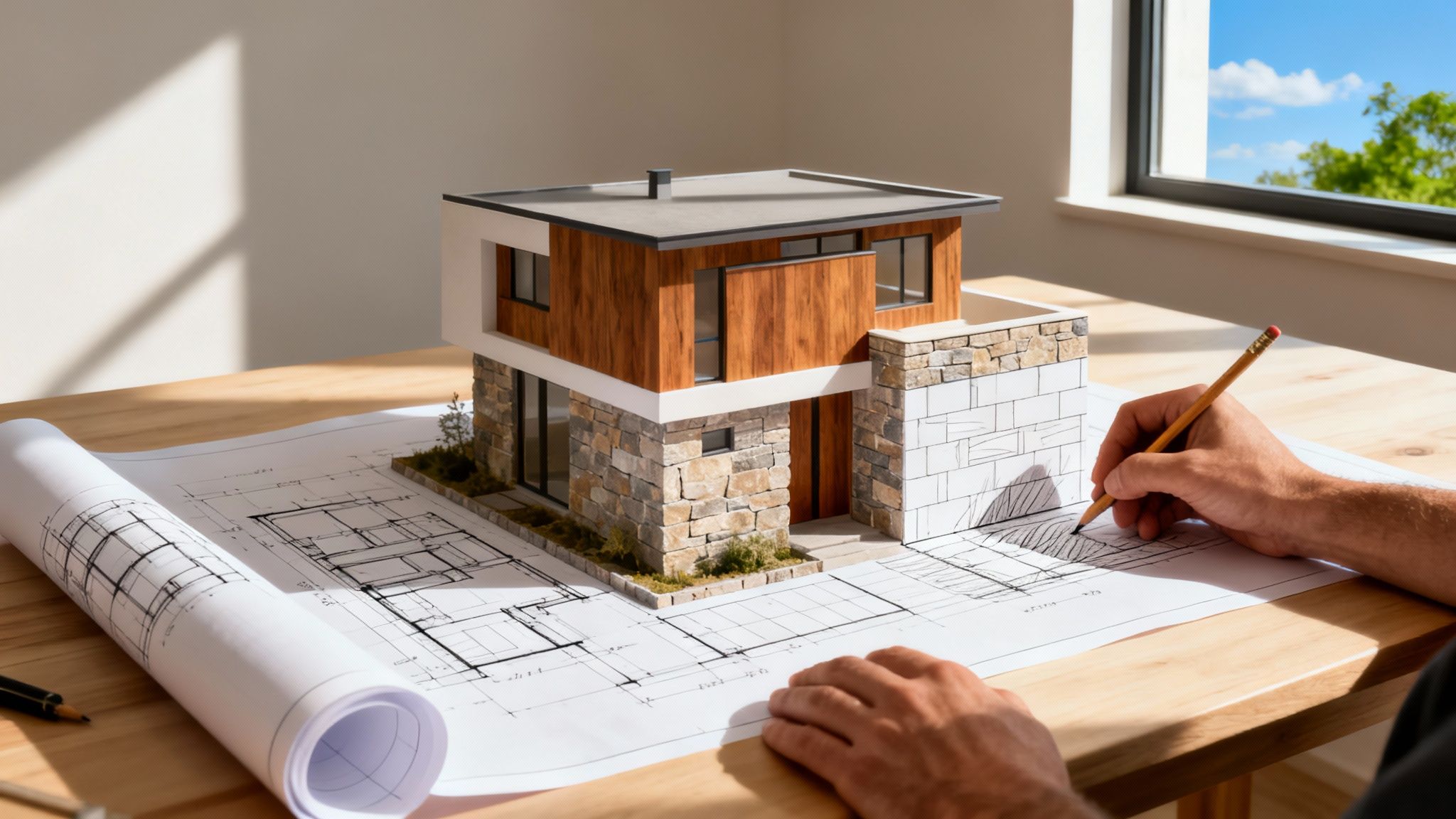
Here’s where your vision really starts to look like a home. You’ll work closely with the design team to create detailed architectural plans and 3D renderings that show you exactly how your home will look and feel.
Once the blueprints are perfect, they’re submitted to the local municipality—whether that’s Oklahoma City or a rural county office—to get the necessary permits. This process ensures your new home is built to meet all local building codes and safety standards.
Step 5: The Key Construction Phases
With permits in hand, it’s time to build! This is usually the longest phase of the project, but it’s also the most exciting as you watch your home rise from the ground. For a much more detailed breakdown, explore our in-depth guide to the custom home building process.
Here’s a quick overview of the major stages:
- Site Work & Foundation: First, we clear and grade the land and run utility lines. Then, the foundation is poured.
- Framing: The skeleton of your home goes up, and you can walk through the rooms to get a real sense of the layout.
- Mechanicals (Plumbing, Electrical, HVAC): All the "guts" of the home—wiring, pipes, and ductwork—are installed behind the walls.
- Exterior & Interior Finishes: Siding, roofing, windows, insulation, and drywall go in, followed by flooring, tile, and paint.
- Fixtures & Final Touches: The home's personality emerges as we install cabinets, countertops, light fixtures, and appliances.
Step 6: The Final Walkthrough
Just before we hand over the keys, you'll do a final walkthrough with your builder. This is your chance to inspect every detail and create a "punch list" of any minor items that might need a final tweak.
Once you are 100% satisfied and every item is checked off, you’ll close on your new home. It’s time to move in and start your new chapter.
How Much Does a Custom Home Cost in Oklahoma? And How Long Does It Take?
Let's get right to it—the two questions every person thinking about a custom home wants answered: "What's the real cost?" and "How long until I can move in?"
These are the million-dollar questions, and the answer is: it depends entirely on you. Unlike a spec home with a set price, your custom home's budget and timeline are a direct result of the dream you want to build.
From the dirt work needed to prep your land to the specific drawer pulls you choose for the kitchen, every single choice has an impact. Our job is to demystify this process, giving you a clear, honest look at what to expect so you can make these big decisions with total confidence.
Breaking Down the Budget for Your Custom Home
Seeing where the money goes is the first step to crafting a budget that feels right. The final price tag is really a combination of a few major components.
Here’s a look at the primary cost drivers when building a home in Oklahoma:
- Land & Site Prep: This isn't just the lot price. It’s also everything needed to make it build-ready. A raw piece of land in rural Guthrie or Shawnee might need clearing, grading, and utility runs, which can be significant expenses.
- Architectural & Design Fees: This covers the expertise needed to turn your ideas into buildable blueprints. A design-build firm often rolls these services together, which can be more cost-effective.
- Materials & Finishes: This is the biggest variable. The gap between standard, builder-grade materials and high-end, luxury finishes is massive. Think about the difference between basic laminate countertops and a premium slab of quartzite.
- Labor & Construction: This covers all the skilled hands that physically build your home—the framers, electricians, plumbers, and painters. Labor costs can shift depending on how busy the market is.
Building a custom home is an investment in your lifestyle and your financial future. Because you control every detail, you can put your money where it matters most to you, creating a home that delivers satisfaction and value for years to come.
Setting a Realistic Timeline
Building a custom home is a marathon, not a sprint. While every project has its own rhythm, a good rule of thumb for a timeline—from our first design meeting to you getting the keys—is 12 to 18 months.
This timeframe allows for thoughtful planning, high-quality craftsmanship, and inevitable hiccups, like a classic Oklahoma spring storm.
Here’s a general roadmap of the journey:
For a much deeper look into what affects the building schedule, check out our guide on how long it takes to build a custom home.
In the end, both the price and the schedule are a reflection of your vision. Whether you’re dreaming of a modern farmhouse in Deer Creek or a sprawling estate near Chickasha, working with a builder who is transparent and experienced is the key to bringing that dream to life without surprises.
Building a Smarter and More Sustainable Home
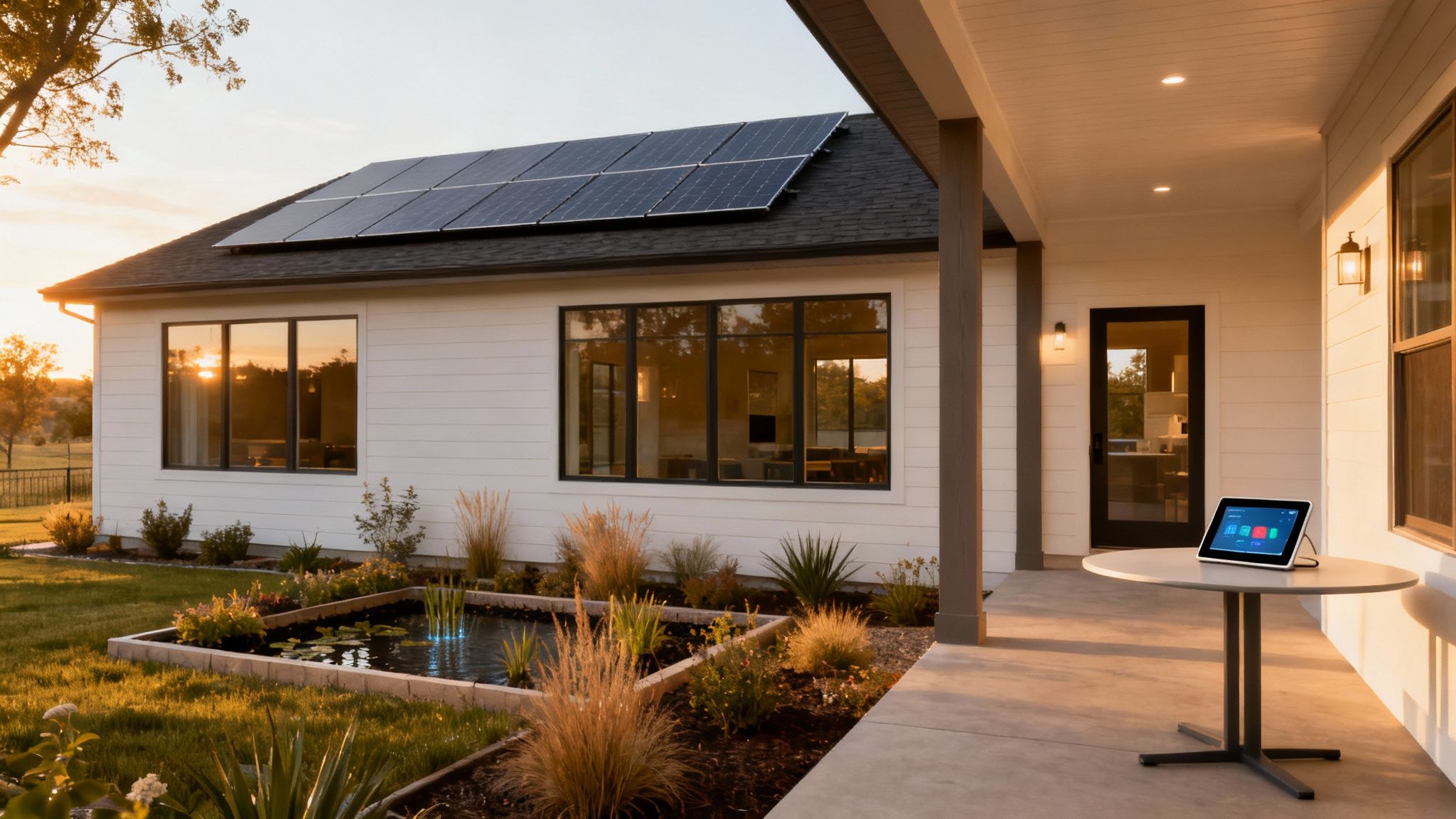
A modern custom home is more than just a beautiful structure—it's an intelligent, efficient, and resilient space designed for how we live today. Building custom is your chance to create a home that not only looks incredible but actually works for you, delivering comfort, security, and lower bills for years to come.
Imagine a home that anticipates your needs and serves as a shield against Oklahoma's wild weather. This is exactly where smart design and sustainable living come together.
Prioritizing Energy Efficiency for Oklahoma's Climate
Here in Oklahoma, our homes are in a constant battle with the elements, from scorching summers in Moore to frigid winters in Elmore City. An energy-efficient custom home isn't a luxury; it's a practical necessity for long-term savings and year-round comfort.
Instead of settling for standard builder-grade materials, you can invest in high-performance systems from the start. This means choosing the right components to create a tight, well-insulated building envelope that keeps the outside, out.
A few key areas make all the difference:
- Superior Insulation: Using spray foam insulation creates an airtight seal that dramatically cuts down on energy loss, keeping your home cooler in the summer and warmer in the winter.
- High-Performance Windows: Low-E coated, double- or even triple-pane windows are essential for blocking solar heat during our hot months while preventing heat from escaping when it's cold.
- Geothermal Systems: This is a game-changer in Oklahoma. By tapping into the earth's stable underground temperature, geothermal heat pumps provide incredibly efficient heating and cooling, often slashing utility bills by 30-60%.
Focusing on these core elements means your home will be more comfortable and far less expensive to run. You can dive deeper into your options in our guide on energy-efficient home features.
Seamlessly Integrating Smart Home Technology
True modern living is about convenience and control. When you build a custom home, you can hardwire smart technology directly into its framework. The result is a seamless, reliable system that's miles ahead of aftermarket gadgets.
A smart custom home is pre-planned for connectivity. This allows for a clean, integrated experience where your home's systems—from lighting to security—work together effortlessly.
You can integrate a whole range of technologies to make daily life simpler:
- Automated Lighting & Climate Control: Imagine your lights, thermostats, and even window shades adjusting automatically based on the time of day or your schedule.
- Advanced Security Systems: Install integrated cameras, motion sensors, and smart locks that you can monitor and control from your phone, no matter where you are.
- Whole-Home Audio & Entertainment: Plan for built-in speakers and media rooms with all the wiring hidden neatly inside the walls for a clean, professional setup.
These features don't just add convenience; they provide a tangible layer of security and efficiency, making your home ready for tomorrow’s technology while delivering real benefits today.
How to Choose the Right Oklahoma Custom Home Builder
Of all the decisions you'll make when building a custom home, none is more critical than choosing your builder. This isn’t just about hiring a crew; you're selecting a long-term partner responsible for your investment, your vision, and your peace of mind.
Think of your builder as the captain of the ship. The right one navigates the entire process smoothly, from the first sketch to the final handshake. You need a professional who understands design, manages budgets like a hawk, and communicates clearly every step of the way.
Vet Their Local Experience and Portfolio
Building in Oklahoma isn't like building anywhere else. A builder with deep local roots will know exactly how to handle our state's specific challenges, from the notorious expansive clay soil to our severe weather patterns. With 15+ years of experience, a builder like ACET Custom Homes knows the right way to build a home that lasts, whether it’s in the heart of OKC or on a rural lot in Macomb.
Take a hard look at their portfolio. Do their past projects resonate with your style? Pay attention to the fine details and the quality of the finishing work. But don't just flip through the pictures—ask about the story behind a specific home and the challenges they solved.
A builder's portfolio isn't just a highlight reel. It's concrete proof of their ability to execute complex designs, manage different project scales, and deliver consistently high-quality homes.
Scrutinize Their Process and Communication Style
The "how" is just as important as the "what." A well-organized builder will have a clear, transparent process they can walk you through from start to finish. This isn't a trade secret; it's a sign of a professional who respects your investment.
Before you sign a contract, get answers to these essential questions:
- How will you handle budget changes or new ideas I have?
- How often will we communicate, and who will be my main point of contact?
- Can you show me a typical project timeline with key milestones?
- What does your warranty cover after I move in?
Good communication is the foundation of a successful build. You need a partner who answers your calls, anticipates questions, and keeps you in the loop without you having to ask.
Verify Their Reputation and Client Satisfaction
The clearest sign of a great builder is a long list of happy homeowners. Look beyond the hand-picked testimonials on their website and dig into independent reviews and word-of-mouth feedback.
A builder who is proud of their work will have no problem providing references. Give them a call! Ask past clients what it was really like to work with the team. Were they responsive? Did they stick to the budget? How did they handle issues after the build was complete? This firsthand insight is the best way to find a team you can truly trust.
Frequently Asked Questions About Building a Custom Home
Here are answers to some of the most common questions we hear from people just starting their custom home journey.
Is it cheaper to buy or build a house in Oklahoma?
Initially, an existing home almost always has a lower sticker price. However, a custom home's value unfolds over time. By investing upfront in high-performance windows, better insulation, and quality materials, you save money through lower energy bills and fewer surprise repairs. Plus, you get a layout that fits your life perfectly, so you won't be paying for a major renovation in five years.
What is the first step to building a custom home?
The very first step is defining your vision and securing financing. Before you can find land or hire a builder, you need a clear idea of what you want to build and what you can afford. Getting pre-approved for a construction loan sets a realistic budget and gives you the confidence to move forward.
How do I finance a custom home build?
Financing a custom home typically requires a construction loan. This is a special type of financing that covers the cost of the land and the entire building process. The bank pays your builder in stages, or "draws," as they hit key milestones. Once the home is complete, that construction loan is usually converted into a standard, long-term mortgage. The U.S. Department of Housing and Urban Development has a helpful guide to the homebuying process.
How much control do I really have over the design?
This is where custom homes truly shine. You have nearly 100% control. You're not picking from a menu of pre-set options; you're writing the menu from scratch. You work directly with an architect and your builder to design a one-of-a-kind floor plan, selecting every single finish from the kitchen countertops to the bathroom tile.
Ready to design your custom home? Schedule a free consultation with ACET Custom Homes today. https://acethomes.com
Consultation Today!