.png)
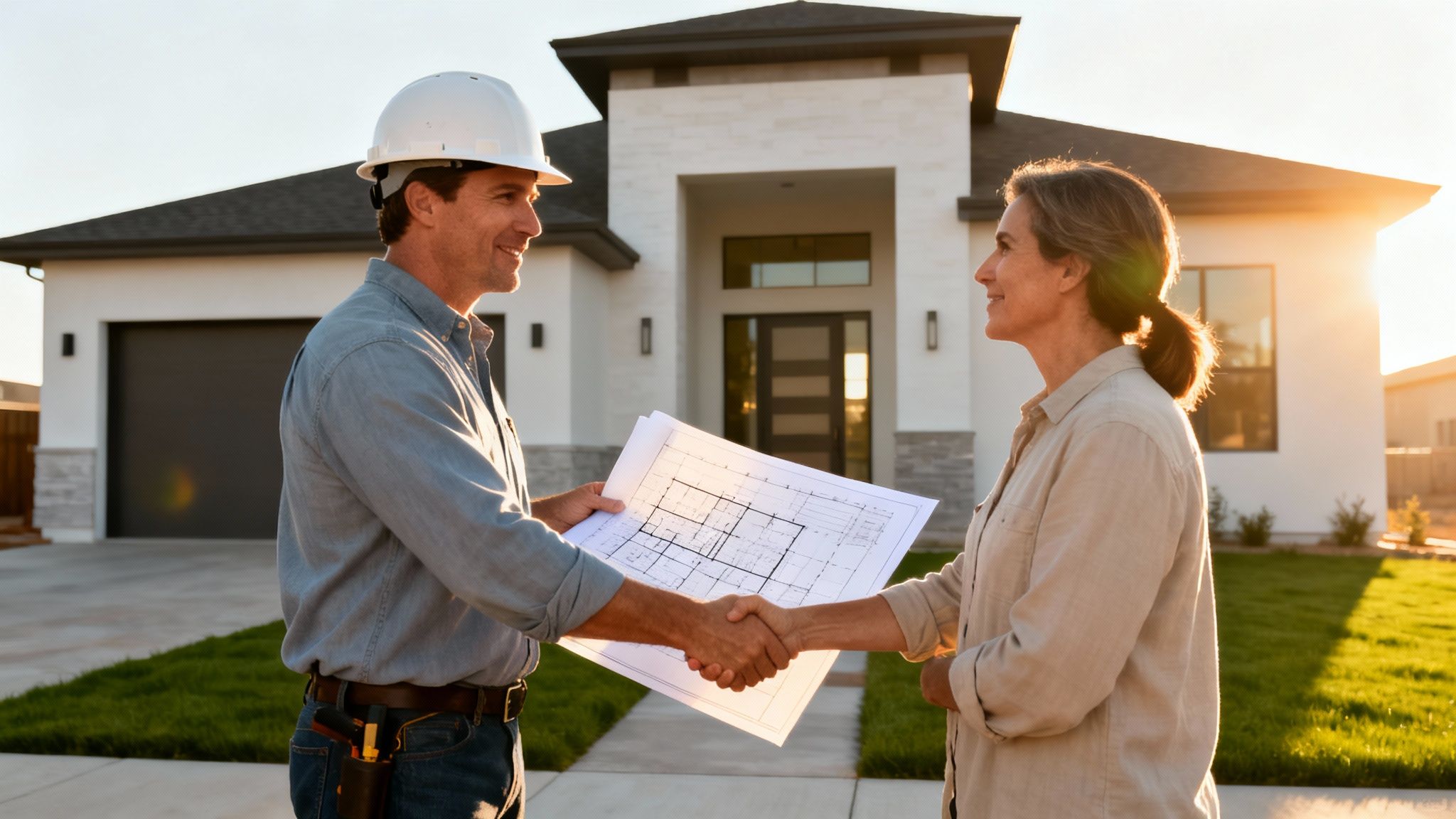
You’re not just building a house; you’re building the backdrop for your family’s future memories. The thought of creating something that’s uniquely yours is exhilarating, but it’s often shadowed by a nagging fear: what if I choose the wrong builder? Finding true quality home builders in Oklahoma isn’t about flashy portfolios; it’s about finding a trusted partner who can turn your vision into a home that stands strong against Oklahoma’s demanding climate, stays on budget, and brings you peace of mind. This guide will give you the actionable steps to cut through the noise and identify a builder you can count on.
What Truly Sets Quality Home Builders Apart
Choosing a builder is one of the biggest financial and emotional decisions you'll ever make. It goes way beyond the blueprints and the budget. The best builders in Oklahoma get this, and they operate on three core principles that really separate them from the pack. When you find a builder who nails these three things, like the team at ACET Custom Homes, you know your vision is in safe hands.
Pillar 1: Unwavering Craftsmanship
You can spot exceptional craftsmanship in the little things. It’s in the perfectly aligned miter joints, the flawlessly smooth finish on a wall, and the solid, sturdy feel of the house. It's about using the right materials and techniques that can handle everything Oklahoma’s climate throws at them, from the shifting red clay soil in Norman to the strong winds out near Guthrie.
A great builder's portfolio will show you this consistency across all their projects, not just a few showstoppers. For example, a home built by a craftsman will feature subflooring that is glued and screwed to prevent squeaks, and exterior wall sheathing that is properly sealed to create a tight thermal envelope. That dedication to quality is what ensures your home isn't just stunning when you move in, but remains a durable, valuable asset for years to come.
Pillar 2: Transparent Communication
Building a home without clear communication is like trying to drive across the country without a GPS. You're bound to get lost. The best builders make communication a priority from day one, keeping things clear, consistent, and proactive.
This means you should always expect:
- Regular Updates: You should know what’s happening at your build site in Edmond or Moore without having to chase someone down for information.
- Clear Documentation: Any changes to the plan, timeline, or budget are put in writing and signed off on, so there are no surprises later.
- A Direct Line: You need a single point of contact who you can call with questions and trust to give you a straight answer.
True transparency isn't just about answering your questions. It's about giving you information before you even think to ask. That's how a builder earns your trust and takes the stress out of the process.
Pillar 3: A Proven and Refined Process
Finally, a top-tier builder runs a tight ship. Constructing a home in Chickasha or Shawnee involves hundreds of moving parts and dozens of different specialists. Without a well-oiled process, things can get chaotic fast, leading to frustrating delays and costly overruns. With over 15 years of build experience, a firm like ACET Custom Homes has dialed in its process to be as efficient and predictable as possible.
A structured approach covers everything from the initial site check and design phase all the way through permitting, construction, and the final walkthrough. A builder with a solid system can give you a realistic timeline, manage all the subcontractors seamlessly, and spot potential problems before they blow up. That’s the mark of a true professional who respects both your money and your time.
Your Builder Vetting and Evaluation Checklist
Staring at a list of seemingly great home builders can feel overwhelming. How do you actually tell them apart? When every website looks polished and every sales pitch sounds perfect, you need a way to cut through the noise and find a real partner for your project.
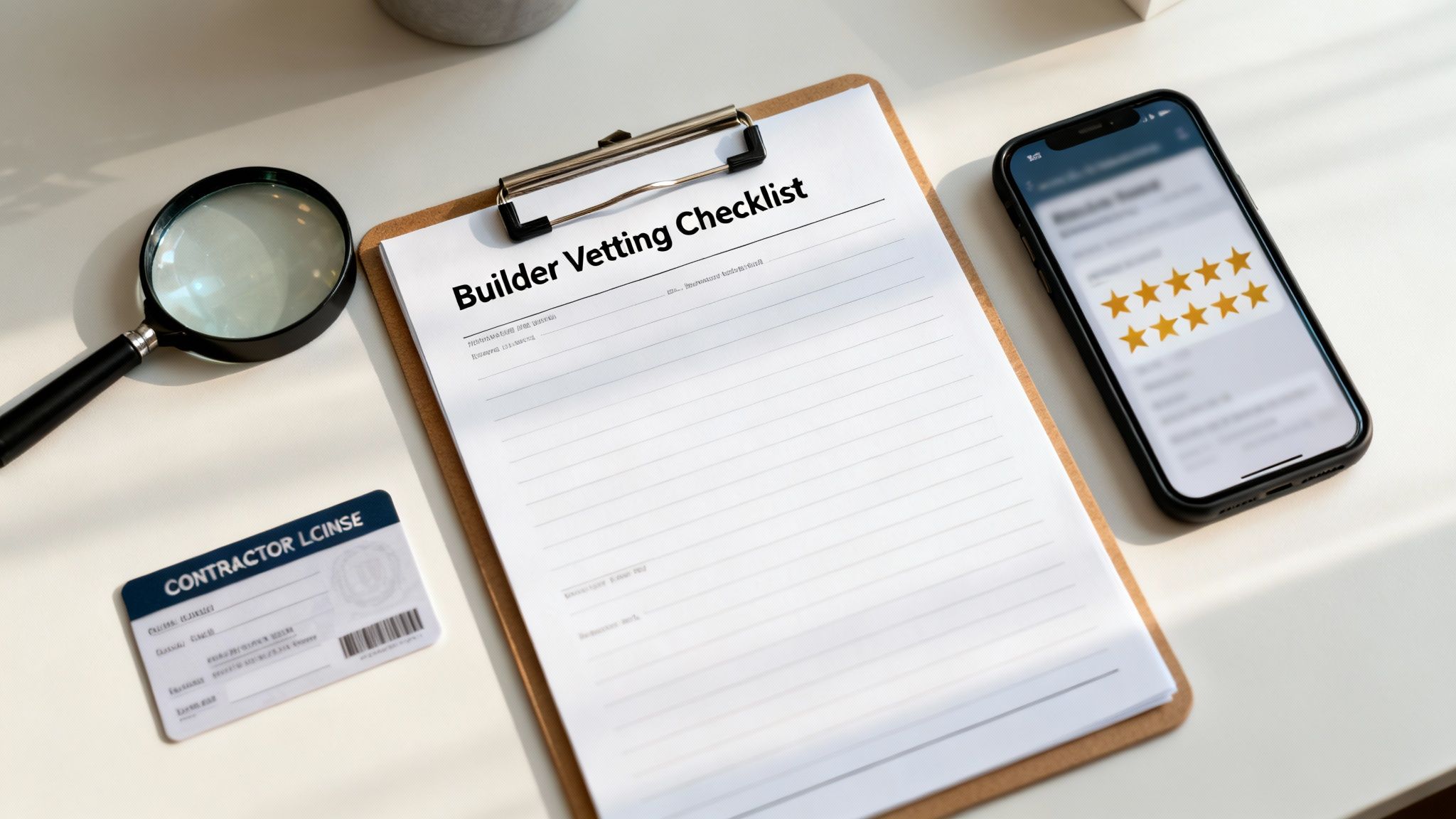
The secret is to have a game plan. This checklist is designed to do just that, giving you a clear, step-by-step process to evaluate your options, whether you're building in the heart of Moore or a quiet spot like Elmore City. Think of it as your guide to spotting red flags early and making a choice based on solid facts, not just a gut feeling.
Step 1: Verify the Basics
Before you even think about floor plans or finishes, you need to confirm the non-negotiables. These are the foundational checks that weed out any builders who aren’t legitimate, professional, and operating by the book.
- License and Insurance: First things first, confirm the builder has a current, valid license to operate in Oklahoma. Ask for proof of both their general liability insurance and workers' compensation coverage. If a builder doesn't have this, you could be on the hook for any accidents on your property.
- Business Standing: Look at their profile with the Better Business Bureau (BBB). A quick search for any past lawsuits is also smart. A pattern of unresolved complaints or legal troubles is a massive warning sign.
- Local Affiliations: Are they active members of professional groups like the National Association of Home Builders (NAHB) or its local chapters? This often points to a builder who's serious about staying current with industry standards.
Step 2: Analyze Their Portfolio and Past Work
A builder’s previous projects are their resume in action. Don't just glance at the best photo of each home. You need to dig deeper to see if their quality is consistent across the board. The goal is to figure out if their work really holds up over time and across different architectural styles.
What to Look For in Their Portfolio:
Step 3: Scrutinize Testimonials and References
Client feedback is pure gold, but you have to know how to read it. A generic, one-line review doesn’t tell you much. You're looking for detailed stories about the actual building experience. A confident builder will have no problem connecting you with their past clients.
A great testimonial doesn't just say, "We love our new home." It says, "They solved a drainage problem on our lot, kept us updated weekly, and finished on schedule. We felt like partners in the process."
When you get on the phone with a reference, ask targeted questions:
- How did the builder handle unexpected problems or delays?
- Was the final cost pretty close to the initial budget?
- What was communication like after you moved in and had a question?
The answers will paint a much clearer picture of what it's really like to work with them day in and day out. This entire process is about finding true quality home builders like ACET Custom Homes, whose reputation rests on proven experience and happy clients. By following these steps, you can confidently cut through the options and find a builder who will bring your vision to life in a home that’s built to last.
Key Questions to Ask Every Potential Builder
Once you've done your homework and looked through a builder's portfolio, it's time to sit down for a real conversation. This interview is your chance to get a feel for how they actually operate, day in and day out.
Think of it less as a grilling and more as the start of a partnership. You're looking for open, honest dialogue that goes way deeper than a glossy brochure.
Forget the generic stuff like, "What's your cost per square foot?" That number is almost always misleading because it doesn't factor in the quality of materials or the smoothness of the process. Instead, you want to ask questions that reveal how they communicate, solve problems, and what their clients really experience. Clear, detailed answers are a great sign; vague responses should give you pause.
Questions About Process and Communication
How a builder manages the project's daily rhythm is everything. These questions are designed to peek behind the curtain and see if their systems are solid and if they can handle the human side of construction—which is just as important as the hammers and nails.
1. "Can you walk me through your change order process?"
- What you want to hear: A great builder will have a clear, documented system. They should mention a written change order form that spells out the new scope, the exact cost, and any impact on the timeline. Crucially, they'll require your signature before starting the new work. This shows they respect your budget and want to prevent surprise costs.
- Red flag: A casual, "Oh, we just figure it out as we go" is a massive warning sign. That approach is a classic recipe for blown budgets and major misunderstandings down the road.
2. "How do you handle unexpected material delays or site challenges?"
- What you want to hear: You're listening for a proactive, not reactive, answer. A seasoned builder will talk about their strong network of suppliers, their ability to pivot to alternative materials if necessary, and—most importantly—their promise to communicate with you immediately. They should have contingency plans. That's the mark of true quality home builders.
- Red flag: An answer like, "That doesn't really happen with us," is just not realistic. Every single construction project hits a snag at some point, especially in rural areas like Macomb or Elmore City. A builder who denies this is either inexperienced or not being transparent.
3. "Who will be my main point of contact, and how often will I receive updates?"
- What you want to hear: The answer should be a specific person—a dedicated project manager or the builder themself. They should also commit to a regular communication schedule, whether it's a weekly email, a standing phone call, or access to a project management portal.
- Red flag: Vague replies like "someone from the office will be in touch" suggest a disorganized team. You'll likely get passed from person to person, which is a fast track to frustration.
Questions About Budget and Quality
These questions get right to the heart of the matter: your money and the long-term integrity of your home. A builder's answers here will tell you volumes about their financial stability and their commitment to building something that truly lasts.
4. "How do you ensure quality control with your subcontractors?"
- What you want to hear: A professional builder will immediately talk about their long-standing relationships with trusted trade partners. They'll mention regular site visits from a supervisor, a clear set of standards their subs must meet, and a detailed final walkthrough process. Top builders like ACET Custom Homes often work with the same crews for years, which is how they deliver consistent quality.
- Red flag: If they say they simply "hire the cheapest crew for the job," you can bet the quality of your home will reflect that cost-cutting mindset.
5. "What is included in your standard pricing, and what is considered an upgrade?"
- What you want to hear: They should be able to hand you a detailed "spec sheet" or a clear list that outlines the specific brands, materials, and finishes included in the base price. This kind of transparency is vital for understanding the true cost and avoiding the sticker shock of realizing everything you actually want is a pricey upgrade.
- Red flag: If they can't give you specifics and keep saying "it depends," they might be planning to use lower-grade materials by default, knowing they can charge you more later for the quality you expected from the start.
Remember, the point of these questions isn't to play "gotcha." It's to find a partner who is organized, transparent, and experienced enough to guide you through one of life's biggest investments with confidence and clarity.
Comparing Design-Build and Traditional Builders
The building model you choose will shape your entire home-building journey, influencing everything from your budget and timeline to your stress levels. When you decide to build a custom home here in Oklahoma, you'll generally find two main roads you can take: the classic traditional method or the increasingly popular design-build approach.
Let's break down what each one means for you. The traditional route is a two-step process: you hire an architect to draw up your plans, and then you take those plans and shop them around to various general contractors for bids. In contrast, the design-build model, which is what we do at ACET Custom Homes, brings the design and construction experts together under one roof from day one. This isn't just a minor difference—it fundamentally changes how your project unfolds.
The Traditional Method Explained
Think of the traditional design-bid-build scenario like a relay race where you're responsible for passing the baton. First, you work with an architect to get your dream home down on paper. Once those plans are finalized, you start the second phase: finding a builder to actually build it.
The potential hiccup here is the disconnect. You can end up caught in the middle if a problem pops up. For example, if the construction bids come back way over budget, who's responsible? The architect might say the builder’s pricing is too high, while the builder points to an overly complex or expensive design. You're left trying to mediate between two separate companies with two separate contracts.
The Design-Build Advantage
Now, imagine a different way. The design-build model gets rid of that gap by putting everyone on the same team from the get-go. With a single firm handling both design and construction, there's one point of accountability. Our architects, designers, and construction managers are all in the same room, ensuring every design choice is weighed against the budget and practical buildability.
This integrated approach is a game-changer. It helps us head off the kind of costly surprises that can derail a project in the traditional model. For our clients building on sprawling lots out in Deer Creek or on rural acreage near Macomb, this means a smoother timeline, tighter cost control, and a single, trusted partner guiding the project. To dig even deeper, you can explore this detailed comparison of a design-build vs general contractor.
This all comes down to a builder's internal process, which directly impacts communication and how they solve problems when they inevitably arise.
Ultimately, a streamlined internal process means fewer headaches for you and a more predictable, enjoyable experience from start to finish.
Design-Build vs Traditional Build Model Comparison
At the end of the day, your choice depends on how hands-on you want to be and your comfort level with potential risks. For most homeowners in Oklahoma who are looking for a seamless, collaborative, and budget-conscious path to their dream home, the design-build model is a clear winner.
Navigating Oklahoma's Unique Building Challenges
Building a custom home in Oklahoma isn't like building anywhere else. Our state throws a unique set of environmental curveballs at you, and if your builder isn't prepared, that dream home can quickly become a maintenance nightmare. We're talking about everything from our notoriously shifty soils to the constant threat of severe weather. Every single decision matters.
A builder’s grasp of the local landscape isn't just a nice-to-have; it's an absolute necessity. This holds true whether you're planning a build in a busy metro like Edmond or on a quiet rural plot in Elmore City. An experienced local builder sees challenges coming miles away, which is how they build a home that’s not just beautiful, but fundamentally built for Oklahoma.
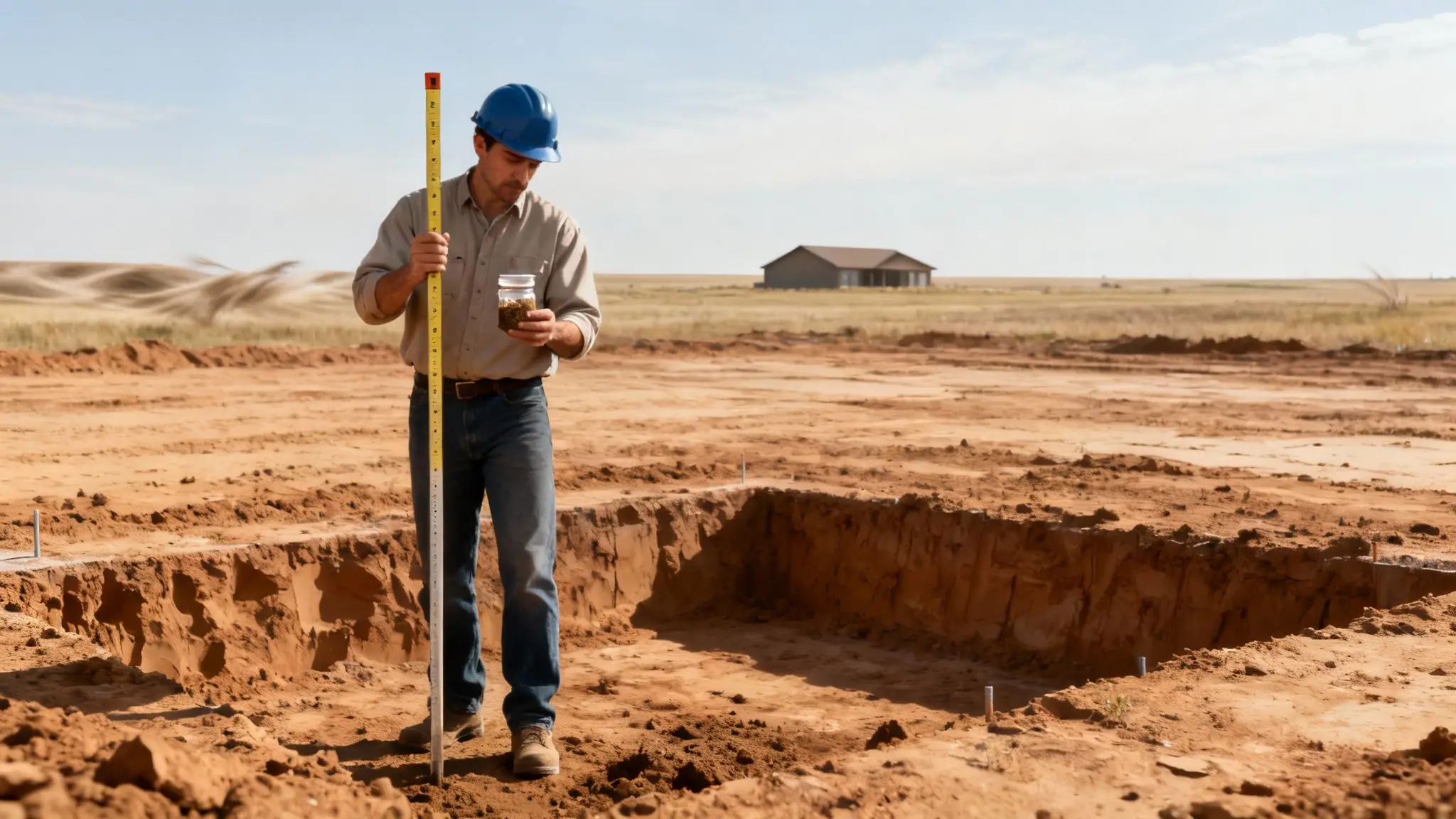
Conquering Oklahoma's Expansive Clay Soil
One of the biggest hurdles is literally right under your feet. A huge part of Oklahoma, from OKC down to Norman, is dominated by expansive red clay soil. Think of this soil like a giant sponge—it swells up dramatically when it soaks up water and shrinks just as much when it dries out. This constant push-and-pull movement can absolutely wreck a standard foundation, leading to cracks, settling, and seriously expensive structural damage down the line.
A top-tier builder won't just pour a generic slab and call it a day. They start the right way, with a professional geotechnical soil report to get the hard data on your specific lot's conditions.
- Engineered Foundations: With that report in hand, they’ll design a foundation specifically to handle that movement, often a post-tension or pier-and-beam system.
- Smart Drainage: They'll also meticulously grade the site and install drainage systems designed to move water away from the foundation, keeping that "sponge" from getting saturated in the first place.
With over 15 years of experience in this soil, we at ACET Custom Homes know that getting the foundation perfect is the single most critical step. Cutting corners here compromises the integrity of the entire structure.
Designing for High Winds and Severe Weather
Let's face it: Oklahoma weather demands respect. A home here has to be designed to stand up to the powerful winds common across our state. This goes way beyond just scraping by with the minimum building codes in cities like Moore or Shawnee.
A builder who’s thinking ahead will weave in structural upgrades that provide a crucial layer of safety and long-term durability.
A truly resilient home is a system of interconnected parts. It’s not just about a storm shelter; it’s about reinforced connections from the foundation all the way to the roof that work together to resist wind uplift and lateral forces.
This means using specific hardware like hurricane clips to anchor the roof trusses to the walls, installing reinforced garage doors, and opting for impact-resistant windows. These are the details that turn a house into a true shelter. The home builders industry, which is projected to generate around $166.9 billion in the U.S. in 2025, is putting a greater focus on this kind of resilience. As noted by industry analysts at IBISWorld, it’s that local expertise that allows a builder to apply these best practices where they matter most.
Optimizing for Energy Efficiency
Oklahoma's climate swings from blistering summers to bone-chilling winters, which makes energy efficiency a huge factor in your home's long-term affordability. A well-built home should keep you comfortable without your utility bills going through the roof.
An experienced builder is laser-focused on creating a tight thermal envelope. This involves a few key things:
- High-Performance Insulation: Using materials like spray foam to seal every last crack and gap.
- Energy-Efficient Windows: Installing double or even triple-pane windows with low-E coatings that reflect heat.
- Properly Sized HVAC: Running the numbers to calculate the precise heating and cooling load for your home, ensuring your system runs efficiently instead of constantly cycling on and off.
These are vital considerations whether you want to build on your lot in rural Oklahoma or in an established neighborhood. By tackling these local challenges with skill and foresight, a quality builder ensures your custom home is a safe, efficient, and lasting investment.
Understanding Costs, Timelines, and Warranties
Let's be honest, the money and scheduling part of building a custom home can feel a bit overwhelming. But getting a firm grip on the costs, timeline, and warranties is what separates a stressful project from an exciting, predictable one. It’s all about eliminating surprises and giving you genuine peace of mind from day one.
The final price of your home isn’t some number pulled out of a hat—it’s the sum of all your choices. Every single decision, from pouring the right foundation for Oklahoma's unique soil to selecting the drawer pulls in your kitchen, has a direct impact on the budget. A great builder makes sure you see those connections clearly, offering complete transparency every step of the way.
Major Cost Drivers in a Custom Home
It helps to know where the biggest chunks of your investment are going. While every custom home is different, the budget breakdown usually follows a familiar pattern.
- Foundation and Site Work: Getting your lot ready, whether it's in Deer Creek or Shawnee, and pouring a properly engineered foundation is the first major expense. It's the one place you absolutely can't cut corners.
- Framing and Structure: This is your home's skeleton. The cost here is driven by the home's size, complexity, and overall structural integrity.
- Exterior and Interior Finishes: This is where you have the most control over the budget. Choices for roofing, siding, flooring, countertops, and light fixtures come in a huge range of price points, giving you plenty of room to personalize.
The Typical Build Timeline
Knowing what happens when is a massive stress reliever. Things like weather and supply chain hiccups can always cause delays, but a professional builder operates on a disciplined, well-planned schedule.
A well-defined timeline is more than just a calendar; it’s a commitment to an organized, efficient process. It ensures that subcontractors are scheduled correctly and materials arrive on time, preventing costly delays.
It’s no secret that the construction industry is facing some headwinds right now. Labor shortages are a real issue, and material costs are high. In fact, in 2025, tariffs on construction goods hit a 40-year high, with rates climbing to between 25% and 30%. These pressures can definitely affect project timelines and budgets. For a deeper dive, check out this recent Deloitte industry outlook.
We've put together a comprehensive guide on the timeline for building a home that walks you through each phase, from the first design meeting to the final walkthrough.
What a Builder Warranty Should Cover
Your builder's job isn't done just because they handed you the keys. A solid warranty is their commitment to stand behind their craftsmanship, and it’s a non-negotiable trait of all quality home builders. This is what protects your new investment.
A good warranty will almost always have three key parts:
- One-Year Workmanship Warranty: This covers the smaller stuff, like defects in labor and materials—think drywall cracks, nail pops, or paint issues.
- Two-Year Systems Warranty: This protects the major mechanical systems in your home, including your plumbing, electrical, and HVAC.
- Ten-Year Structural Warranty: This is the big one. It covers major structural failures in your home's foundation and frame, giving you long-term security.
Always read the warranty document before you sign. A builder who takes pride in their work will always offer a clear, comprehensive warranty that lets you sleep easy at night.
FAQ: Finding Quality Home Builders in Oklahoma
You've soaked up a lot of information on what to look for, the right questions to ask, and how the whole custom build process unfolds. To bring it all home, let's tackle some of the most common questions we get from clients just starting their search in Oklahoma.
How Can I Really Check a Builder's Reputation?
A builder’s own website is a starting point, but you need to dig deeper. Check out third-party review sites like Google and Houzz to see what uncurated feedback looks like. It gives you a much more balanced picture. Also, see if they’re in good standing with the Better Business Bureau (BBB) and if they’re involved with professional groups like the local chapter of the National Association of Home Builders (NAHB). The best step? Ask for a list of past clients and actually call them. A builder who’s proud of their work will happily let you speak with homeowners who can vouch for their process and quality firsthand.
What Should an Initial Consultation Feel Like?
Think of it less as a sales pitch and more as a collaborative brainstorming session. The first meeting is all about you. A good builder will spend most of the time listening—to your ideas, your must-haves, and your budget. They should be asking smart questions that get you thinking about your lifestyle, how you envision using each space, and what your family needs down the road. They'll walk you through their entire process, from the first sketch to the final walkthrough, and be upfront about what's realistic for your specific lot, whether it’s in the heart of OKC or out in rural Macomb.
How Are Changes to the Plan Handled During Construction?
Changes happen, but they shouldn't cause chaos or sticker shock. A professional builder will have a clear, formal process for any "change orders." It’s not just a verbal agreement; it’s a document. When you want to make an adjustment, they should provide you with a written breakdown that details: the exact change, the precise cost impact, and how it will affect the construction timeline. Crucially, this document requires your signature before they start the new work. This simple step protects you from surprise charges on the final invoice.
What's a Realistic Timeline for a Custom Home in Oklahoma?
Building a custom home from scratch is a marathon, not a sprint. While every project has its own unique rhythm, a good rule of thumb for the construction phase—from breaking ground to getting your keys—is anywhere from 10 to 16 months. Factors like the complexity of your design, Oklahoma's unpredictable weather, and even permitting timelines in specific cities like Edmond or Norman can influence the schedule. A builder you can trust will give you a detailed, phase-by-phase schedule right from the start, so you always know what’s happening next.
Ready to design your custom home? Schedule a free consultation with ACET Custom Homes today.
Consultation Today!