.png)
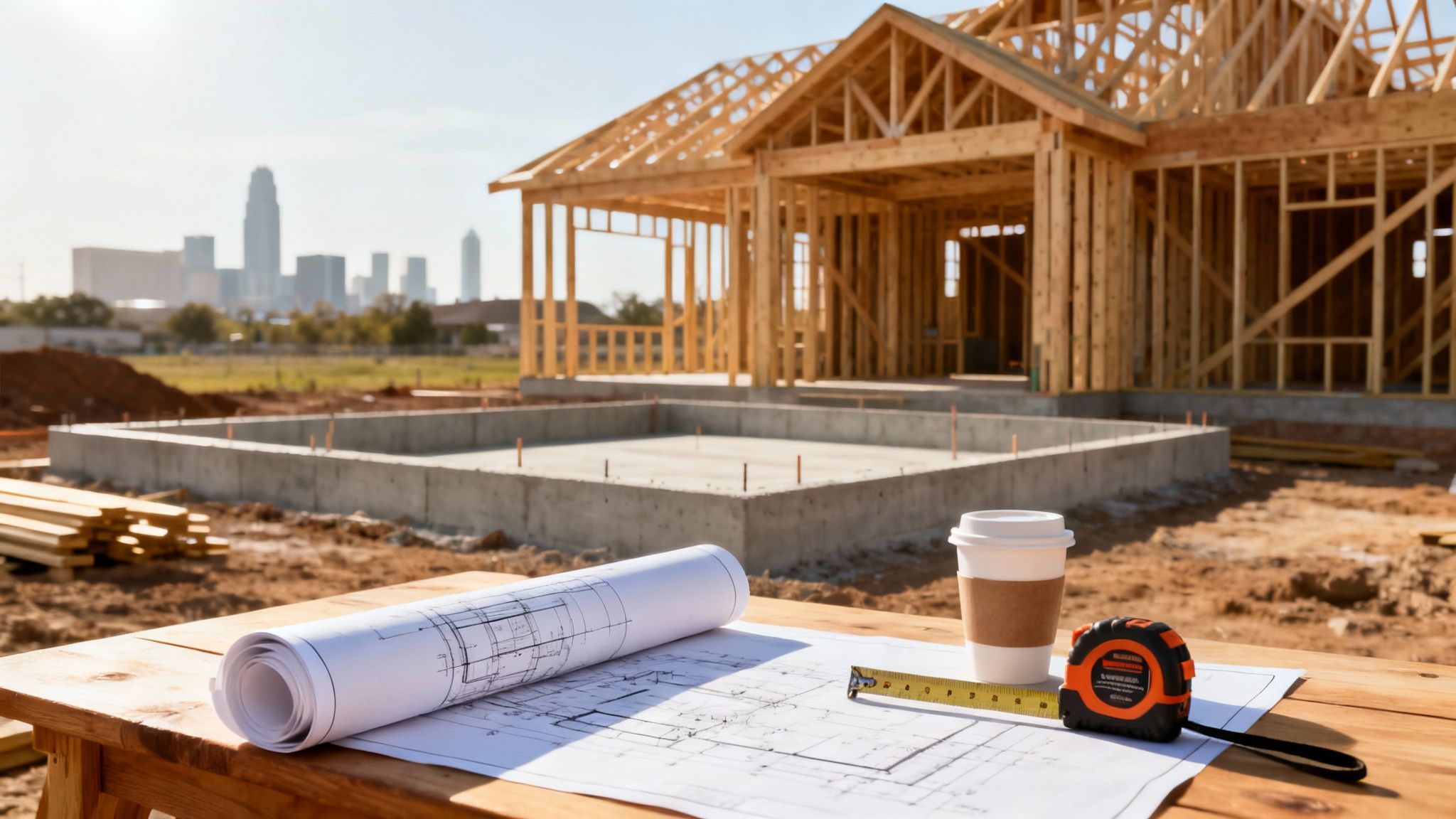
Thinking about building your dream home from the ground up in Oklahoma City? It’s a powerful feeling—the idea of creating a space that’s perfectly yours, something a pre-owned house just can't deliver. But the path from an empty lot to your front door can feel overwhelming. This guide is your practical roadmap for new home construction in OKC, taking you from the first sketch to the final walkthrough, ensuring your vision becomes a stress-free reality.
Starting Your New Home Construction Journey in OKC
Building a custom home is easily one of the most exciting and rewarding things you'll ever do. It's your chance to design a space that’s a perfect reflection of your family, whether you're dreaming of a modern farmhouse out in Deer Creek, a spacious estate in Edmond, or a peaceful escape in a smaller town like Guthrie. But turning that vision into a reality takes careful planning and, most importantly, the right team by your side.
I'm going to break down the entire process into simple, straightforward stages. We'll cut through the industry jargon and give you real, actionable advice based on our 15+ years of building homes all over Oklahoma. The goal here is to give you the confidence to make smart decisions every step of the way.
Taking the Pulse of the Current Market
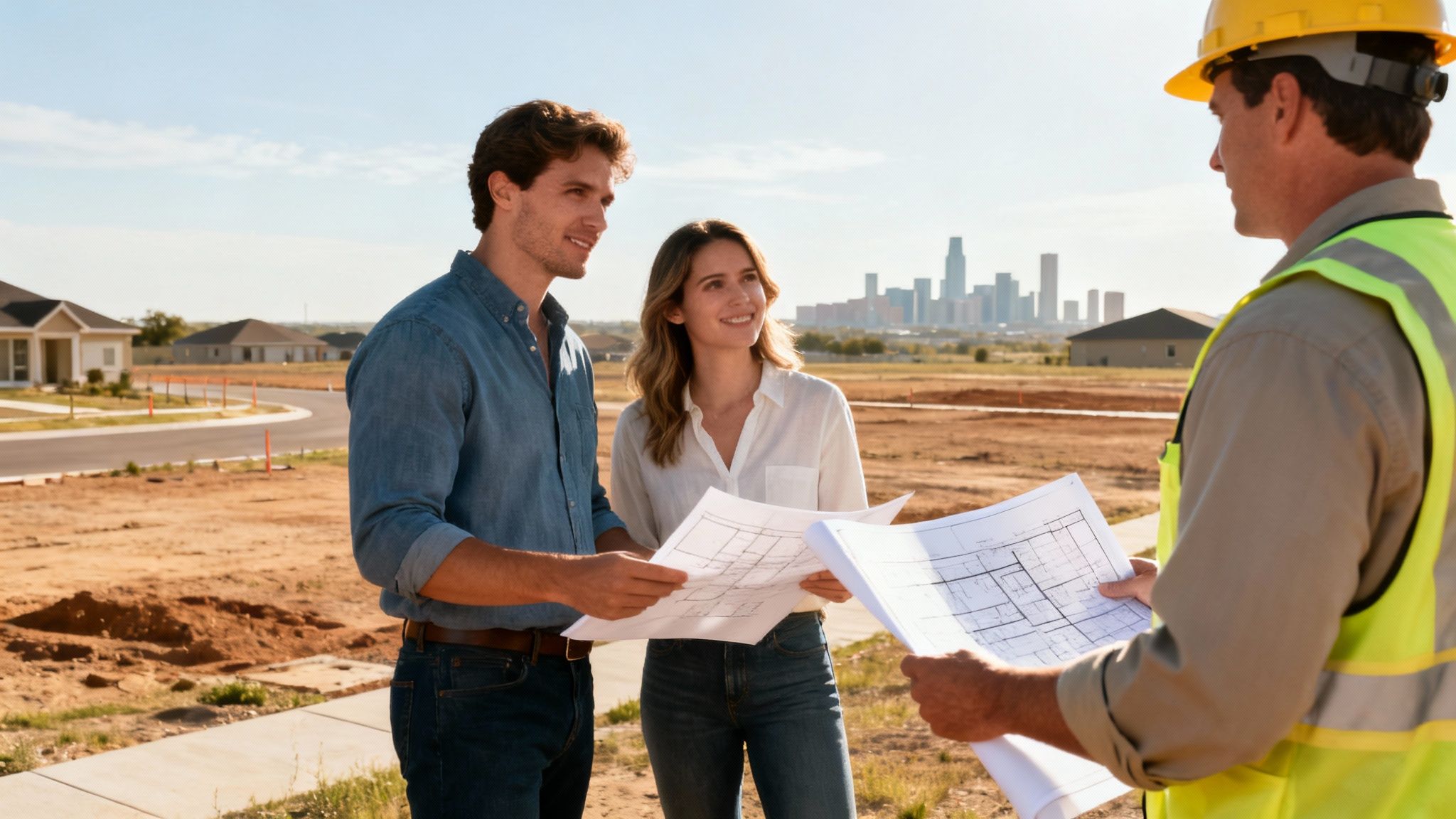
The Oklahoma City metro is buzzing with construction activity. The whole region is growing so fast that local planning departments have pointed out a serious need for thousands of new housing units. That number alone shows just how much demand there is for new homes right now. Every month, hundreds of new building permits are issued, which tells you you're jumping into a very active market.
With so much happening, picking the right builder is more crucial than ever. A great partner does more than just build your house; they guide you through every choice, making sure the home you end up with is the one you pictured, all while sticking to your budget.
"From start to finish our process was flawless. Bono and his team always answered calls and texts in a timely manner. They were very thorough and transparent. We absolutely love our forever home." - ACET Custom Homes Client Review
What to Expect in This Guide
Before you start getting lost in the fun stuff like floor plans and finishes, there are some big-picture decisions that lay the groundwork for the entire project. This guide will walk you through those critical first steps:
- Finding Your Spot: How to evaluate land, whether it's in the city, suburbs, or out in the country.
- Getting Your Financing: Making sense of construction loans and putting together a budget that actually works.
- Design & Build: The process of turning your lifestyle needs into a beautiful, functional home design.
- The Build Itself: Understanding what happens during each phase of construction.
Honestly, choosing your builder is the single most important decision you'll make at the start. For a deeper dive, take a look at our article on how to choose a home builder who really gets your vision. Getting this right from the beginning makes the whole experience so much smoother and more enjoyable.
Finding and Evaluating the Perfect Oklahoma Lot
Before a single line is drawn on a blueprint, your journey to building a new home in the OKC area starts with the land. The lot you choose is so much more than an address. It's the literal foundation for your dream, and its unique character will shape everything from your home's design and orientation to the final number on your budget. Picking the right spot here in Oklahoma means looking past the pretty view and getting to know the dirt under your feet.
You have to look at Oklahoma land through a specific lens. A gorgeous, rolling ten-acre plot out near Macomb might seem perfect, but can a concrete truck actually get to it? That seemingly ideal suburban lot in Deer Creek might look great in the dry season, but what happens during our heavy spring rains? Answering these questions upfront prevents some seriously expensive surprises later on.
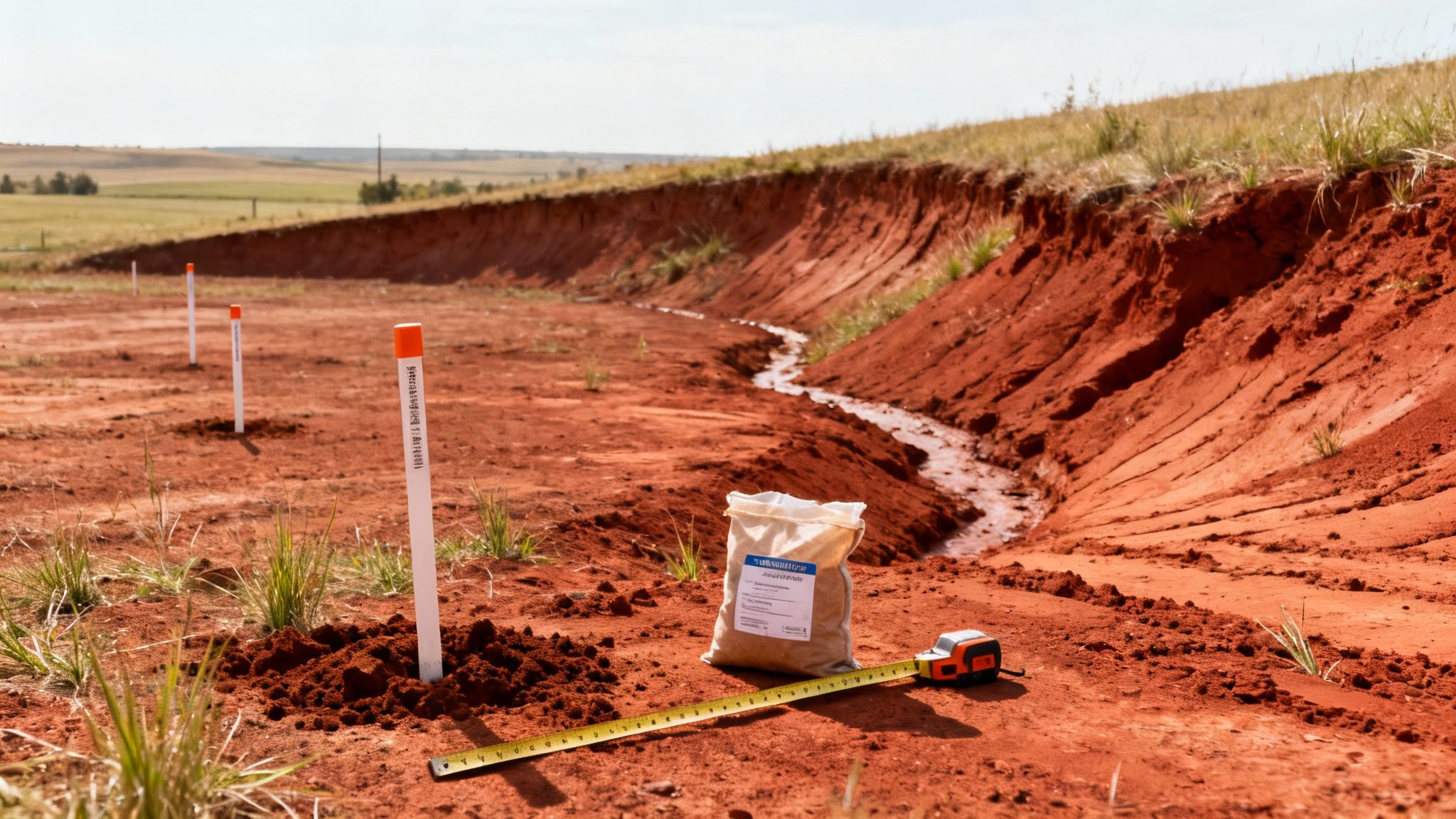
Key Factors in Oklahoma Lot Evaluation
That famous Oklahoma red clay isn't just for looks—it’s a major engineering challenge. This expansive soil swells dramatically when it gets wet and shrinks when it dries, putting incredible stress on a home's foundation. This is why a geotechnical soil test is absolutely non-negotiable. It tells us exactly what we're dealing with.
The results of that test dictate the right foundation for your specific piece of ground.
- Monolithic Slab: This is a single, continuous concrete pour that works well for stable soil that drains properly. It’s simple and effective when conditions are right.
- Post-Tension Slab: This is a more robust, engineered foundation. We run steel cables through the slab and tighten them after the concrete cures, creating a stronger base that can handle the shifting clay soils common around OKC, Edmond, and Norman.
Trust me, ignoring the soil is one of the costliest mistakes you can make. An experienced builder will know to look at a potential site and anticipate these needs right from the get-go.
The Hidden Costs of Undeveloped Land
It’s easy to fall in love with a raw piece of land without realizing the work—and cost—involved in making it ready for a home. Unlike a prepared lot in a new development, a rural property in a place like Elmore City or Shawnee can require a hefty investment before construction can even start.
"A common oversight we see is underestimating site prep. Bringing in utilities—water, electric, and septic—can add tens of thousands of dollars to a project. We always advise clients to get firm quotes for these services before they ever close on a property." - Bono, Project Manager at ACET Custom Homes
Before you sign on the dotted line, run through this checklist:
- Utility Access: How far away are the power lines and city water? If they aren't close, you'll need to budget for a well and a septic system.
- Zoning & Covenants: Always check with the local municipality, whether it's OKC or a smaller town like Chickasha, about zoning laws. You also need to find out if there are any restrictive neighborhood covenants that might limit your plans.
- Topography and Drainage: Does the land naturally slope away from where your house will sit? Low spots can become big, expensive water problems down the road.
- Access: Is there a paved road leading to the property, or are you going to have to pay to build and maintain a long driveway?
These aren't just minor details; they have a direct impact on your budget and timeline. For a deeper dive, our guide to building on your own land breaks down this critical phase even further. A thorough evaluation ensures the lot you love is also a smart, buildable investment—the perfect start for a successful project.
Getting Your Finances and Budget in Order
So you've found the perfect piece of Oklahoma land—fantastic! Now comes the less glamorous, but absolutely critical, next step: mapping out the financial side of your new home construction in OKC. Getting your financing and budget locked down is the foundation upon which your entire project rests.
Financing a custom home isn't like buying an existing one. You won't be getting a standard mortgage right out of the gate. Instead, you'll need what's called a construction loan.
Think of it as a short-term loan designed specifically for the building process. The bank doesn't just hand over a lump sum; it releases funds in stages, known as "draws," as your builder hits key milestones. Money for the foundation, another draw after framing is complete, and so on.
To get approved, lenders want to see that you've done your homework. They’ll need a detailed plan, your final home design, a signed contract with your builder, and a comprehensive budget that shows where every dollar is going.
Building a Realistic Custom Home Budget
That old "price-per-square-foot" number you hear tossed around? It’s a dangerously oversimplified way to look at things. At best, it’s a rough guess; at worst, it completely ignores major costs that will absolutely blindside you later. A real custom home budget is far more granular.
A well-built budget covers every single cost, not just the house itself. I always tell my clients to think about it in four main buckets:
- Land & Site Prep: This isn't just the price of the lot. It’s everything needed to get it ready for construction—clearing trees, grading the land for proper drainage, and bringing in utility lines from the street.
- Hard Costs (The Build): This is the meat of the budget. It covers all the labor and materials that go into physically building your home, from the concrete to the roof shingles.
- Soft Costs (The Paperwork): This category includes all the necessary administrative expenses like architectural and engineering fees, soil tests, and those pesky permit fees from the city.
- Your Contingency Fund: This is non-negotiable. Plan on setting aside 5-10% of your total construction cost as a safety net. It’s there for the unexpected issues—or even the unexpected opportunities—that pop up during a build.
As one of our clients mentioned on our Google Business Page, "They were very thorough and transparent." That transparency has to start with the budget. A good builder will walk you through every line item so there are no surprises down the road.
How Your Design Choices Shape the Bottom Line
The selections you make for finishes—from flooring to faucets—will have one of the biggest impacts on your final cost. A "small" upgrade here and another one there can snowball quickly. Understanding the cost difference between standard, mid-range, and luxury options is key to putting your money where it matters most to you.
This is something we spend a lot of time on with our clients early in the design phase. It helps to see a practical comparison of how these choices play out.
Custom Home Budget Impact Comparison
Here’s a simple table to illustrate how different quality levels for key components can affect the budget.
Having these conversations early on is crucial. It lets you make informed decisions that bring your vision to life without derailing your financial plan.
If you want to dig deeper into the lending process, you can learn more about securing Oklahoma construction loans in our detailed guide. A little extra planning upfront is the best way to ensure a smooth, financially sound building experience.
Tailoring Your Home to Your Life with the Design-Build Process
This is where the dream starts to become reality. The design-build phase is an intensely collaborative journey where we take all your ideas, wish lists, and lifestyle needs and translate them into a real, buildable home. It's about more than just aesthetics; we're creating a space that functions perfectly for how you and your family actually live.
Too often, people think of "design" and "construction" as two separate worlds, handled by different companies. The problem? That separation can lead to a lot of friction. A stunning design might turn out to be wildly impractical or blow the budget once it gets to the builder.
A design-build firm, on the other hand, puts everyone at the same table from day one—the designers, architects, and builders. This unified approach keeps your design grounded in real-world costs and construction realities, saving you from some major headaches down the road.
Turning Your Lifestyle into a Floor Plan
Your floor plan is the absolute heart of your home. It’s the blueprint for your daily life, dictating the flow and feel of everything you do.
Are you the family that hosts every holiday? An open-concept kitchen that flows into a great room and out to a covered patio is probably high on your list. If you work from home, a dedicated office tucked away from the main living areas—with extra sound insulation—becomes a non-negotiable.
We usually kick this off with a deep dive into your daily routines. We'll talk about your future plans and, just as importantly, what you love and can't stand about your current home.
Customizing a Plan: Many clients find a great starting point in one of our existing floor plans. From there, we can make it their own—maybe by extending the back patio to enjoy Oklahoma's beautiful fall evenings or adding a second sink in the primary bathroom.
Starting from Scratch: If you have a truly one-of-a-kind vision, we can start with a blank page. This lets us design a home that perfectly fits your lot's unique characteristics and your family's specific needs, like creating a multi-generational suite with its own entrance.
"They took all our crazy ideas and made a home we love. The attention to detail was amazing." - ACET Custom Homes Client Review
Designing for Oklahoma Living
Building in Oklahoma means designing for Oklahoma. These aren't just afterthoughts; they're essential elements we need to weave into the design from the very beginning for comfort, safety, and enjoyment.
A storm shelter is a perfect example. Instead of an afterthought in the backyard, we can integrate a reinforced safe room seamlessly into your floor plan. It might be tucked into a pantry, a primary closet, or built right into the garage foundation, making it accessible and completely unobtrusive.
And of course, there's our love for the outdoors. A well-designed covered patio is crucial for shielding you from the intense summer sun, while an outdoor fireplace can make your backyard a go-to spot on cool autumn nights. These features dramatically extend your home’s usable living space.
Visualizing Your Home Before It's Built
One of the most exciting parts of the modern design process is 3D rendering. This technology transforms a flat, 2D blueprint into a vibrant, photorealistic model you can explore. It’s like taking a virtual walkthrough of your home before a single shovel of dirt has been moved.
You get to see exactly how the morning light will stream into your kitchen. You can experiment with different cabinet colors or see how your furniture will fit in the living room. This isn't just for fun; it's an incredibly practical tool. Seeing the layout in 3D helps you catch potential issues—like an awkwardly placed door or a hallway that feels too tight—while it's still just a quick, inexpensive fix on a computer.
This collaborative, visual approach ensures the home we build is a perfect match for your vision, your budget, and the way you want to live.
Understanding Oklahoma Construction Phases and Timelines
With your designs locked in and permits in hand, it's time for the real magic to begin on your piece of Oklahoma land. The construction itself is a carefully choreographed dance, with each step setting the stage for the next. Knowing what to expect during your new home construction in OKC demystifies the process and helps you see the incredible progress being made, even when it looks like a bit of organized chaos.
Whether your lot is in Deer Creek or Norman, the build follows a tried-and-true path. The timeline for a custom home always has some variables, but a well-run project moves through very distinct phases, each with its own crew of specialists and critical city inspections. As one of our clients recently put it, "Seeing the foundation poured was the moment it all felt real." That's the culmination of all the planning and the official starting pistol for your home taking physical shape.
From Dirt Work to a Dried-In Structure
The first major push is all about the groundwork. This is where the heavy equipment shows up and we literally carve your home’s footprint into the landscape.
Site Prep & Foundation: The first order of business is clearing and grading the lot to ensure water flows away from the house—an absolute necessity with Oklahoma's unpredictable weather. We then set the forms, run the initial plumbing lines, and pour the concrete foundation. This might be a monolithic slab or a more complex post-tension foundation, depending on the soil report. Before a single 2x4 goes up, city inspectors from OKC, Edmond, or Moore will need to sign off on this crucial first step.
Framing: This is easily the most dramatic part of the build. You’ll see your home take on a recognizable shape with shocking speed as the walls, floors, and roof structure are erected. It's not uncommon to go from a flat slab to a house-like structure in just a few weeks. Once the frame is complete, we wrap it in sheathing and a protective house wrap. At this point, the house is officially "dried-in" and protected from the elements.
Bringing the Home to Life From the Inside Out
Once the shell is secure, our focus pivots to the complex systems that make a house a home. This part of the project is a whirlwind of activity, with specialized trades working in a coordinated effort.
Mechanical Rough-Ins: Before any drywall goes up, this is when the "guts" of the home are installed. Plumbers run water lines, electricians snake wiring through the studs, and HVAC technicians install all the ductwork for your heating and air conditioning.
Key Inspections: This is a huge checkpoint. City inspectors have to approve all the framing, plumbing, electrical, and mechanical work before we can move forward. It’s a vital quality control step that ensures everything behind the walls is safe and up to code.
Insulation & Drywall: With the green light from inspectors, we install insulation in the walls and ceilings—a step you'll be thankful for during hot Oklahoma summers and chilly winters. Right after, the drywall is hung, taped, and textured. Suddenly, you have actual rooms.
This is where all that initial design work really pays off.
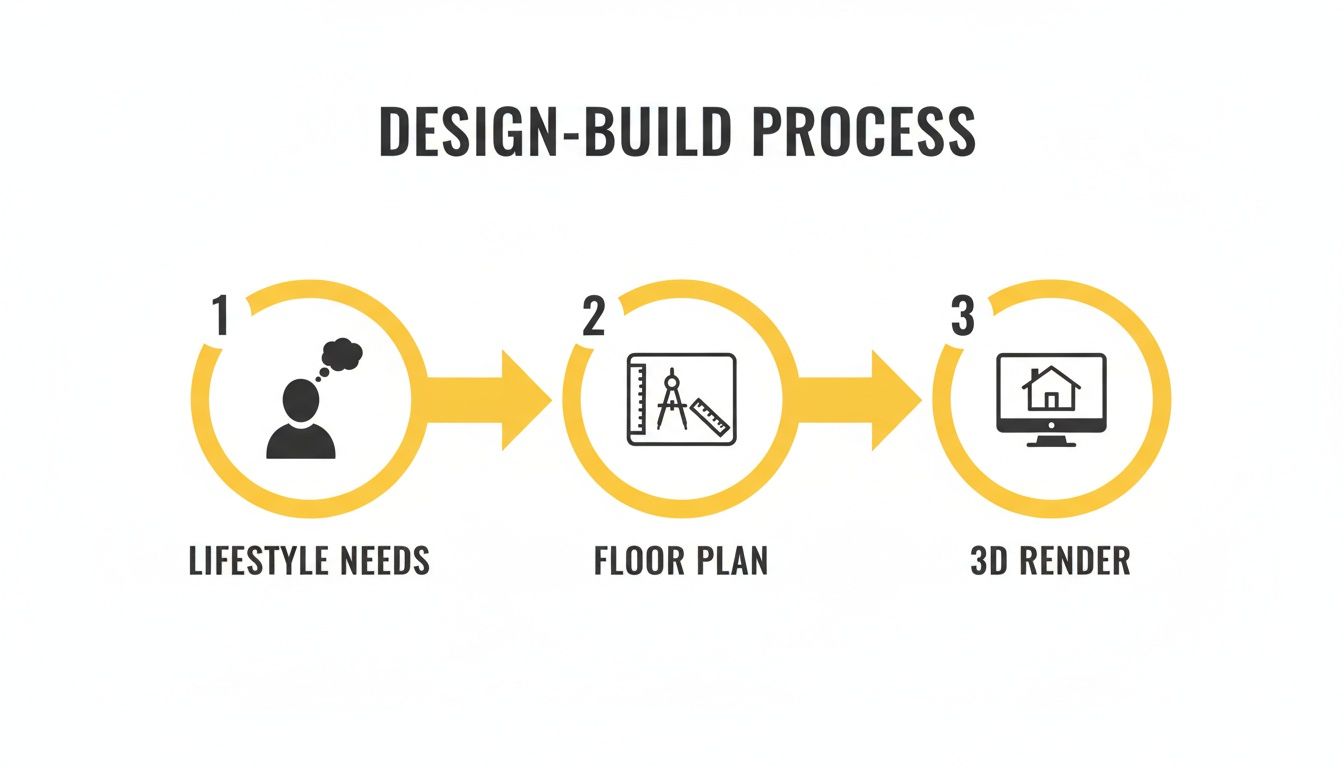
As you can see, translating your lifestyle into a detailed plan and 3D model is what guarantees these construction phases bring your specific vision to life.
The Final Stretch: Exterior and Interior Finishes
This is where your house truly becomes your home. The construction site feel starts to fade, and your personal style begins to shine through.
On the outside, the home gets its final look with brick, stone, siding, and paint. At the same time, the interior comes alive as the finish work gets underway. This is a very detail-oriented stage that includes:
- Installing flooring like hardwood, tile, or carpet
- Setting all the kitchen and bathroom cabinets
- Painting interior walls, trim, and doors
- Installing countertops and all the plumbing fixtures
- Placing light fixtures, outlets, and switches
"Watching the finishes go in was the most exciting part for us," a recent client shared. "The ACET team helped us pick materials that felt like 'us,' and seeing it all come together was incredible."
Every one of these steps requires true craftsmanship to get that high-quality, polished look. And while Oklahoma weather can throw a wrench in the schedule—especially during the foundation and framing stages—an experienced builder knows how to anticipate these issues and build buffers into the timeline.
For a deeper dive into what to expect, check out our guide on how long it takes to build a custom home. Having a transparent view of the process lets you know exactly what’s happening as you watch your dream home become a reality.
The Final Walkthrough and Handover Process
This is it—the moment you've been waiting for. After months of planning, decisions, and watching your vision come to life, the final walkthrough is your official introduction to your new home. This isn't just a celebratory tour; it's a crucial final inspection to make sure every last detail is perfect before you get the keys.
This is your chance to spot any little things that need a final touch. You'll walk through every room with your project manager, creating what we in the industry call a "punch list." It’s simply a running list of minor adjustments, like a scuff on the baseboard or a cabinet door that needs a slight alignment tweak.
Creating a Thorough Punch List
A good punch list is detailed and comprehensive. It's not about finding fault; it's a collaborative final step to ensure your home is absolutely perfect. A seasoned builder not only expects this but welcomes your keen eye—we want you to be thrilled with the result.
"They were very thorough and transparent," a client of ours mentioned on our Google Business Page. That kind of partnership is never more important than during this final walkthrough.
The best way to tackle this is to be methodical. Don't be shy—flip every light switch, open and close every window, and turn on every faucet. Your builder should be guiding you, but it helps to have your own mental checklist ready:
- Surfaces and Finishes: Look closely at walls, ceilings, and floors. Are there any scuffs, dings, or paint drips that need attention?
- Doors and Windows: Do they all open, close, and lock smoothly? No sticking or squeaking?
- Cabinetry and Countertops: Check that all cabinet doors and drawers are perfectly aligned and close softly. Run your hand over the countertops to feel for any imperfections.
- Plumbing and Electrical: Test every single faucet for hot and cold water pressure. Peek under the sinks for any drips. Make sure all outlets and light switches are working.
- Appliances: If your appliances are already installed, run a quick cycle on the dishwasher or turn on the oven to make sure everything is good to go.
Understanding Your Home Warranty
Once every item on the punch list is addressed and you’ve signed off, you'll finally get your keys, along with your home warranty packet. Think of your builder's warranty as your safety net. It’s our promise to you that your home is built to last and provides protection for specific issues after you move in.
Home warranties are typically layered. You'll often find a one-year warranty covering workmanship and materials. Major systems—think plumbing, electrical, and HVAC—are usually covered for two years. The big one, your home's structural integrity, is protected for much longer, often up to ten years.
Take some time to read through these documents. Knowing what's covered and how to submit a claim will give you incredible peace of mind as you settle into your new investment. For more general information on what to expect, the National Association of Home Builders (NAHB) is a fantastic resource for understanding industry standards.
FAQ: Your New Home Construction OKC Questions Answered
How long does it realistically take to build a custom home in Oklahoma?
Once we break ground, the actual construction typically takes between 9 and 12 months. The pre-construction phase, which includes design and permitting, can add another 2 to 4 months. Factors like weather, the complexity of the design, and the location of the build can all influence the final timeline.
What is the true cost per square foot for new construction in OKC?
While it's a common question, a "cost per square foot" number is misleading for custom homes. The final price depends heavily on three key factors: the cost of the land and site prep (clearing, utilities), the architectural complexity of the home, and the level of interior and exterior finishes you select. A transparent builder will provide a detailed, itemized budget instead of a vague square-foot price.
What happens if I want to make changes during construction?
Changes are a normal part of the custom building process. We use a clear change order system. For any requested change, we provide a document that outlines the work, the cost, and any impact on the schedule. This ensures you can make an informed decision with no surprises, keeping the process transparent and collaborative.
What are the first steps to building a new home?
The very first step is to secure your financing by getting pre-approved for a construction loan. This establishes your budget. The next steps are finding the right builder for your project and selecting a piece of land. A good builder can even assist you in evaluating potential lots before you purchase.
Ready to design your custom home? Schedule a free consultation with ACET Custom Homes today.
Consultation Today!