.png)
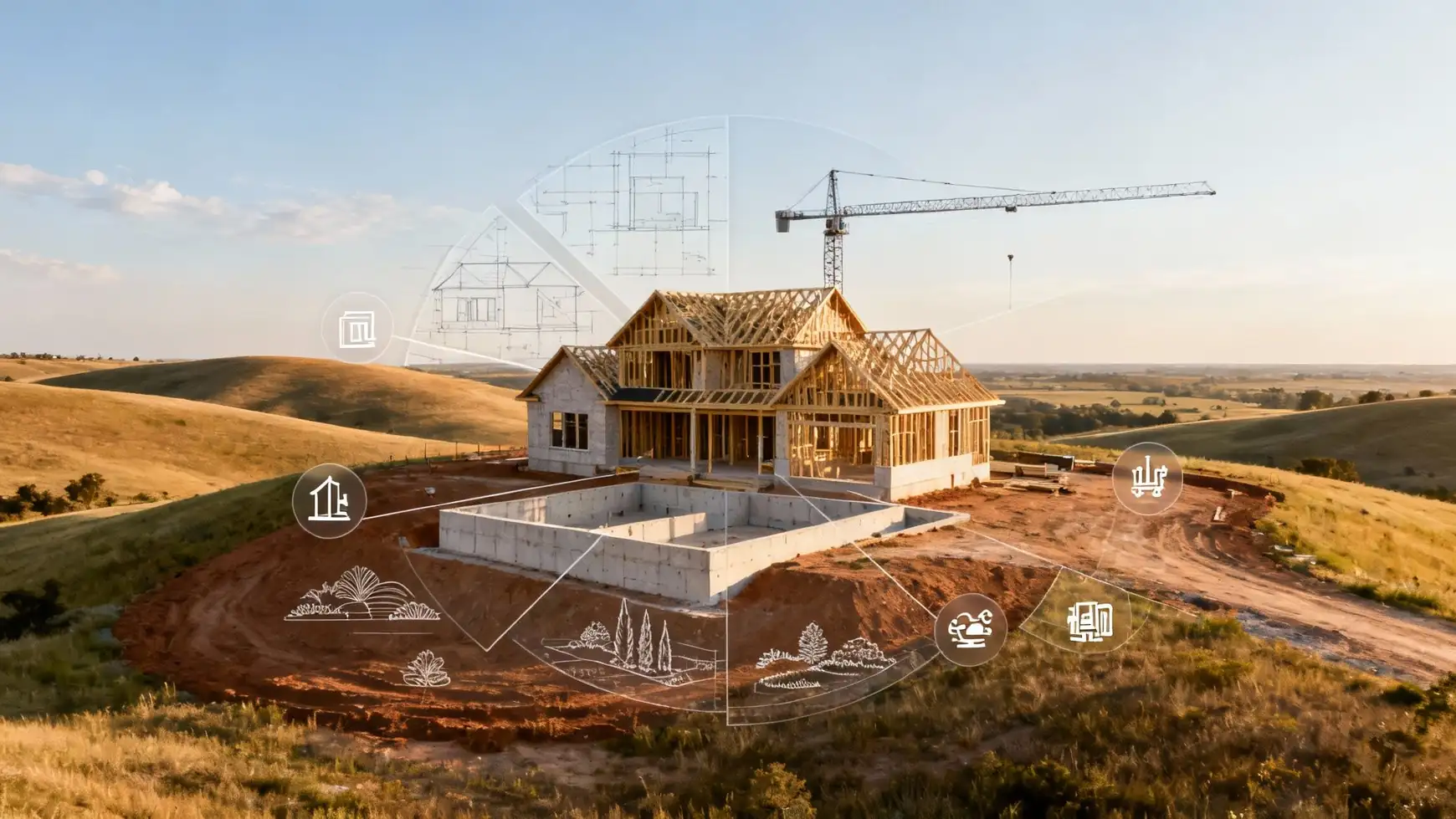
Building a luxury home in Oklahoma is an incredible journey, but let's be honest—the first question on everyone's mind is, "What's this actually going to cost me?" You’ve saved, you’ve planned, and now you’re standing at the threshold of making a lifelong dream a reality. The fear of hidden fees or a runaway budget can turn that excitement into anxiety.
The truth is, there's no simple number. Understanding the real luxury home construction costs is like solving a puzzle, with pieces influenced by your land, design, and materials. As a starting point, a true luxury custom home in the Oklahoma City metro area typically falls in the $250 to $400+ per square foot range. But that number is just the beginning of the story.
This guide is designed to give you clarity and confidence. We will break down every factor, from land prep in rural Macomb to high-end finishes in Edmond, so you can build a realistic budget and turn your vision into a home without any unwelcome financial surprises.
Decoding the Price of Your Oklahoma Dream Home
The dream of building a custom home, whether it’s on a sprawling acreage near Elmore City or a prime piece of land in Deer Creek, always starts with excitement. Pretty soon, though, the practical side kicks in: budgeting.
Understanding what drives the cost of a luxury home is the very first step in turning your vision into a concrete plan. Unlike a production home with a fixed price tag, a custom home’s final cost is as unique as the choices you make and the property you build on.
At ACET Custom Homes, we believe a successful build is built on clarity. With over 15 years of experience crafting one-of-a-kind residences across Oklahoma—from Norman to Shawnee—we’ve guided countless families through this exact process. Our goal here is to pull back the curtain on the numbers so you can move forward with confidence.
Several key factors will shape your final investment:
- Land and Site Preparation: The condition of your land is a huge variable. A flat, clear lot in Moore will cost far less to prepare than a sloped, wooded acreage near Guthrie that needs significant excavation and new utility lines run to it.
- Design Complexity: A straightforward, rectangular footprint is simply more cost-effective to build. A complex design with intricate rooflines, curved walls, and other unique architectural elements will naturally increase the budget.
- Material and Finish Selections: This is where the budget can really swing. The difference between builder-grade finishes and high-end, imported materials is massive, and it’s where your personal taste directly impacts the bottom line.
- Structural and System Choices: Oklahoma's unique climate and soil conditions—from the stubborn red clay around Oklahoma City to the sandy loam in other areas—heavily influence foundation design and structural engineering. These aren't choices, they're requirements, and they directly affect your costs.
It's also helpful to see the bigger picture. While Oklahoma is known for its affordability, luxury construction operates in a global market. Nationally, the costs can be eye-watering. In places like New York City, for example, luxury construction can easily soar to $650 per square foot or more thanks to higher labor costs and tough logistics. You can discover more insights about national construction costs on Haute Living to see how our region compares.
Quick Guide to Oklahoma Luxury Home Cost Ranges
Before we dive into the line-item details, here’s a quick snapshot of what you can generally expect at different quality levels in the Oklahoma City metro and surrounding areas. This table provides a helpful starting point for framing your budget discussions.
Keep in mind these are ballpark figures for the structure itself. They don't include the cost of the land, extensive landscaping, a pool, or other major site-specific expenses.
Mapping Your Budget: A Step-by-Step Breakdown
Planning a luxury home budget is a layered process that begins long before a single shovel hits the dirt. The key is understanding the difference between soft costs (the planning) and hard costs (the physical build).
Step 1: Account for Crucial Soft Costs
Think of soft costs as the brainpower behind the project. They’re all the intellectual and administrative tasks that happen before construction begins. Investing wisely here prevents frustrating, budget-busting changes later on.
- Architectural and Design Fees: This is where your vision comes to life. These fees cover the creation of your custom home blueprints and detailed construction documents.
- Engineering Reports: This is non-negotiable in Oklahoma. Geotechnical engineers analyze the soil—whether it's expansive clay in Edmond or sandy loam in rural areas—to design a foundation that won't move.
- Permitting and Inspection Fees: Every city, from Oklahoma City to Yukon, has its own rulebook. These fees pay for the official review and approval of your plans.
Putting the right investment into detailed plans and engineering ensures what we design can be built efficiently and safely on your specific piece of land.
Step 2: Understand the Hard Costs of Your Home’s Skeleton
Hard costs are all about labor and materials—everything that goes into the physical structure. This is where your budget meets the reality of your land and the complexity of your design.
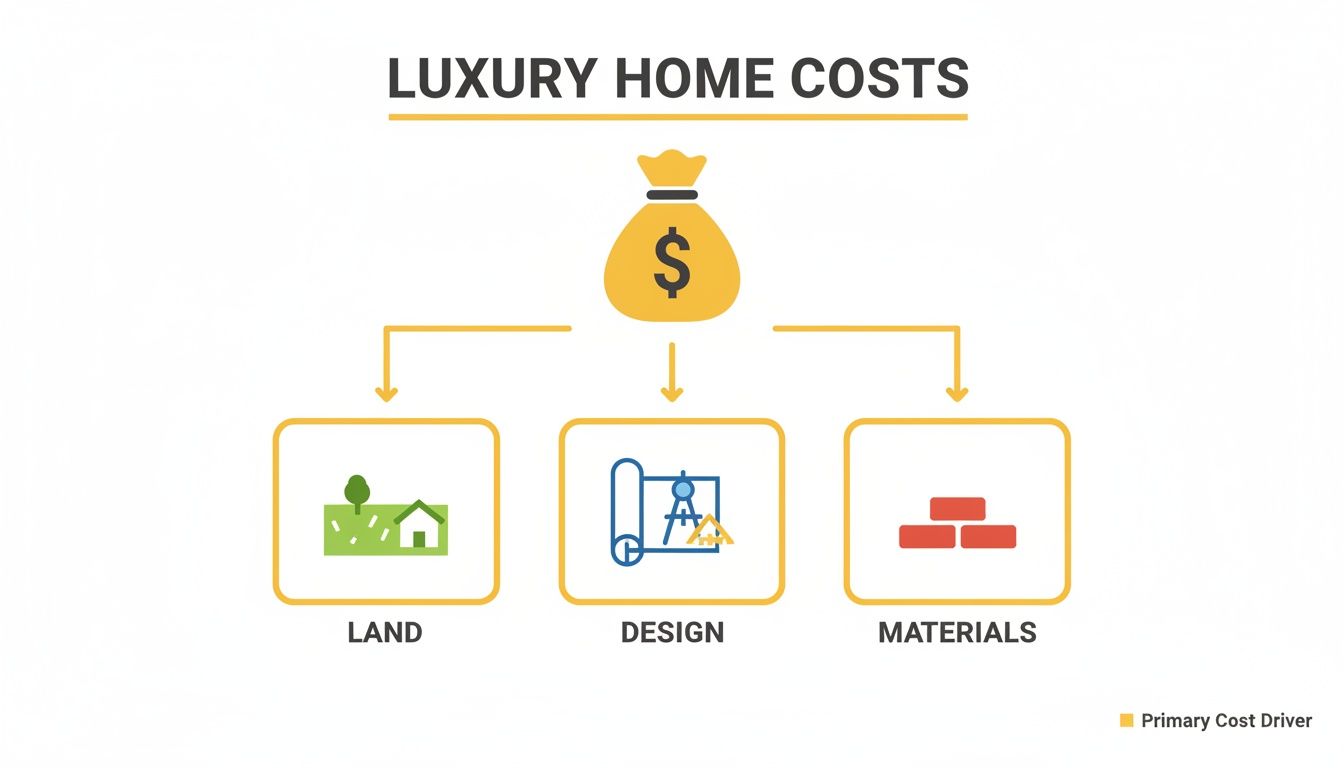
As you can see, a decision in one area has a direct ripple effect on the others.
After building for over 15 years, we’ve learned that the site itself often dictates the first chapter of the budget story. A flat, cleared lot in Norman is pretty straightforward. But a sloped, wooded lot out in a town like Macomb? That could require extensive excavation, tree removal, and maybe even a retaining wall—easily adding tens of thousands of dollars right at the start.
Here’s a breakdown of the primary hard costs that get your home out of the ground:
Site Work and Excavation: This is the first action on your property. The cost here can swing wildly depending on topography. It covers clearing trees, grading for proper drainage, and digging for the foundation and utility lines. For a deeper look, check out our guide to building a house on your land.
Foundation: The right foundation is determined by engineering reports and the home's design. In many OKC metro areas, a monolithic slab is a cost-effective choice. However, a lot with a slope that requires a walk-out basement will jump the foundation budget significantly due to extra excavation, concrete, and waterproofing.
Framing: This is when the skeleton of your home takes shape. The cost is a direct reflection of the design's complexity. A simple rectangular home is far less expensive to frame than a sprawling design with multiple gables and intricate rooflines.
Exterior Finishes and Windows: Once framing is complete, we "dry in" the home to protect it from weather. This involves sheathing, roofing (like architectural shingles or standing seam metal), and windows. Given Oklahoma's wild weather, investing in high-performance, energy-efficient windows isn't just a luxury; it's a smart decision that pays you back.
How Finishes and Upgrades Shape Your Final Price Tag
If the foundation and framing are your home's skeleton, then the finishes are its soul. This is where your unique personality and style really come to life, and it's also where the budget can see some of the most dramatic swings.
The materials you touch and see every day are what transform a well-built house into your personal sanctuary. These selections are a chance to invest in daily luxury, but with a world of options, it's critical to understand the real-world cost of each choice.
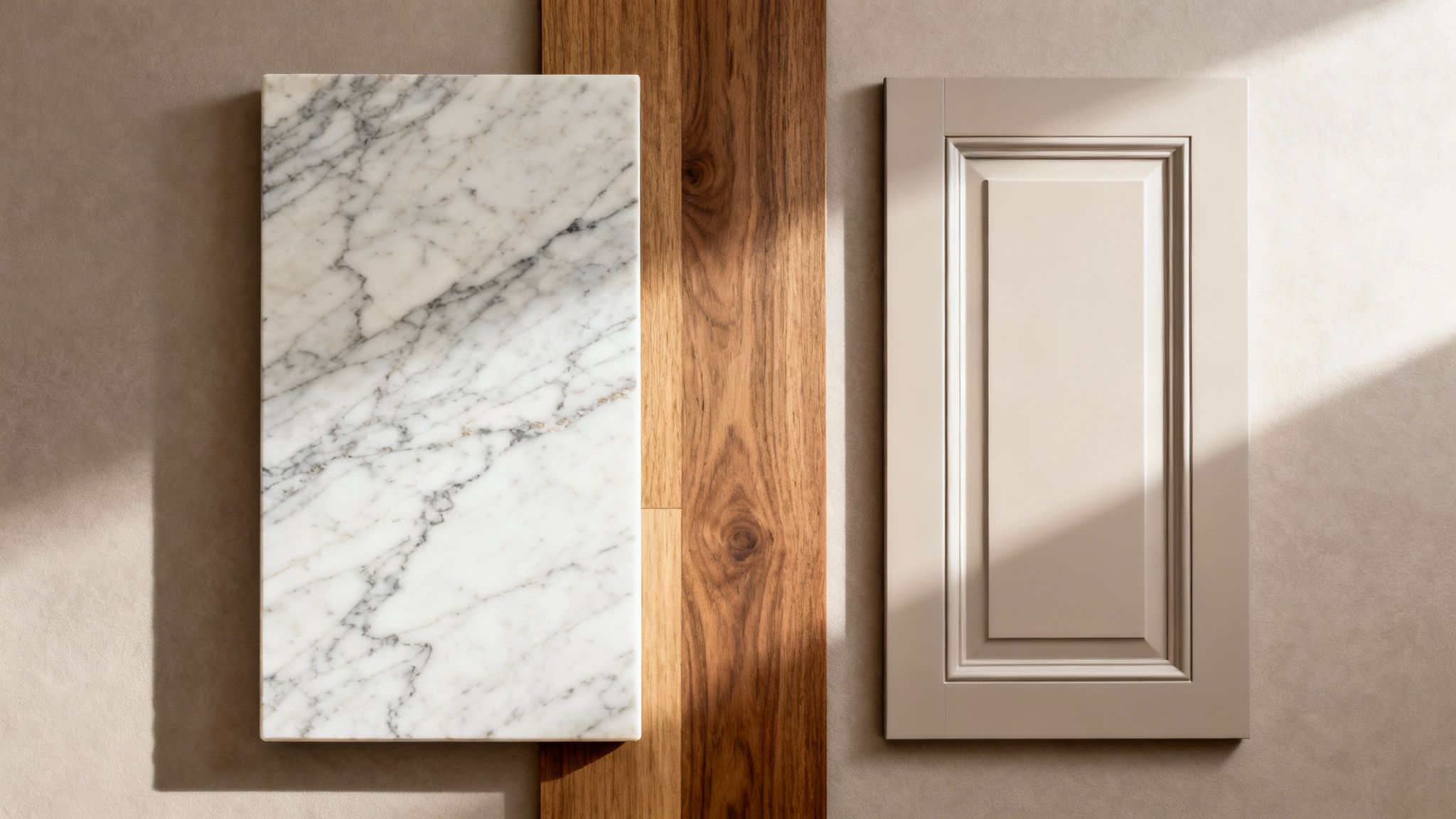
For instance, the decision between beautiful semi-custom cabinetry and truly bespoke, artisan-crafted millwork can easily mean a difference of tens of thousands of dollars in a kitchen alone.
Prioritizing Your Investment for Maximum Impact
The secret to a smart finish budget is knowing where to spend your money. You don't have to pick the most expensive option for every room to get a high-end feel. Successful luxury builds focus on stunning focal points where they matter most.
A bit of builder insight we often share is to 'invest where you live.' Spend the money on the quartzite waterfall island that will be the heart of your home. Then, in guest bathrooms, select a high-quality quartz that delivers a similar look without the premium price tag.
Recent economic shifts have also made smart material selection more crucial. Construction expenses now make up a record-high 64.4% of an average new home's price, a sharp increase from 60.8% in 2022, mainly driven by inflation. You can read the full research about these construction cost trends to see the numbers for yourself. This reality makes strategic finish selection a powerful tool for managing your overall budget.
Comparing Standard vs. Luxury Options: A Cost Impact Table
To put these choices into perspective, the table below breaks down a few common features, offering a side-by-side look at standard versus luxury selections and the kind of insight we bring to every project, from Edmond to Elmore City.
High-end windows, for example, not only look better but offer far superior insulation—a huge deal during Oklahoma’s hot summers. To learn more, check out our guide on key energy-efficient home features that provide both comfort and savings.
Building a Rock-Solid Financial Plan for Your Custom Home
A successful luxury home build absolutely depends on a strong financial foundation. Let's walk through the practical side of budgeting and financing your project, so you feel in complete control from the first sketch to the final walkthrough.
Understanding Your Financing Options
For most people, the first step is lining up financing. Building a custom home requires a specialized construction loan.
These are short-term loans designed to cover costs as your home is being built. The money is paid out in stages, called "draws," as your builder hits specific milestones. Lenders need to see a solid plan, including your builder's credentials, architectural plans, and a line-item budget. For a deep dive, check our guide to securing Oklahoma construction loans.
The Non-Negotiable Contingency Fund
If there’s one piece of advice we drill into every client, it’s this: plan for the unexpected. A contingency fund of 10-15% of the total construction cost is essential.
In our 15+ years of building across Oklahoma, we've seen it all. From hitting a solid shelf of rock during excavation in Chickasha to sudden increases in lumber prices, unexpected challenges are part of the process. Your contingency fund is the safety net that keeps your project moving forward without stress.
Remember this fund is for legitimate surprises, not for last-minute upgrades. It’s there to handle problems no one could have predicted.
Your Comprehensive Budget Checklist
A thorough budget goes way beyond sticks and bricks. Use this checklist to ensure you're accounting for the full picture:
- Land Acquisition Costs: The purchase price of your lot.
- Soft Costs: Architectural design, engineering fees, land surveys, and city permits.
- Hard Costs: All labor and materials for the home's construction.
- Utility Connections: Fees for hooking up to water, sewer/septic, electricity, and gas.
- Landscaping and Exterior Work: Driveways, irrigation, sod, plants, and fencing.
- Closing Costs and Loan Fees: Administrative expenses for your construction loan.
- Furniture and Decor: Furnishing a new, often larger, home can be a major expense.
The financial world is also getting more complex. With benchmark rates now sitting above 5%, the cost to borrow money has increased significantly. You can read the full U.S. Census Bureau construction data release to see these economic trends for yourself. A robust financial plan is your best defense against this volatility.
Smart Ways to Manage Costs Without Sacrificing Quality
Staying on budget doesn’t mean gutting your vision. The secret is to build smarter, not cheaper, by making strategic decisions that deliver high-end craftsmanship without waste.

With over 15 years of building custom homes across Oklahoma, from Edmond to Elmore City, we’ve learned a thing or two about helping clients achieve their dreams without breaking the bank. It all starts with value engineering.
Embrace the Power of Value Engineering
Value engineering isn’t about cutting corners. Think of it as a collaborative problem-solving session where your builder actively looks for cost-saving alternatives that don't compromise the quality or intent of your design.
This process happens before we ever break ground. For instance, we might suggest a subtle tweak to a roofline that dramatically simplifies framing without changing the home’s curb appeal. Or, we might recommend a different brand of high-performance windows that offers the same style and energy efficiency for a better price.
We see this all the time: a client falls in love with a specific imported stone. Through value engineering, we can almost always find a nearly identical stone from a local quarry. This simple switch can save thousands in shipping costs and supports Oklahoma businesses—all without changing the final look.
Invest in High-Value Materials
One of the best long-term strategies is to choose materials that blend a luxury look with durability and low maintenance. Spending a little more upfront can save a fortune down the road.
- Durable Exteriors: Instead of wood siding that requires constant maintenance in Oklahoma's weather, choose high-quality fiber cement siding. It offers the same beautiful look with incredible resistance to rot, insects, and hail.
- Engineered Flooring: High-end engineered hardwood provides the same warmth as solid hardwoods with far greater stability against Oklahoma's humidity swings.
- Quartz Countertops: Premium quartz delivers the same high-end feel as exotic marble with zero maintenance and fantastic resistance to stains and scratches—a practical choice for a busy kitchen.
Avoid Common Budget-Busting Pitfalls
The single biggest threat to any construction budget is making late-stage design changes.
Once materials are ordered and subcontractors are scheduled, changing your mind triggers a domino effect of expensive consequences. Moving a wall after framing means paying for rework, buying new materials, and rescheduling multiple trades.
The most effective way to protect your budget is to finalize every detail before construction begins. This disciplined, upfront approach is a cornerstone of the transparent process we provide at ACET Custom Homes, ensuring a smooth and predictable journey.
Answering Your Top Questions About Home Construction Costs
Building a custom luxury home is a massive investment of your time, money, and dreams. It's natural to have questions. Here are answers to the most common ones we hear from families across Oklahoma.
FAQ: Your Luxury Home Cost Questions Answered
Is it cheaper to build new or buy an existing luxury home?
Buying an existing home in areas like Deer Creek or Edmond can seem cheaper initially, but that price tag rarely tells the whole story. You also buy its compromises: an outdated kitchen, a layout that doesn't fit your family, or aging systems. Renovations to fix these issues can quickly erase any initial savings. Building new gives you total control, modern energy efficiency, and a home designed exactly for you, providing lasting value without the hidden costs of a massive remodel.
How does the build timeline affect the final cost?
Absolutely. Time is money in construction. A typical luxury custom home in Oklahoma takes about 12 to 18 months. Delays from unpredictable Oklahoma weather or global supply chain issues can stretch this timeline and increase costs. A seasoned builder with a strong network of suppliers, like ACET Custom Homes, can anticipate these issues, order long-lead-time items early, and manage crews efficiently to minimize expensive downtime and protect your budget.
What are the biggest hidden costs in a custom build?
With a transparent builder, there shouldn't be "hidden" costs, but there are items homeowners often underestimate. These include extensive site work (especially for rural lots in places like Guthrie or Shawnee), utility hookup fees, a complete landscaping and outdoor living package, and city-specific permitting or impact fees. A good builder discusses these potential expenses with you upfront so they become part of a realistic, comprehensive budget from day one.
Ready to design your custom home? Schedule a free consultation with ACET Custom Homes today.
Consultation Today!