.png)
Is the dream of your perfect home starting to feel more like a mountain of overwhelming decisions? You've imagined the soaring ceilings, the gourmet kitchen, and the sunset views from your back porch, but turning that vision into a reality feels… complex. For homeowners in places like Oklahoma City and Edmond, this is about creating a legacy, not just another house. My goal is to cut through the noise and give you clear, practical advice on finding a luxury home builder Oklahoma residents can truly count on.
Starting Your Custom Home Journey
The thought of building from the ground up can feel daunting, whether you’re looking at a plot of land in a quieter spot like Guthrie or figuring out building codes in Norman. The secret to a successful build is starting with a solid foundation—and I don’t just mean the concrete. It all begins with a meticulous site evaluation and smart budget planning, long before you ever see a floor plan. With over 15 years of hands-on experience, we at ACET Custom Homes want to share the kind of insider knowledge that helps you make confident choices and avoid the common traps.
This simple breakdown shows the three core phases you'll go through.
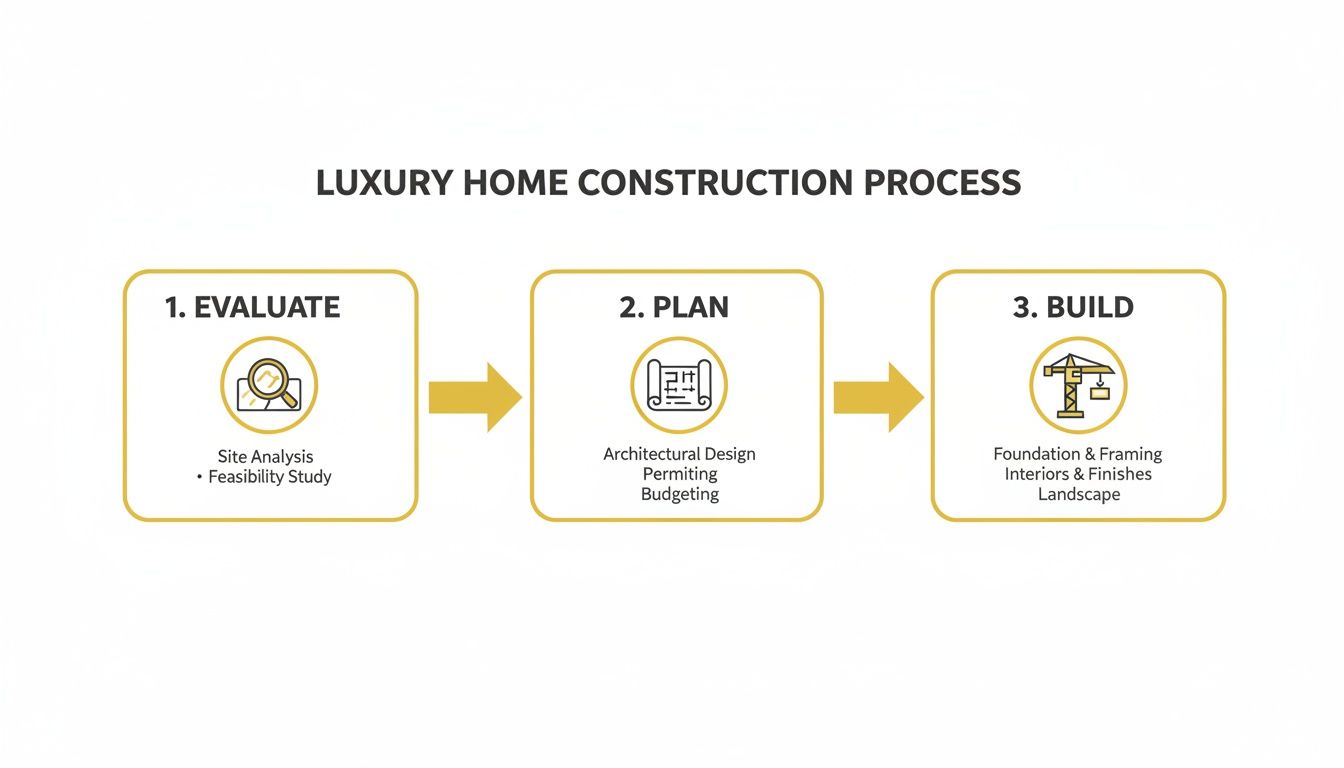
As you can see, getting the "Evaluate" and "Plan" stages right is what makes the "Build" phase go smoothly. The most successful projects I've ever been a part of are the ones where we put in the diligence right at the start.
Defining Your Vision and Budget
Before you can pick the right luxury home builder oklahoma, you have to know exactly what you want to build and what you’re prepared to invest. These two things are completely connected. For instance, a sprawling single-story ranch on five acres near Shawnee has a totally different cost profile than a multi-level modern home in the heart of Deer Creek.
A great first step is to create a "must-have" list and a "nice-to-have" list. This isn’t just busywork; it forces you to prioritize what truly matters and gives a builder immediate insight into your lifestyle.
- Must-Haves: These are your non-negotiables. Think about the number of bedrooms you need, a dedicated home office for remote work, or an essential like a storm shelter built right into the foundation.
- Nice-to-Haves: These are the features you’d love if the budget allows but could part with if needed. This could be anything from a custom wine cellar or a home theater to a specific brand of Sub-Zero appliances.
As one of our clients mentioned on our Google Business Page, "ACET helped us focus on what truly mattered for our family's lifestyle, which made the budgeting process feel manageable and transparent."
Getting this kind of clarity is priceless. The financial side of things is every bit as important as the architectural design. For a more detailed breakdown of what to expect, take a look at our guide on luxury home construction costs. It walks you through all the factors that shape the final price tag, from site prep to interior finishes, so you can start with a realistic financial picture. A clear, well-defined budget is your best tool for a successful build.
How To Find And Vet Oklahoma's Top Luxury Builders
This is it. The single most important decision you'll make during this entire journey is choosing your builder. Think of them as more than just a contractor; they're your partner, the team you’re trusting to bring your vision to life, turning a set of plans into a home you'll love for years to come.
Getting this right from the start is crucial. We'll walk through how to find builders who not only understand your dream but have the skill and experience to execute it perfectly. We'll cover everything from digging through online portfolios and reading between the lines on client reviews to knowing the right questions to ask in that first meeting.
Building Your Shortlist of Builders
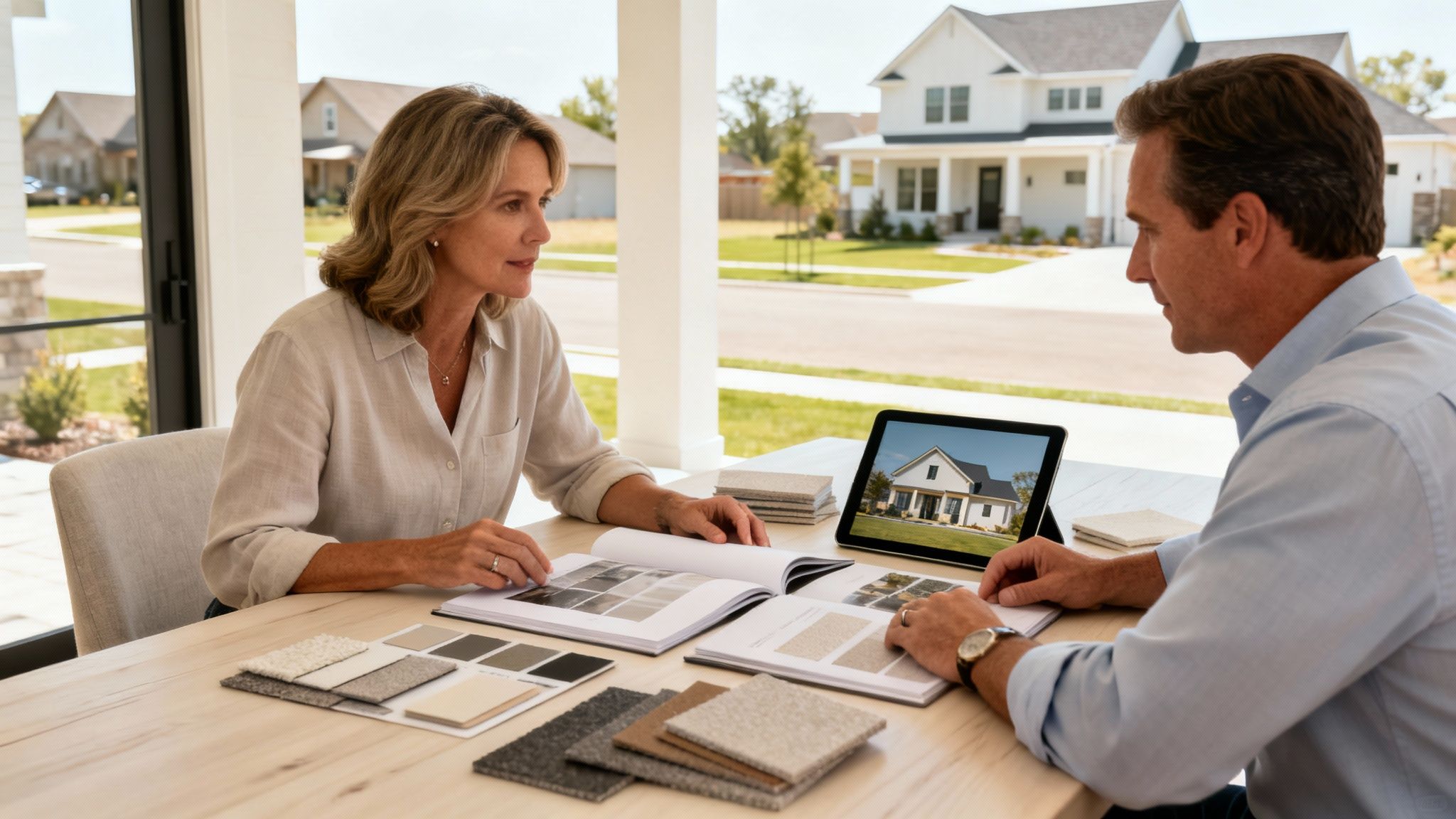
The search for the right builder starts online, but it needs to move into the real world pretty quickly. Begin by looking for builders who specialize in the architectural style you love, whether that’s a modern farmhouse out in Edmond or a sleek contemporary estate in Nichols Hills.
A few pretty pictures on a website won’t cut it. You want to see extensive online portfolios with a wide range of projects. This is where you get a feel for their craftsmanship, their eye for detail, and their ability to handle the kind of complexity your project demands. Ask yourself: does their work line up with my personal style?
Next, it's time to become a detective. Dive into client reviews on Google and other platforms. Don't just skim them—look for patterns. Are clients consistently talking about great communication, budget transparency, and hitting deadlines?
One of our past clients recently shared, "Their transparency from the start was what sold us. We always knew where we stood with the budget and schedule."
That's the kind of feedback that points to a builder you can trust. Once you have a solid list of three to five potential builders, it’s time to do some final due diligence. A quick check with organizations like the Central Oklahoma Home Builders Association can confirm they're a reputable member of the local building community.
The Interview Process: Key Questions To Ask
Sitting down with a potential builder is your chance to see if you genuinely click. It’s as much about personality and communication style as it is about their technical skills. Forget the generic questions; you need to ask things that reveal how they really operate.
Here are a few questions I always recommend homeowners ask:
- Process and Communication: "Can you walk me through your entire design-build process, from our first conversation to the day you hand over the keys? What's your communication rhythm like during the actual build?" A great builder won't just have a process; they'll have it documented and will be eager to keep you in the loop.
- Oklahoma-Specific Experience: "Tell me about your experience building on Oklahoma's expansive clay soil. How do you design your foundations to prevent shifting and cracking down the road?" Their answer will immediately show whether they understand our state's unique geological challenges or not.
- Budgeting and Transparency: "How do you manage project allowances and change orders? Can you show me a real example of how you present budget updates to your clients?" If they get vague here, consider it a major red flag.
Knowing how to properly evaluate builders is a huge advantage. For a more detailed list of questions and things to look out for, our article on how to choose a home builder is a great resource.
Builder Vetting Checklist
To keep your thoughts organized and make a clear-headed decision, it helps to use a checklist. I've put together this quick comparison table to use as you interview each builder. It’s a simple way to spot the pros from the pretenders before you sign anything.
Following a structured process like this takes the emotion out of the decision and helps you partner with a true professional. A builder with a proven track record isn't just a contractor; they are your most important asset in ensuring your investment is a sound one for decades to come.
Mastering The Pre-Build and Planning Phase
The most successful luxury home projects are won long before the first shovel of dirt is turned. Think of the pre-build phase as the critical foundation for your entire project—it's where your vision gets translated into a tangible, buildable plan. This is all about doing your homework, from analyzing the land to securing the right financing, and it truly sets the tone for everything that follows.
Getting this stage right isn't just about avoiding problems; it's about creating opportunities. A thorough plan ensures every dollar is maximized and every decision aligns with your ultimate goal for the home.
Site Evaluation, Oklahoma Style
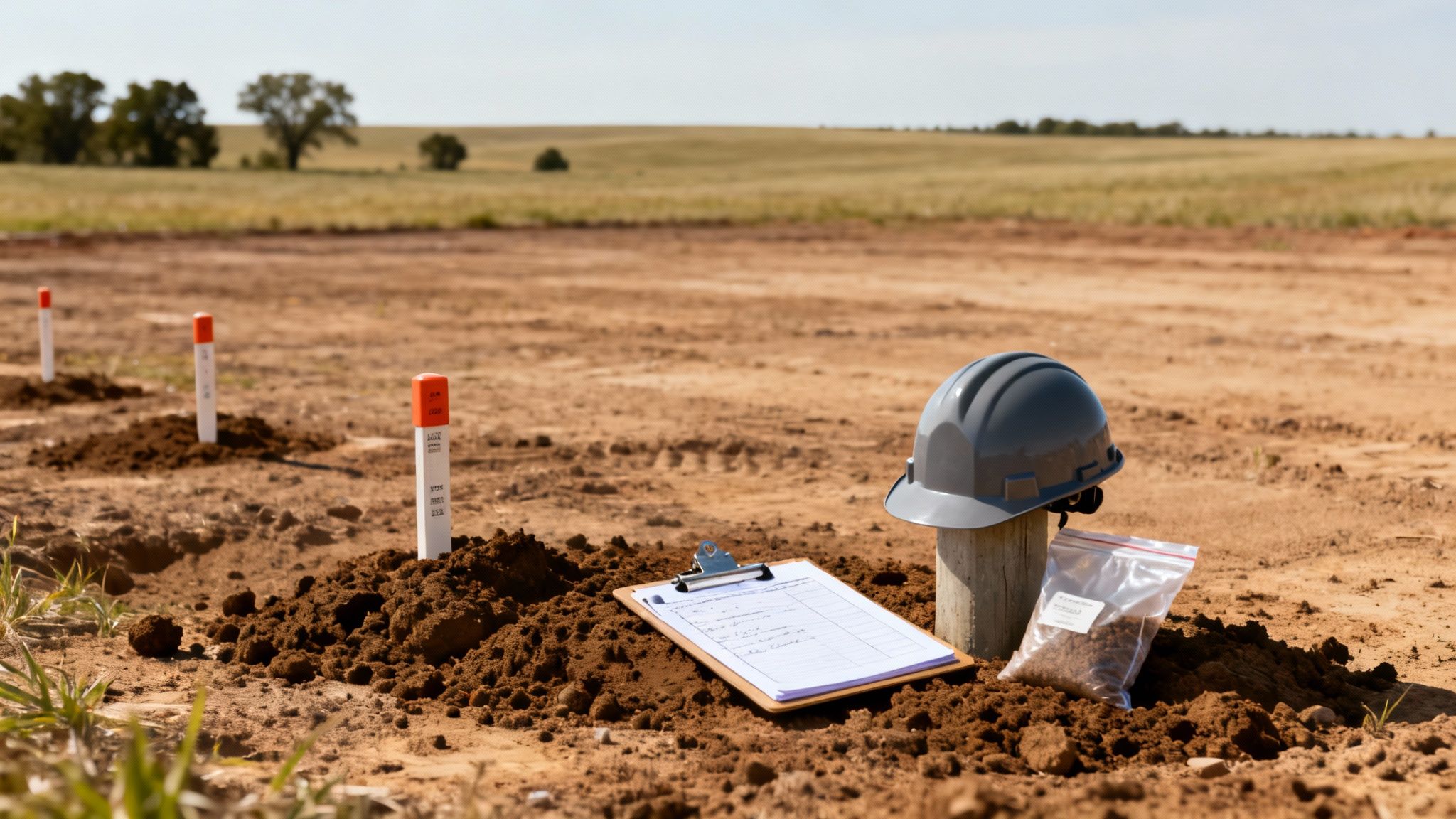
The land you build on is every bit as important as the home itself. Here in Oklahoma, evaluating a potential build site goes far beyond just admiring the view. Our unique geology and weather patterns demand a specific set of considerations that any experienced luxury home builder in Oklahoma will know by heart.
Whether you have a suburban lot in Deer Creek or a sprawling acreage near Elmore City, the evaluation process has to be meticulous. This is a non-negotiable step in our design-build process at ACET Custom Homes because it informs everything from foundation engineering to the final placement of your home.
Key Land Evaluation Factors
- Soil Composition: Oklahoma is famous for its expansive clay soil, which can swell dramatically with moisture and shrink when it dries out. A geotechnical soil test is an absolute must. This analysis tells us exactly what we're working with, allowing the engineer to design a foundation that can handle those shifts and prevent costly cracks down the line.
- Drainage and Topography: You have to know how water moves across your property. Proper drainage planning is essential to protect your foundation and landscaping from day one. We analyze the natural slope of the land to design a site plan that works with nature, not against it, to make sure water is always directed away from your home.
- Utility Access: If you're building on a more rural property, say around Macomb or Guthrie, getting utilities like water, electricity, and septic systems in place can be a major budget item. We investigate the costs and logistics of bringing these services to your build site early in the process to avoid any surprises.
"A beautiful piece of land can hide expensive problems," notes Bono, our project manager. "We've seen it all in our 15+ years. A thorough site evaluation isn't an expense; it's an investment in your home's long-term stability."
Establishing a Realistic and Comprehensive Budget
A luxury home budget is so much more than just the construction cost. One of the most common mistakes we see homeowners make is underestimating the "soft costs" and failing to plan for the unexpected. A truly comprehensive budget is your financial roadmap for the entire project.
To make sure nothing gets overlooked, we break the budget down into several key categories.
- Land Acquisition: The cost of the property itself.
- Site Development: This bucket includes excavation, grading, utility hookups, and driveway installation. These costs can vary wildly between a ready-to-build lot in Moore and raw land out in Chickasha.
- Hard Costs (Construction): This is the biggest piece of the pie, covering all labor and materials for your home’s structure and finishes.
- Soft Costs: Don't forget these essential expenses, including architectural fees, engineering costs, permits, and loan closing costs.
- Contingency Fund: This is crucial. Always set aside 10-15% of your total construction cost for a contingency fund. This buffer covers unforeseen issues or gives you the freedom to take advantage of an upgrade opportunity without derailing your budget.
Demystifying Construction Financing
Unless you're paying with cash, securing a construction loan is a pivotal step. Unlike a standard mortgage, a construction loan is a short-term loan that covers the cost of building your home. The bank doesn't just hand over a lump sum; instead, the funds are paid out in draws at key project milestones, like when the foundation is poured or the framing is complete.
Here’s a quick breakdown of the two main loan types you'll encounter:
Working with a lender who has deep experience in new construction here in Oklahoma is vital. They understand our local market and the draw schedules builders use. A good builder can often recommend lenders they have a successful track record with, which can make the whole process much smoother. The design-build model is a huge advantage here, as having firm costs from the start gives lenders the confidence they need to approve the project.
Getting The Paperwork Right: Contracts And Timelines
When you’re building a custom home, the contract is arguably the single most important document you'll sign. Think of it less as a legal formality and more as the foundational blueprint for the entire project. It’s what turns your vision into your builder's official set of instructions, making sure everyone is on the same page from day one.
A good contract doesn’t just protect you—it prevents the kind of misunderstandings that can lead to blown budgets and unnecessary stress down the road.
The agreement should feel transparent and be written in plain English, not bogged down in confusing legal jargon. You need to be able to read it and feel confident that every critical detail, from the brand of your kitchen faucets to the process for making last-minute changes, is clearly spelled out.
What to Look For in Your Builder's Contract
Vagueness is your enemy here. If a contract feels light on details, that’s a massive red flag. Your agreement with a luxury home builder in Oklahoma needs to be specific and thorough, leaving absolutely no room for interpretation. Before you even think about signing, grab a cup of coffee and make sure these non-negotiables are in there.
- A Detailed Scope of Work: This is the "what." It should be an exhaustive list of every single task the builder is responsible for, from clearing the lot and pouring the foundation to the final coat of paint and landscaping touches.
- Specifics on Materials and Finishes: The contract can’t just say "hardwood floors." It needs to say, "7-inch wide European Oak, XYZ brand, in color 'Natural.'" Every material, appliance, and finish should be listed with brand names, model numbers, and colors.
- The Total Cost and Payment Schedule: It needs a firm, total price for the project. Just as important is the payment schedule, which should be broken down into "draws" that are tied directly to completed construction milestones. This way, you’re only paying for work that’s already done.
- The Change Order Process: Let's be realistic—you'll probably change your mind about something. A solid contract outlines exactly how that works: how you request a change, how it gets priced out, how you approve it in writing, and how it affects the schedule.
- A Realistic Project Timeline: You should see an estimated start date and a target completion date, along with key checkpoints along the way. A pro builder will be honest about potential delays from weather or supply chain snags but will still provide a clear, realistic schedule.
"A clear plan and constant communication are what turn a complex build into a smooth journey," says ACET's project manager, Bono. "The contract is our shared roadmap, and we review it with clients to ensure every detail is understood before we ever break ground."
Understanding the Major Milestones
Watching your home come to life is exciting, but it helps to know what to expect and when. Construction isn't random; it follows a logical sequence of major milestones. Knowing these stages helps you track progress and understand when payment draws will be due.
Here’s a simplified look at how a typical project unfolds:
Don't Forget About Warranties and Aftercare
A great builder’s job isn't over just because they handed you the keys. Their commitment should extend well beyond move-in day, backed by a comprehensive warranty that covers their work and your home’s critical systems.
At a minimum, you should expect to see:
- A one-year workmanship warranty for things like drywall, paint, trim, and fixtures.
- A two-year systems warranty to cover the big-ticket items like electrical, plumbing, and HVAC.
- A ten-year structural warranty that protects the core integrity of your home—the foundation and framing.
This kind of post-construction support is the ultimate sign of a builder who stands behind their quality. It gives you peace of mind that your massive investment is protected for years to come. Make sure you get all the warranty details in writing and understand the claim process before you sign the final contract.
Designing For The Oklahoma Lifestyle
Building a luxury home in Oklahoma isn't just about impressive square footage or high-end finishes. It's about creating a home that belongs here—one that can handle our sweltering summers, wild winters, and the ever-present threat of severe weather. It needs to be as tough as it is beautiful.
This means thinking past the surface-level aesthetics. A truly well-designed custom home is built from the ground up with our climate in mind, focusing on the core elements that ensure comfort, efficiency, and lasting value for your family.
Efficiency and Sustainability in Oklahoma
Let's be honest: energy bills in Oklahoma can be brutal. That’s why energy efficiency isn’t just a buzzword for us; it’s a cornerstone of smart luxury home design. Keeping your home comfortable year-round without breaking the bank requires a strategic, whole-house approach.
Here are a few non-negotiables we build into our homes:
- High-Performance Windows: We almost exclusively use low-emissivity (Low-E) coated, argon-gas-filled windows. Think of them as sunglasses for your house. They reflect the sun's heat in the summer and keep your home's warmth inside during the winter. This simple choice can cut your energy consumption by up to 25%.
- Advanced Insulation: A combination of spray foam in the walls and blown-in insulation in the attic is our standard. This creates a nearly airtight thermal envelope, which means fewer drafts, a more consistent indoor temperature, and less work for your HVAC system.
- Zoned HVAC Systems: Trying to cool a sprawling luxury home with a single thermostat is incredibly wasteful. We design zoned systems that let you control temperatures in different parts of the house independently. You get comfort precisely where you need it without wasting energy on empty rooms.
Popular Design Elements for Modern Oklahomans
Beyond pure performance, we know Oklahomans love to blend their indoor and outdoor lives. This has shaped some of the most sought-after features in the luxury market today.
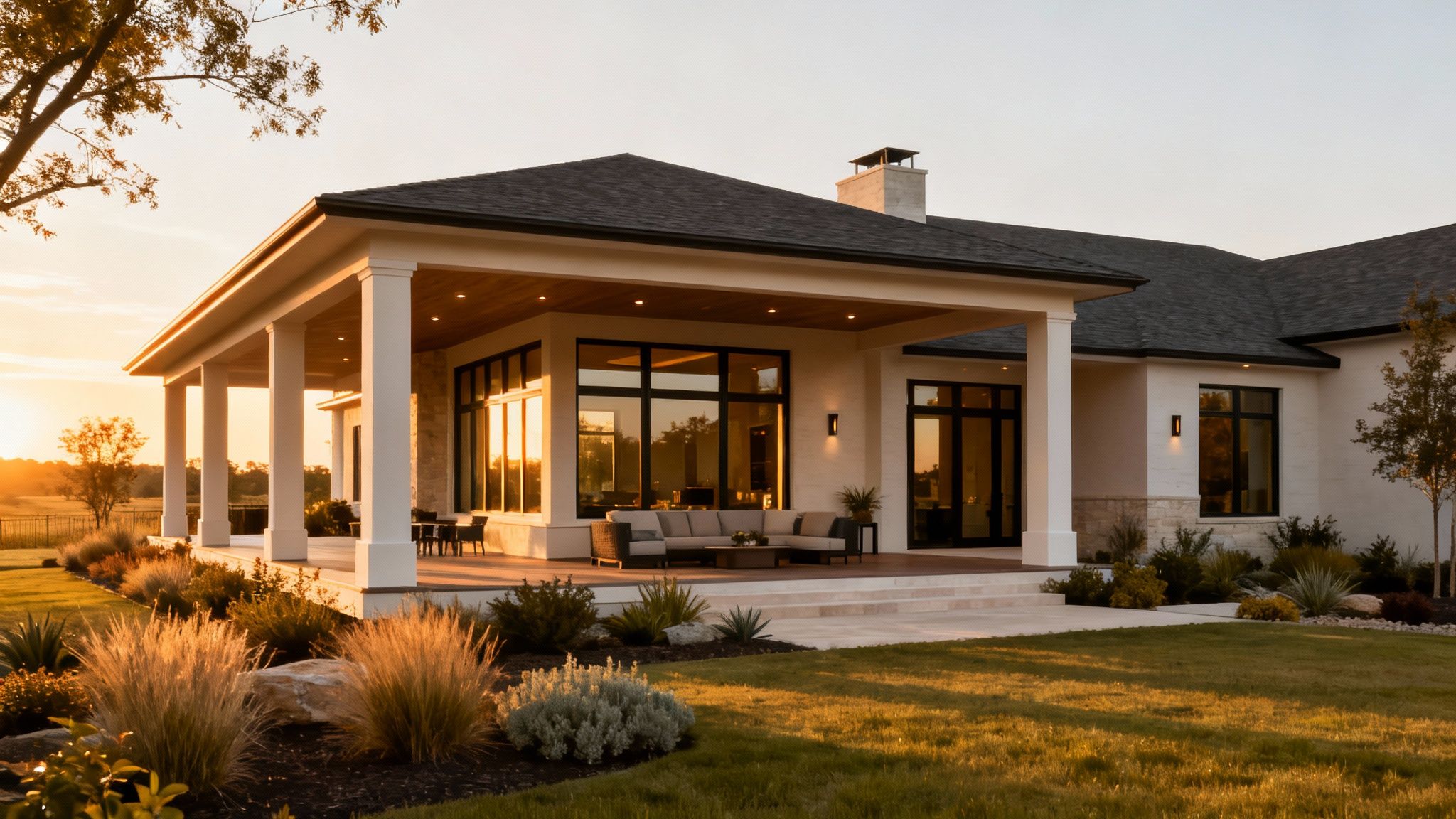
Expansive outdoor living areas are no longer a "nice-to-have"—they're a must. We’re talking about covered patios with full-blown outdoor kitchens, cozy fireplaces, and enough seating to host the whole family. These spaces effectively extend your home's living area, making them perfect for entertaining from early spring well into the fall. Many of the design ideas we discuss for luxury living rooms that redefine custom home design can be brilliantly adapted to create a seamless flow to the outdoors.
A recent client in Edmond told us, "Our outdoor patio is our favorite room in the house. ACET designed it to feel like a natural extension of our great room, and we use it almost every day."
Of course, this is Oklahoma, so integrated storm shelters are a top priority for most families. We’ve become experts at seamlessly incorporating reinforced safe rooms into closets, pantries, or even garage floors, so you get total peace of mind without sacrificing your home’s aesthetic.
Flexible floor plans with multi-purpose rooms—like a dedicated home office that can easily convert to a guest suite—are also incredibly popular. These thoughtful, localized designs are what buyers are looking for, fueling strong growth in Oklahoma’s luxury market. We're seeing home prices in communities like Edmond appreciate 6-8% annually as more people seek out these intelligently crafted homes.
FAQs: Your Luxury Home Building Questions Answered
Building a custom home from the ground up is a massive undertaking, and it’s only natural for questions to bubble up. This is a huge investment of your time, energy, and money, so getting straight answers is non-negotiable. We hear a lot of the same questions from clients all over Oklahoma—from OKC proper to sprawling properties out in Shawnee—so we've gathered them here to give you the clarity you need.
How Much Does It Cost Per Square Foot To Build A Luxury Home In Oklahoma?
Here in Oklahoma, you can generally expect the cost for a luxury custom home to fall somewhere between $200 and $400+ per square foot. That's a pretty wide range, and for good reason: the final number is a direct reflection of your choices. The final cost pivots on a few key things: the architectural complexity, the quality of materials you choose, and just how high-end you want to go with the interior finishes.
For example, a home built on a sloped, wooded lot that needs significant site prep will have higher upfront costs than a flat, cleared lot. Likewise, if your dream kitchen includes professional-grade appliances, custom-milled cabinetry, and a sophisticated smart home system, you'll be leaning toward the higher end of that spectrum. The only way to nail down a truly accurate estimate is to sit down with your builder for a detailed consultation. That’s where they dig into your vision and can put together a transparent budget based on today's real-world costs.
What Is The Typical Timeline For Building A Custom Luxury Home?
From the first conversation about design to the day we hand over the keys, a good rule of thumb is to plan for 12 to 18 months. This timeframe isn't just a random number; it's what allows for the meticulous, unhurried craftsmanship that a true luxury home deserves.
The entire process is broken down into major phases, each with its own timeline:
- Design & Permitting: Finalizing blueprints and getting all the necessary approvals from the city or county. This usually takes 2-4 months.
- Site Prep & Foundation: This is where the real work begins, getting the ground ready and pouring a solid foundation. Plan on 1-2 months.
- Framing & Exterior: Your home really starts to take shape. This is about a 2-3 month phase.
- Interior Finishing: This is often the longest stretch, taking 4-6 months as every last detail, from drywall and paint to light fixtures and faucets, is perfectly installed.
A little pro tip? Always build a bit of a buffer into your personal timeline. Unpredictable Oklahoma weather or the occasional supply chain hiccup can cause small delays. Having that flexibility from the start keeps the stress way down.
What Is A Design-Build Firm And Why Should I Choose One?
A design-build firm is essentially your all-in-one partner, handling both the architectural design and the physical construction under a single roof and a single contract. For homeowners, this integrated approach is a total game-changer, creating one seamless process with a single point of contact.
Instead of you playing mediator between a separate architect and a separate builder, the design-build team works in lockstep from day one. This synergy brings some major advantages:
- Crystal-Clear Communication: When everyone's on the same team, information flows easily, dramatically cutting down on misunderstandings.
- Smarter Budgeting: The construction experts provide real-time cost feedback during the design phase, which keeps the plans from getting out of sync with your budget.
- Faster Timelines: The handoff from design to construction is seamless, which eliminates dead time and makes the whole project more efficient.
At the end of the day, the design-build model just simplifies a very complex process, making the entire experience smoother and far more enjoyable for you.
As one of our past clients put it, "Having one team handle everything from the first sketch to the final nail was incredible. It made the entire process feel so much more connected and manageable."
Can I Build A Custom Home On My Own Lot In Oklahoma?
Absolutely. Building on your own land is incredibly popular here in Oklahoma and it’s something we specialize in. This "build-on-your-lot" path gives you the ultimate freedom to pick your perfect spot, whether that’s an infill lot in a Moore neighborhood or a beautiful piece of acreage out near Chickasha.
The journey always begins with a thorough site evaluation. Your builder will walk the property to assess everything—soil conditions, topography, utility access, and more. This step is absolutely critical for figuring out site-prep costs and engineering the right foundation. From there, they'll guide you through the specific zoning rules and permitting for your city or county, ensuring your new home is positioned perfectly to capture the best views and work with the natural flow of your land.
Ready to design your custom home? Schedule a free consultation with ACET Custom Homes today.
Consultation Today!