.png)
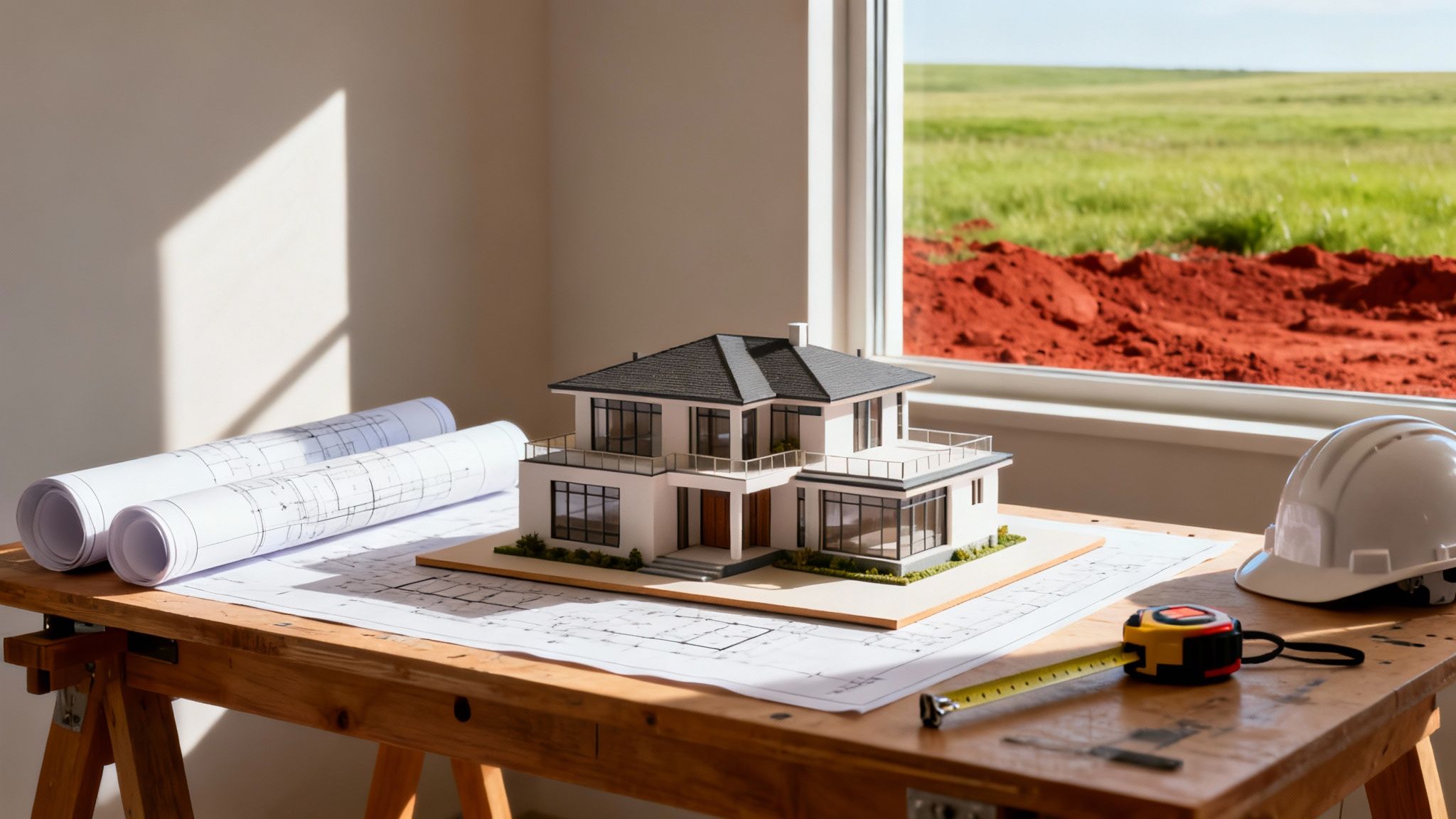
Have you ever stood on a piece of land and just known it was the one? That feeling—the mix of excitement and possibility—is the true foundation of your dream home. But turning that raw Oklahoma dirt into a sanctuary that reflects your life is a journey, and choosing the right partner, a top-tier homes custom home builder, is the most critical decision you'll make.
Finding the Right Land for Your Oklahoma Dream Home
The journey to your dream home doesn't start with a floor plan—it begins with the very earth it will stand on. From the rolling hills near Guthrie to the growing suburbs of Edmond and Deer Creek, every lot has its own personality and challenges. A seasoned builder doesn't just see a plot of land; they see the potential and the pitfalls.
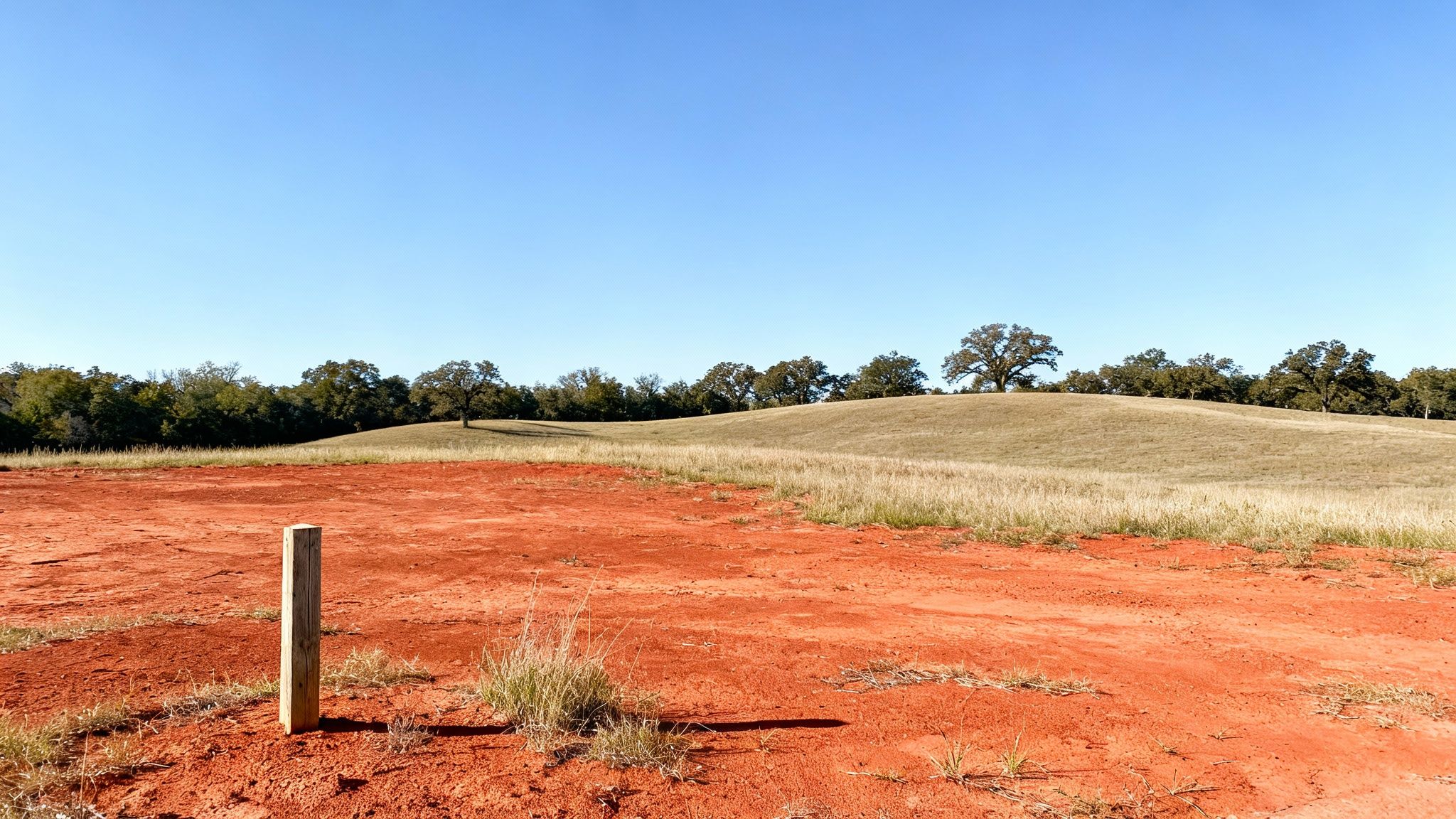
With over 15 years of building across Oklahoma, we at ACET Custom Homes understand our state's unique landscape. Our famous red clay soil, dramatic weather, and varied terrain demand a builder who knows how to work with the environment, not fight against it. A beautiful view is wonderful, but solid, buildable ground is everything.
Evaluating a Potential Lot Before You Buy
Falling in love with a property is easy; ensuring it’s buildable is the hard part. A thorough evaluation can save you tens of thousands in unexpected site prep costs. Before you make an offer, investigate these critical factors.
An initial walk-through reveals a lot. Pay attention to the slope. A steep grade might offer stunning sunset views but will drive up foundation and excavation costs. Conversely, a perfectly flat lot in a low-lying area—common around Moore and Norman—could become a drainage nightmare during heavy spring rains.
Builder Insight: We once walked a seemingly perfect lot for a client near Shawnee. We discovered it was in a 100-year floodplain, a fact that wasn't immediately obvious. That single piece of information allowed the client to back out of a purchase that would have required incredibly expensive foundation work and sky-high flood insurance.
Your Actionable Land-Buying Checklist
Use this checklist to spot potential red flags on any property, whether it's a multi-acre plot in Macomb or a suburban lot in OKC. A quality homes custom home builder will be your partner in this due diligence.
- Utility Access: Are water, sewer, electric, and gas lines at the property line? In rural spots like Elmore City or Chickasha, you’ll likely need to budget for a well and septic system, which can add $15,000 to $30,000 or more.
- Zoning and Covenants: Know the rules. Dig into local zoning laws and any Homeowner Association (HOA) covenants. These can dictate everything from minimum square footage to the type of fence you can install.
- Soil Quality: Oklahoma's expansive clay soil is notorious. A geotechnical survey (soil test) is non-negotiable. It tells us what kind of foundation is needed—be it a slab-on-grade or a post-tension slab—to prevent your home from shifting and cracking.
- Drainage and Water Table: Observe how water moves on the property. Are there signs of standing water? Proper site grading and drainage are vital to protecting your foundation's integrity.
Picking the right land is about seeing its potential while understanding its limitations. Bringing a builder into the conversation early ensures your vision is grounded in reality, setting your project up for success.
Aligning Your Vision and Budget with a Design-Build Firm
You’ve found the perfect piece of Oklahoma land. Now, the real magic begins: turning your ideas into a home. But how do you ensure the dream home in your head doesn't become a financial nightmare? The answer is working with an experienced homes custom home builder in a design-build partnership to keep your vision and budget perfectly aligned.
The design-build model integrates designers, architects, and the construction team from the start. This approach is incredibly effective for translating your vision for a home in Norman or Moore into a plan that’s both beautiful and buildable within your budget. Learn more about what is a design-build firm in our detailed guide. It’s all about preventing the common scenario where a stunning architectural drawing ends up costing far more than expected.

From Dream Features to a Concrete Budget
Every choice, from architectural style to square footage, impacts the cost. A sprawling modern farmhouse design has a different price tag than a compact traditional home. At ACET Custom Homes, we provide total transparency, showing you how each decision affects the bottom line.
A powerful first step is creating a 'needs vs. wants' list. This exercise clarifies your priorities.
Needs (Non-Negotiables): Core elements your family can’t live without.
- Example: A first-floor primary suite.
- Example: A dedicated home office.
- Example: At least four bedrooms.
Wants (Desirable Features): Upgrades that are incredible but not deal-breakers.
- Example: A professional-grade Wolf range.
- Example: A covered outdoor living area with a built-in grill.
- Example: Floor-to-ceiling custom bookshelves.
By separating these categories, you can make smart, strategic budget decisions, ensuring you invest in what truly matters without compromising your vision.
Understanding Your Construction Contract
True financial clarity comes from the fine print. In Oklahoma, you'll typically encounter two contract types: fixed-price and cost-plus. Knowing the difference is critical for managing expectations.
To help you understand, let's break down the two most common structures. Each has implications for budget predictability, flexibility, and your involvement in financial decisions.
Comparing Custom Home Contract Types
Choosing the right contract is a major decision. A good builder will walk you through the pros and cons for your specific project.
Navigating material allowances is another key piece. These are budget amounts for items like flooring and countertops. A trustworthy builder provides realistic allowances based on quality, mid-to-high-grade materials, preventing unexpected upgrade costs.
How to Personalize Your Floor Plan
This is where your house becomes your home. A floor plan isn't just a technical drawing; it’s the blueprint for your family's life. Getting it right means creating a home that’s intuitive, functional, and deeply personal.
Starting with a builder’s library of proven floor plans is a huge advantage. These layouts have already passed structural reviews, making adjustments faster and more affordable than designing from scratch. A great homes custom home builder provides a solid foundation of layouts we can shape to fit your exact vision.
Analyzing a Layout for Flow and Function
The best floor plans just feel right. They have an effortless flow. Think about how you move through your current home. Are there bottlenecks? When you look at a new layout, imagine your daily routines playing out within its walls.
Here are a few things to consider:
- The Kitchen Work Triangle: How easily can you move between the sink, refrigerator, and stove? A smart layout makes cooking a pleasure.
- Public vs. Private Zones: The plan should separate social areas (kitchen, living room) from private spaces (bedrooms, bathrooms).
- Sightlines: When you stand at the front door, what’s your view? Open sightlines make a home feel expansive, while carefully placed walls create cozier spaces.
Tailoring the Plan to Your Oklahoma Lifestyle
A great floor plan reflects your family and your location. How a family customizes their home in an Edmond suburb is different from someone building on acreage in Elmore City.
For instance, we worked with a couple in OKC who both work from home. They modified a plan to include two separate home offices and a large, walk-in pantry. Compare that to a family building in Macomb. Their focus was a sprawling mudroom for outdoor gear and massive windows to capture the best views and natural light.
Builder Insight: A family in Deer Creek wanted to plan for multi-generational living. We modified an existing plan to create a first-floor suite with its own private entrance and kitchenette. That one adjustment transformed the home's long-term value, giving them flexibility for an aging parent or an adult child.
Key Decision Points in Customization
Personalizing a floor plan comes down to a series of impactful decisions:
- Room Placement: Where do you want the morning sun? We can place the primary bedroom on the east side to fill with natural light.
- Structural vs. Cosmetic Changes: Moving a non-load-bearing wall is simple. Altering the home's footprint requires more engineering and budget.
- Future-Proofing: Think about your life in five or ten years. Do you need a bonus room that could become a playroom, a home gym, or a teen hangout?
Exploring layouts is one of the most exciting parts of the design process. To get started, you can even create your dream home with a free AI floor plan generator to play with concepts. The goal is to craft a space that supports your life today and enhances it for years to come.
FAQs About Working With a Homes Custom Home Builder
How long does it take to build a custom home in Oklahoma?
Building a custom home in Oklahoma typically takes 10 to 16 months. This timeline depends on the complexity of the plans, home size, site preparation needs, and, of course, Oklahoma weather. A reliable homes custom home builder will provide a detailed project schedule with major milestones to keep you informed every step of the way.
What is the average cost per square foot for a custom home in OKC?
This is the most common question, and the honest answer is: it varies significantly. For a luxury custom home in the OKC metro, the price per square foot is shaped by every decision you make, from the foundation type and finishes to the specific challenges of your building site. An upfront, transparent budget meeting with your builder is the only way to get a realistic price for your unique home.
What is the difference between a custom and production builder?
The difference boils down to personalization and flexibility. Production builders build in specific neighborhoods using a limited portfolio of floor plans with minor cosmetic choices. A custom home builder, on the other hand, offers a completely different experience: you can build on your own lot, design a home from scratch or heavily modify an existing plan, and select every single detail. This path leads to superior craftsmanship and a home that is a true reflection of you.
What kind of warranty should my custom home builder offer?
A reputable custom builder in Oklahoma will offer a comprehensive warranty. This should include a one-year warranty for workmanship and materials, a two-year warranty for major systems (HVAC, plumbing, electrical), and a ten-year structural warranty. Clear warranty terms are a vital part of a healthy builder-client relationship and show that a builder stands confidently behind their work.
Ready to design your custom home? Schedule a free consultation with ACET Custom Homes today.
Consultation Today!