.png)
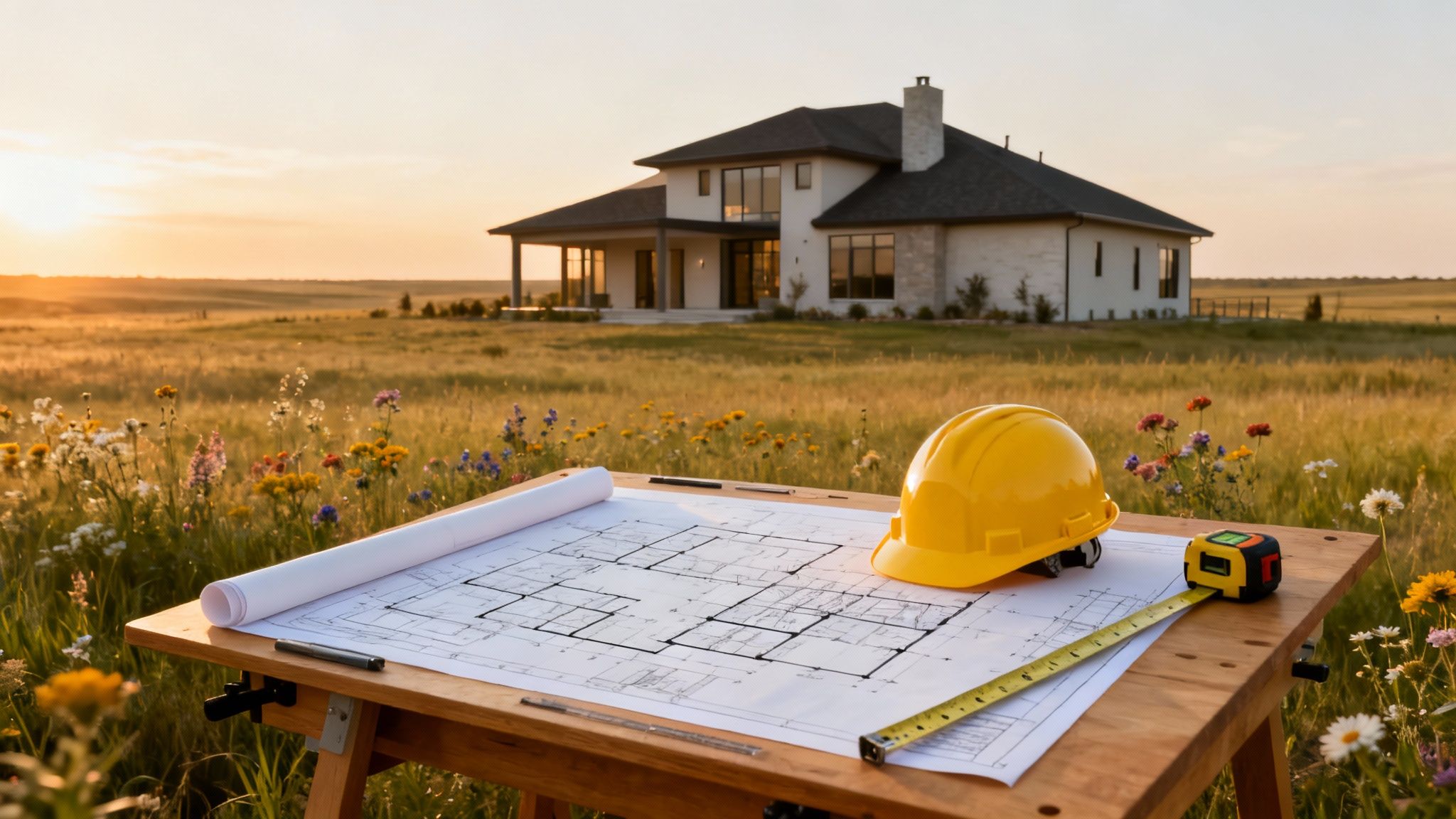
Building the custom home you've always imagined is one of life's most exciting projects. But let's be honest—finding the right home building contractor in Oklahoma to bring that vision to life can feel overwhelming. You have this incredible dream, but the path from an empty lot in Edmond to a finished home in Shawnee is paved with critical decisions. Are you worried about making the wrong choice and turning your dream into a nightmare? This guide is your roadmap to avoiding those pitfalls.
Your Oklahoma Custom Home Building Journey Begins Here
We're going to pull back the curtain on the entire process, giving you the clarity and confidence to choose a true partner for your build. We'll explore how a seasoned Oklahoma builder works with our state's unique character—from its infamous red clay soil to its unpredictable weather—to make sure your home isn't just beautiful, but built to last for generations.
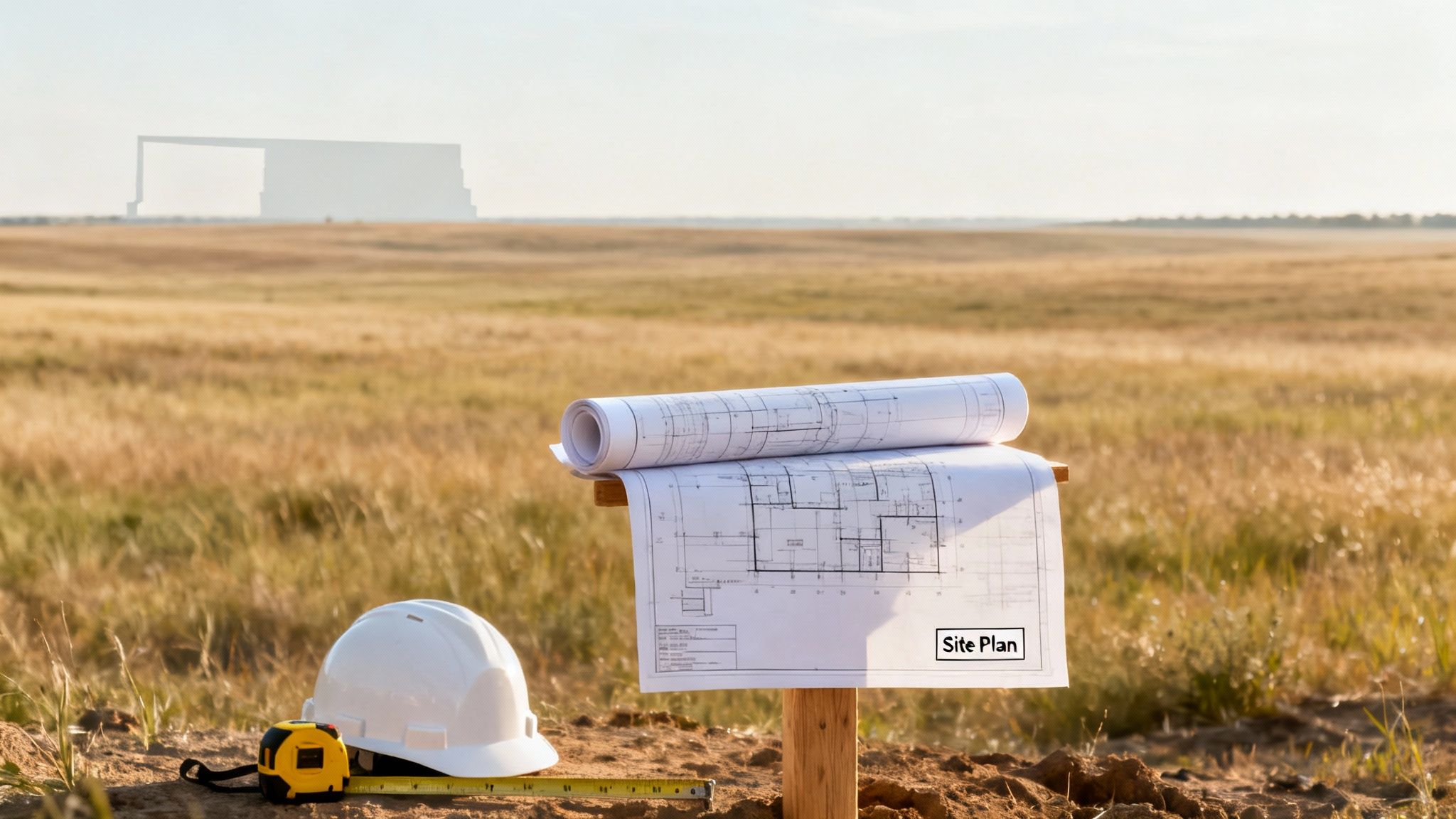
With over 15 years of hands-on experience right here in Oklahoma, we at ACET Custom Homes know this journey inside and out. As our project manager, Bono, always says, "A successful build is a true partnership. It's built on trust and clear communication from day one." This guide is designed to give you the tools you need to build that partnership and turn your dream into a reality.
A Growing Market for Custom Homes
Oklahoma's economy is booming, and that's creating a huge demand for new homes, which makes finding the right contractor more important than ever. While other parts of the country have seen construction slow down, the Oklahoma City metro area has been incredibly resilient.
New construction volume is up a remarkable 7% year-over-year, and it's expected to jump another 11%. Why? Because our population is growing by about 17,000 new residents every year, drawn in by strong job markets in aerospace, energy, and healthcare. Professionals moving here for these opportunities are often looking for the quality and personalization that only a custom home can offer.
Navigating the Local Building Landscape
Building a home in Oklahoma isn't like building one anywhere else. Our state comes with a unique set of challenges that only an experienced local builder truly understands. These aren't minor details; they're fundamental to your home's safety and durability.
A qualified home building contractor in Oklahoma will be an expert in managing:
- Soil and Foundation: Oklahoma is known for its expansive clay soil, especially in areas like Moore and Norman. The wrong foundation on this type of ground is a recipe for disaster. A local pro knows how to engineer the correct foundation, usually a post-tension slab, to prevent cracks and costly structural problems down the road.
- Weather Resilience: From tornadoes to severe thunderstorms, Oklahoma weather demands a tougher approach to construction. This means things like reinforced framing, impact-resistant windows, and specific wind-rated roofing to protect your investment and, most importantly, your family.
- Local Permitting: The permitting process in Deer Creek is different from Guthrie, and both are different from Oklahoma City. A builder with deep local roots knows the ins and outs of each municipality's building codes and administrative quirks, which keeps your project moving smoothly and avoids frustrating delays.
Getting a handle on these local factors is your first step. For a closer look, check out our detailed article on building a house in Oklahoma.
The Design-Build Advantage for Oklahoma Homeowners
Have you ever tried to manage a project where two different teams don't communicate? That’s often what happens when you hire an architect and then separately hire a builder. This old-school method creates a painful disconnect where your vision gets lost in translation, your budget gets blown, and you're stuck in the middle feeling helpless.
This is where the design-build model changes everything. Imagine having a master chef who not only creates the recipe but also hand-picks every ingredient and cooks the meal from start to finish. Everything is designed to work together perfectly, and the result is exactly what you envisioned.
What is a Design-Build Firm?
Simply put, a design-build firm puts architectural design and construction services under a single roof. Instead of you playing mediator between two separate companies, you get one unified team working together from the very first sketch.
This integrated approach means you have one point of contact and one team accountable for the entire project. Your designer and builder aren't adversaries; they’re collaborators, solving problems and refining your vision as a cohesive unit.
“In a design-build model, everyone is on the same team, with the same goal: delivering the client’s vision on time and on budget. It removes the finger-pointing that can plague traditional builds and fosters true creative problem-solving.”
— Bono, Project Manager at ACET Custom Homes
This unified process is a game-changer here in Oklahoma. Our state has some unique building challenges that demand a seamless connection between the plans and the actual construction. Take the expansive clay soil in places like Moore or Norman. Designing the right foundation for that soil requires a builder's practical, on-the-ground knowledge—not just an idea that looks good in a blueprint.
Key Benefits for Oklahoma Homeowners
Choosing a design-build home building contractor in Oklahoma brings real-world advantages that will save you time, money, and a whole lot of stress.
- Real Cost Control: The builder is in the room during the design phase, which keeps your budget front and center. They can give immediate cost feedback on materials and design choices, steering you away from expensive surprises down the road.
- Faster Timelines: Because design and construction phases can overlap, the whole project moves faster. There are no communication gaps or delays while you wait for one team to get an answer from the other.
- A Better-Built Home: When designers and builders work hand-in-hand, the final product is just better. They can innovate on the fly, making sure the home is both beautiful and structurally sound.
- Simple Communication: Got a question? An idea? You have one phone number to call. This eliminates the headache of juggling contacts and ensures everyone is on the same page.
If you want to dig deeper into this, our guide explains in full detail what a design-build firm is and why it’s the smarter choice for custom homes.
At ACET Custom Homes, we live and breathe the design-build process. We even use advanced 3D visualizations so you can digitally walk through your home before we ever break ground. It’s our way of guaranteeing the home you’ve been dreaming of is exactly the home you get.
How to Hire the Right Home Building Contractor
Choosing the right home building contractor is the single most important decision you'll make. You're not just hiring someone to put up walls; you're entrusting a massive investment and your family’s dream to a partner. The fear of choosing the wrong one is real, but a proven strategy can give you complete confidence.
This isn't something to rush. Let's walk through a proven, five-step playbook that will take you from the "idea" phase all the way to confidently signing on the dotted line.
Step 1: Define Your Vision and Budget
Before you can find the right builder, you must know exactly what you're asking them to build. Get specific. Start a Pinterest board, a scrapbook, or a detailed document. What’s the architectural style you love? How many bedrooms and bathrooms are non-negotiable? What are the "must-haves" versus the "nice-to-haves"?
At the same time, establish a realistic budget. And I mean realistic. This number must cover more than just construction. You have to account for the land, site preparation, permits, and always, always a contingency fund. Plan on setting aside an extra 10-15% for those inevitable surprises. Nailing down your vision and budget first makes your initial conversations with builders a hundred times more productive.
Step 2: Research Local Oklahoma Builders
With a clear plan in hand, it's time to start the search. You want a home building contractor in Oklahoma with a solid local track record, so keep your research focused right here at home.
- Look at Their Work: The easiest first step is to dive into their online portfolios. Check out their websites and social media to see the homes they've built across OKC, Edmond, and even out in smaller towns like Macomb or Elmore City. Does their style and the level of quality you see match what you’re imagining?
- Check Their Credentials: Are they part of professional groups like the National Association of Home Builders (NAHB) or local chapters? Membership isn’t everything, but it often shows a builder is serious about their craft and staying up-to-date on industry standards.
- Listen to the Locals: Nothing beats good old-fashioned word-of-mouth. Dig into online reviews, but also ask around. Talk to friends, family, or your real estate agent to see who they recommend.
Step 3: Conduct Insightful Interviews
Once you’ve done your homework, narrow your list down to your top three contenders. Now, it’s time to meet them. Think of this less as an interview and more as a conversation to see if you click. You're going to be working closely with this person for a long time, so you need to find someone you genuinely trust and can communicate with.
Ask them to walk you through their process from start to finish. How do they keep clients in the loop? What does their design-build system look like? A builder who is transparent and proud of their process will have no problem explaining every detail.
This is the streamlined approach a true design-build firm, like us at ACET Custom Homes, follows. It’s all about keeping things integrated.
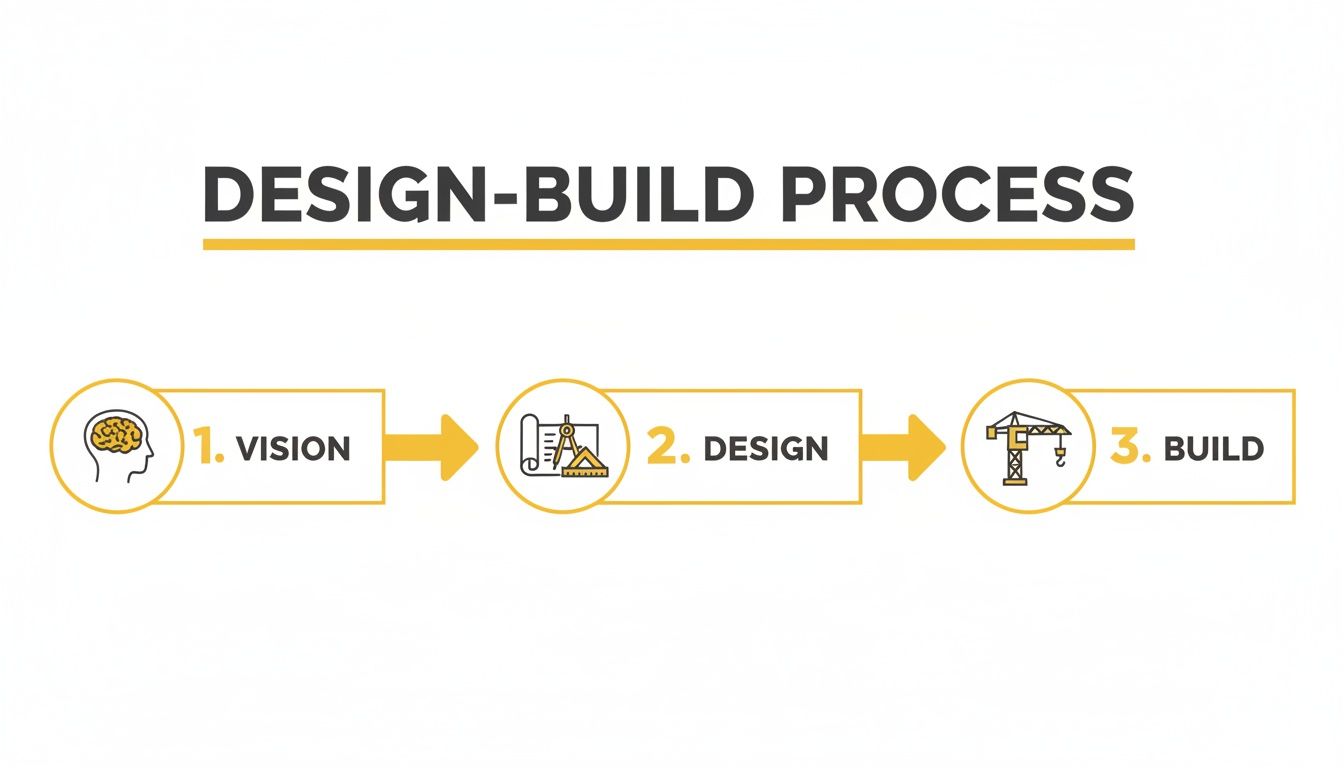
The beauty of this model is that it puts the vision, design, and construction all under one roof. That single point of responsibility is what helps eliminate the blame games and delays that can plague a traditional build.
Step 4: Check References and Tour Past Projects
A good builder will have a portfolio of happy clients who are eager to sing their praises. Ask for at least three recent references—and actually call them. Don't be shy! Ask the tough questions about their experience.
"They communicated with us every step of the way and were completely transparent about the budget. ACET made a complex process feel manageable and even enjoyable." - Past ACET Custom Homes Client Review
Hearing that kind of feedback directly from a past client is invaluable. It tells you about the two things that matter most: communication and transparency. If you can, ask to see one of their finished homes or even walk a job site that's in progress. There’s no substitute for seeing their craftsmanship with your own eyes. For a deeper dive into what to expect, check out our complete guide to the custom home building process.
Step 5: Review Contracts and Warranties
You've found your builder. The final step before you pop the champagne is to review the contract. I strongly recommend having an attorney who specializes in construction law look it over. A solid, professional contract should clearly spell out everything:
- A detailed scope of work: Every single thing that is included and, just as importantly, what is not.
- The total cost and payment schedule: You should know exactly when payments are due based on specific milestones.
- A projected timeline: A realistic schedule for when your home will be completed.
- Change order procedures: A clear process for how any changes or additions will be handled and priced.
- Warranty information: What’s covered and for how long after you get the keys.
A builder who provides a thorough, easy-to-understand contract isn't just being professional—they're showing you they're trustworthy and have nothing to hide.
Critical Questions to Ask Every Potential Builder
Walking into a builder meeting unprepared can lead to expensive mistakes and a world of stress. The right questions cut through the sales pitch and reveal who the true professionals are.
Think of this as your game plan. I've broken down the essential questions you need to ask any potential home building contractor in Oklahoma. We'll go category by category to make sure you get a full picture of who you’re considering hiring, so you can find a partner you genuinely trust.
Experience and Licensing Questions
First, establish their credibility. You need a builder who has a deep, proven track record right here in Oklahoma's unique building environment.
- How long have you been building custom homes in Oklahoma? You’re looking for someone who knows our clay soil and unpredictable weather patterns inside and out. A builder like ACET Custom Homes, with 15+ years of local experience, has seen it all and knows how to plan for it. That kind of insight is priceless.
- Can you provide your license and proof of insurance? This is a deal-breaker. Reputable builders must follow all local city and county rules and absolutely must carry general liability and workers' compensation insurance. Ask to see the actual certificates.
- How many custom homes do you build per year? This tells you about their business model. A firm that completes a select number of homes is likely focused on high-touch service and superior quality. A high-volume builder might have a more rigid, assembly-line process. Neither is inherently bad, but you need to know which style fits you best.
Process and Communication Questions
A smooth build comes down to clear communication and a solid process. These questions reveal how a builder runs their projects and how they'll keep you in the loop.
- Walk me through your design-build process from start to finish. A great builder won't hesitate. They should be able to clearly and confidently explain every step, from the first sketch to the final punch list.
- Who will be my main point of contact, and how often will I hear from them? You need one dedicated person to call. A dedicated project manager who provides consistent weekly updates is a great sign.
- How do you handle disagreements or problems during construction? Things happen. You want a partner who has a professional, straightforward process for resolving issues, not someone who gets defensive or disappears when things get tough.
Budget and Timeline Questions
Nothing creates more anxiety than money and deadlines. Get on the same page from day one to ensure a low-stress project.
- How do you put together and manage the budget? Ask to see a sample budget. You’re looking for a detailed, line-item breakdown, not a lump sum.
- What's your process for handling change orders? A good builder has a formal system. This should involve a written change order that spells out the new scope, cost, and any schedule impact. You should sign off on it before they start the work to prevent surprise bills.
- What is your average build time, and what kind of things could cause delays? An honest builder will give you a realistic timeline, which in Oklahoma is often 12-18 months. They should also be upfront about what can throw a project off schedule, like our wild spring weather or supply chain snags.
Contractor Interview Comparison Checklist
Interviewing multiple builders can feel overwhelming. Use a simple chart like this during your meetings to keep your notes organized and make a clear-headed, side-by-side comparison later.
Once you've filled it out, you can make a decision based on facts and direct answers, not just a gut feeling. To go a bit deeper, you can also learn about the key differences between a design-build firm and a general contractor in our detailed guide.
Breaking Down Costs and Timelines for Oklahoma Homes
Every single person planning to build a home asks two questions right off the bat: "How much is this really going to cost?" and "How long until I can move in?" Let's pull back the curtain on the numbers and schedules you can realistically expect when working with a home building contractor in Oklahoma. Getting a handle on this now helps you plan with confidence.
You’ll hear the term "cost per square foot" thrown around a lot, but honestly, it can be pretty misleading. A custom home isn't like buying something off a shelf; every decision, big or small, affects the bottom line. Think of it like buying a truck—the basic model has one price, but the fully-loaded version with all the bells and whistles has a completely different price tag. Your home is the exact same way.
Key Factors That Drive Your Final Cost
The final price of your custom home in the OKC metro or out on a rural lot is shaped by a few major variables. Once you understand these, you can start building a realistic budget.
- Lot Preparation: That beautiful piece of land is rarely "build-ready." You might need significant prep work, especially on rural acreage in places like Guthrie or Macomb. This could involve clearing trees, grading the site for proper drainage, and bringing in utilities—water, septic, and electricity—which can be a substantial cost.
- Architectural Complexity: A simple, rectangular home is always more budget-friendly to build than one with complex rooflines, curved walls, and a dozen corners. The more intricate the design, the more materials, specialized labor, and engineering it requires.
- Material and Finish Selections: This is where your personal style really hits the budget. The difference between standard builder-grade vinyl flooring and high-end engineered hardwood, or laminate countertops versus imported quartz, can easily swing your total cost by tens of thousands of dollars.
With over 15 years in the business, we’ve gotten pretty good at helping clients find that sweet spot between their dream vision and their budget. We can show you where to invest for lasting value (like top-notch, energy-efficient windows) and where you can save a little without cutting corners on quality.
Typical Custom Home Build Timeline in Oklahoma
Building a custom home from scratch is a marathon, not a sprint. While no two projects are identical, a well-managed build follows a predictable path. Here’s a look at a realistic timeline from start to finish:
From that first design meeting to the day we hand you the keys, a typical custom home in Oklahoma takes somewhere between 9 and 18 months. Things like weather delays—especially during our wild spring storm season—and supply chain hiccups can stretch the schedule. For a deeper dive, check out our guide on how long it takes to build a custom home.
“A transparent timeline is built on experience. We know the potential bottlenecks—from city permits in Edmond to coordinating rural utility hookups—and we plan for them, keeping our clients informed every step of the way.”
— Bono, Project Manager at ACET Custom Homes
Warning Signs of a Bad Home Building Contractor
Picking the right builder is everything. Most contractors are honest, hardworking folks, but it only takes one bad apple to turn your dream into a financial and emotional nightmare. The fear is real, but knowing the red flags empowers you to protect yourself.
Spotting these signs early will save you from headaches, heartache, and a whole lot of money. The oldest trick in the book is the unusually low bid. It's tempting, but if one builder's estimate is dramatically lower than everyone else's, your alarm bells should be ringing. That rock-bottom price usually means they're cutting corners on materials, using uninsured labor, or have completely misunderstood the scope of your project.
Vague Contracts and High-Pressure Tactics
Pay close attention to the paperwork and the sales pitch. A professional contract is the foundation of your project; it needs to be detailed, specific, and crystal clear.
Watch out for any builder who:
- Pressures you to sign on the spot. A good builder wants you to be confident. They'll give you time to think and even suggest you have a lawyer look over the contract. Aggressive, "sign now or the deal is gone" tactics are a huge red flag.
- Hands you a flimsy contract. Your agreement should be thorough, spelling out everything from the exact model of your kitchen faucet to a clear payment schedule tied to project milestones. If the contract is just a few pages long and full of vague language, run.
- Asks for a huge cash payment upfront. A deposit is normal, but a contractor demanding a massive chunk of the total cost before work even begins is a sign of trouble. It could mean they're financially unstable or, worse, they might just take the money and disappear.
Lack of Professionalism and Dodging Questions
Your builder is your partner in this journey, and transparency is key. If they get shifty or defensive when you ask direct questions, that's a problem.
For example, ask a potential builder how they handle foundation engineering for Oklahoma's tricky clay soil, especially in a rural spot like Elmore City. A true professional home building contractor in Oklahoma will confidently walk you through their process for soil testing and post-tension slab design.
If a builder can't—or won't—give you a clear, detailed answer about how they tackle Oklahoma-specific building challenges, they're either too inexperienced or they have something to hide. Transparency isn't a bonus; it's a must.
Finally, check their professional footprint. A serious business will have a professional website showcasing their work and client reviews. If a builder has virtually no online presence or a string of unhappy customer reviews, that's a clear signal to move on. Trust your gut and hold out for a builder who embodies professionalism, transparency, and has a rock-solid reputation to back it up.
Frequently Asked Questions (FAQ)
How Much Does It Cost to Build a Custom Home in Oklahoma?
The cost to build a custom home in Oklahoma typically ranges from $175 to over $350 per square foot. This wide range depends on factors like lot preparation costs, architectural complexity, and the quality of materials and finishes you select for your home, whether it’s in OKC, Macomb, or anywhere in between.
How Long Does It Take to Build a House in Oklahoma?
From the initial design to move-in day, building a custom home in Oklahoma usually takes about 12 to 18 months. This timeline includes design and planning (2–4 months), permitting (1–2 months), and the actual construction (9–12 months), but can be affected by weather or material delays.
What Should a Home Building Contract Include?
A comprehensive home building contract is your most important document. It should clearly outline the full scope of work, a detailed budget and payment schedule tied to milestones, a projected timeline, a formal process for change orders, and full warranty and insurance information. Never sign a vague or rushed contract.
Do I Need an Architect and a Builder Separately?
While you can hire them separately (the traditional method), using a design-build firm like ACET Custom Homes streamlines the process. A design-build contractor in Oklahoma puts your architect and construction team on the same crew, improving communication, controlling costs, and often speeding up the project timeline.
Ready to design your custom home? Schedule a free consultation with ACET Custom Homes today.
Consultation Today!