.png)

Deciding to build a custom home in Oklahoma City means your first choice is your most important. It sets the stage for your entire project—budget, timeline, and stress levels. The decision boils down to design build vs general contractor, a choice that hinges on one word: integration. If you’re weighing these options, you’re likely worried about surprise costs, delays, and who to hold accountable. This guide delivers the clear, actionable insights you need to choose the right path for your Oklahoma home.
At ACET Custom Homes, we’ve seen how this single decision can make or break a project. The design-build model offers a unified team under one contract, while the general contractor model (design-bid-build) splits design and construction into separate, often conflicting, steps.
Understanding the Two Home Building Models
Choosing how to build your home is the most critical decision you'll make before breaking ground. This choice directly impacts communication, accountability, and final costs—especially when dealing with Oklahoma's unique challenges, like expansive clay soil and unpredictable weather.
After 15+ years of building custom homes in areas like Edmond and OKC, ACET Custom Homes exclusively uses the design-build model for one reason: it provides a single point of responsibility. One integrated team manages your project from the first sketch to the final walkthrough, ensuring a seamless flow and crystal-clear communication.
The general contractor route requires you to hire an architect first. Once plans are complete, you shop them around to builders for bids. This separation often creates friction between the design vision and the on-the-ground realities of construction. Understanding this is like knowing the distinction between a design-build firm and an architect—their roles are fundamentally different.
Key Differences At a Glance
Let's break down how these two approaches stack up side-by-side. This table gives you a quick snapshot of the most important distinctions.
As you can see, the biggest shift is in how risk, communication, and cost are managed. The path you choose will define your entire home-building journey.
Comparing Project Timelines From Concept to Keys
When building a custom home, time is as valuable as your budget. The path from first sketch to final keys is shaped dramatically by the model you choose. Understanding the timeline differences in the design build vs general contractor debate helps you set realistic expectations.
The traditional general contractor route is a linear, sequential process. Each phase must be fully completed before the next can start, which builds delays right into the system.
The design-build model, which ACET Custom Homes has perfected over 15+ years, runs on a parallel track. Design and construction planning happen concurrently, creating a fluid, efficient workflow. This integration is the secret to a shorter project timeline.
This infographic gives you a clear visual breakdown of how each model flows.
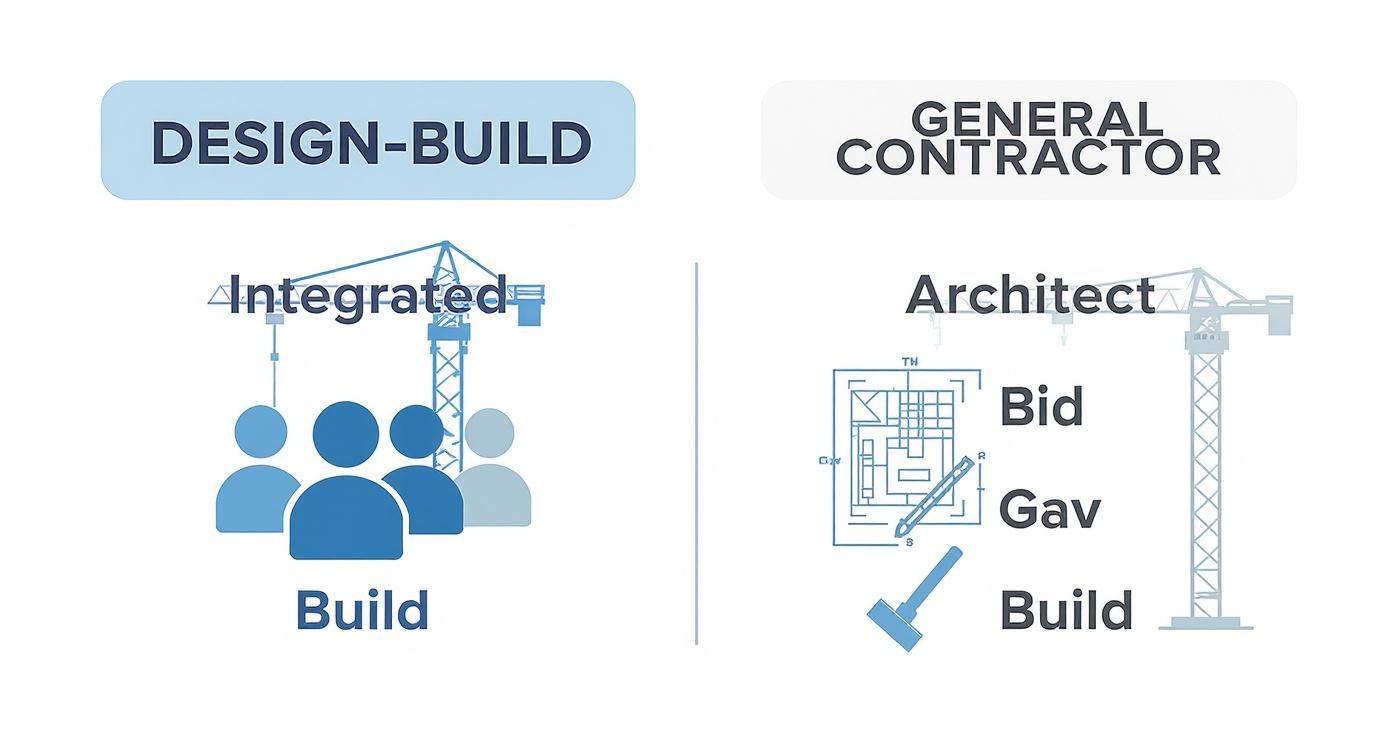
You can see how the design-build approach overlaps critical steps like design, estimating, and permitting. That means we get on-site and start building faster.
The Linear Path of a General Contractor
The traditional general contractor approach has a longer, less predictable timeline. The process is chopped into stages that don't overlap, and each handoff creates a potential for delays.
Step-by-Step General Contractor Timeline:
Hire an Architect (1-3 months): Find, interview, and contract an architectural firm.
Architectural Design (3-6+ months): The architect turns your ideas into detailed plans. Revisions can easily stretch this phase.
Bidding Process (1-2 months): "Final" plans are sent to general contractors for bids. This is where you wait and hope the design fits your budget.
Construction (9-18+ months): After picking a contractor and signing another contract, the build begins. Delays are common, often from design flaws or disputes between the architect and builder.
Real-World Example: We’ve seen Oklahoma City homeowners spend six months and thousands on architectural plans, only to find out during bidding that their dream home is $100,000 over budget. It’s a gut-wrenching moment forcing them to scrap plans, pay for expensive redesigns, or abandon the project.
The Integrated Flow of Design-Build
The design-build timeline is engineered for efficiency. A cohesive team manages the entire project from day one, eliminating the sequential handoffs that bog down the traditional process.
Builder Insight: With design-build, we start value engineering from the first meeting. If a design choice impacts foundation costs—a critical factor with Oklahoma's expansive clay soil—we address it immediately. This prevents the budget shocks that plague the design-bid-build model.
With a design-build firm like ACET, the timeline is compressed and more predictable. Budgeting is woven into the design process, not an afterthought. For a closer look, see our guide on how to build a custom home in Oklahoma.
Actionable Insight: This integrated approach lets us order long-lead materials—like custom windows or trusses—while finalizing interior details. On a recent project in Edmond, our ability to prep the site while finalizing permits saved the client nearly eight weeks compared to a traditional timeline. That's the efficiency you get when one team is driving the project.
Analyzing Costs and Budget Certainty in OKC
For most people building a custom home, the budget is the foundation of the project. The design-build vs. general contractor debate often boils down to one critical question: Which model gives you more certainty over final costs? The answer lies in when your budget is locked in.
With a general contractor, the final price is a mystery until far down the road. It’s common to spend months on architectural plans, only to find out during bidding that the design is 20-30% over budget. This "budget shock" forces a tough choice: compromise your vision with costly redesigns or stretch your finances.
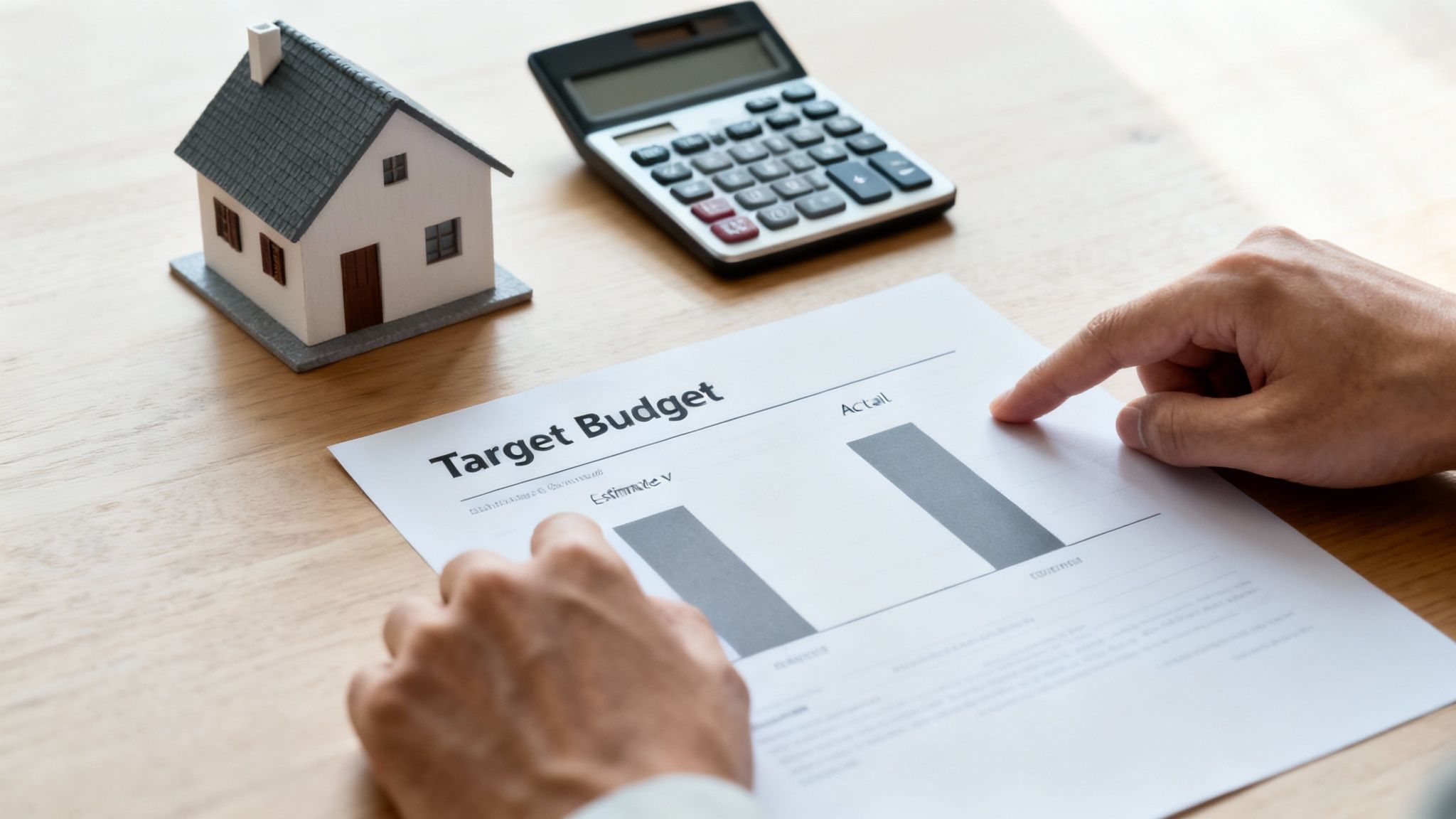
The design-build approach flips this script. At ACET Custom Homes, your budget is the starting point. We establish a realistic cost target from day one and design your home to meet that exact number, guaranteeing financial alignment.
The Design-Build Advantage: Upfront Cost Control
With design-build, cost is part of the design conversation. Our designers and construction experts are at the same table, providing real-time cost feedback as plans take shape. This value engineering process lets us make smart decisions that protect your budget without sacrificing quality.
Real-World Example: On a recent build in Deer Creek, our client wanted an oversized sliding glass door that was over budget. Because our construction manager was involved early, we immediately identified an alternative supplier with a nearly identical product that saved over $15,000. In a traditional model, this discovery might never happen or would become a frustrating change order mid-construction.
This integrated approach offers powerful financial benefits:
Budget Certainty: Your total cost is locked in much earlier. No surprises.
Fewer Change Orders: One team manages design and construction, drastically reducing the errors that lead to costly changes.
Informed Decisions: You understand the cost implications of every design choice, giving you total control.
The Financial Risks of the General Contractor Model
The disconnected design-bid-build process introduces serious financial risks. An architect is paid to design a beautiful home but often lacks real-time construction cost data. This is where budgets fall apart.
Builder Insight: We often see clients with plans from an independent architect that are simply not buildable within their budget in the current Oklahoma market. Material and labor costs shift quickly. Only an active builder like ACET has the up-to-the-minute data to design accurately to a budget.
Research from a Federal Highway Administration study on transportation infrastructure delivery methods found that design-bid-build cost outcomes were highly unpredictable, with swings ranging from a 62% cost reduction to a 65% increase. That volatility is a risk most homeowners can't afford.
Actionable Checklist: Hidden Costs to Watch For
No matter which path you choose, hidden costs can derail your project. Ask about these specific expenses when interviewing potential partners.
General Contractor (Design-Bid-Build) Red Flags:
Architectural Redesign Fees: If bids come in too high, you’ll pay your architect hourly to revise plans you already paid for.
Multiple Consultant Fees: You may need to separately hire a structural engineer, soil engineer, and surveyor, adding coordination and cost.
Change Order Markups: Contractors typically add a 15-25% markup on any change requested after construction begins.
Builder's Risk Insurance: Who is responsible for carrying this crucial policy during the build? The answer isn't always clear.
For a comprehensive look at budgeting, check our guide on the costs to build a custom home in Oklahoma. Budget certainty comes from a partner who aligns your vision with financial reality from the start.
Where Accountability and Risk Management Differ
When building a custom home, ask this simple question: "When something goes wrong, who is responsible?" The answer reveals a fundamental divide between the design-build vs. general contractor models and exposes critical differences in risk, liability, and accountability. This is about protecting your financial investment.
In the design-build model, accountability is simple. You have one contract and one point of contact responsible for everything. If a design detail clashes with a construction reality, the design-build firm owns the problem and the solution.
At ACET Custom Homes, this integrated accountability is the core of our process. Our designers and builders are part of the same team, so there are no fingers to point.
Single Point of Responsibility
This single-source accountability is invaluable when dealing with Oklahoma-specific challenges. Take the expansive clay soil common in Edmond and Deer Creek. A foundation must be designed and engineered precisely to prevent future shifting.
Real-World Example: In a traditional setup, if a foundation fails, the builder might blame the architect’s plans, while the architect claims the builder executed them incorrectly. You’re trapped in the middle of a costly, finger-pointing dispute. With design-build, that conflict is impossible. Our team is fully responsible for both the engineering and the execution, giving you a single warranty and total peace of mind.
Who Truly Carries the Risk
Many homeowners don't realize the design-build model shifts significant financial risk from you to the builder. With the Design-Bid-Build approach, legal precedents often protect the general contractor from design errors, placing liability for a flawed plan on the owner.
A design-build firm assumes responsibility for both design and construction. This means they absorb the risk of cost overruns if design issues surface after the project starts. You can find more expert insights on how project delivery methods allocate risk on BerkleyCP.com.
Builder Insight: Over our 15+ years, we’ve seen countless scenarios where this accountability divide becomes critical. On one project, we discovered an unforeseen underground spring during excavation. In a traditional setup, this would trigger change orders and disputes. For us, it was an internal challenge our team solved collaboratively in a day by re-engineering the drainage plan with minimal impact on the timeline.
Actionable Checklist: Red Flags for Hiring Separates
If you lean toward the general contractor route, you must be proactive in vetting both your architect and builders. Use this checklist during interviews to spot accountability gaps.
Red Flags to Watch For:
Vague Answers on Collaboration: Ask how they handle design discrepancies discovered during construction. No clear, pre-defined process is a major red flag.
Lack of Shared Projects: Inquire if the architect and builder have successfully worked together before. A new team is more likely to experience friction.
Inconsistent Warranty Details: Ask both parties to explain their warranties. If there are gaps where one can blame the other, you are exposed.
Hesitation to Define Communication Protocols: Who is your primary contact? How are issues escalated? A lack of a clear communication hierarchy is a recipe for chaos.
Choosing a model with clear, undivided accountability is one of the smartest ways to de-risk your custom home build.
So, What's the Right Choice for Your Custom Home?
Deciding between design-build vs. a general contractor isn't about a one-size-fits-all answer. It’s about which model fits you—your personality, priorities, and how you want to experience the journey.
To make it real, let's walk through scenarios we see all the time with Oklahoma City area homeowners. One might sound like you.
Which Oklahoma Homeowner Are You?
Over our 15+ years at ACET, we've seen it all. See if you recognize yourself.
Scenario 1: The Busy Professional
You have a demanding career in OKC and no time to juggle an architect, a builder, and endless details. You need an efficient, hands-off process where one team owns the project. You want to make big decisions but need someone to manage the day-to-day.
- Best Fit: Design-Build. The single point of contact is everything. One phone number, one contract, one team accountable for timeline and budget. This respects your time and removes you from being the middleman.
Scenario 2: The Budget-Conscious Family
You have a firm budget for your dream home in a great school district like Deer Creek, and every dollar counts. Your biggest fear is loving architectural plans, only to discover they’re $50,000 over budget. Cost certainty is non-negotiable.
- Best Fit: Design-Build. This is where design-build shines. The process is about designing to a budget. With a firm like ACET, we discuss the cost of every decision, making smart adjustments to protect your bottom line and avoid budget shock.
Scenario 3: The Hands-On Architect or Designer
You’re an architect or have a designer you must have on your team. You know construction and feel comfortable acting as project manager, coordinating between design and construction.
- Best Fit: General Contractor (Design-Bid-Build). This approach makes sense. You bring finished plans and are ready to manage the information flow. Hiring a general contractor to execute your vision is the logical next step.
Your Decision-Making Checklist
Still on the fence? Use this quick checklist to see where your priorities lie.
If you checked more boxes for Design-Build, you value a seamless, efficient process. If you checked more for General Contractor, you prioritize working with a specific designer and are comfortable managing both sides yourself.
How ACET Custom Homes Delivers Through Design-Build
Choosing how your home gets built shapes your entire journey. For over 15 years, ACET Custom Homes has exclusively used the design-build model. We’ve seen firsthand how it prevents the most common and costly frustrations Oklahoma homeowners face. Our integrated process ensures clear communication, predictable costs, and an enjoyable experience.
The difference is our single-team approach. Instead of a fractured process, our architects, designers, and construction managers work together under one roof, in sync from day one. This synergy turns the complex puzzle of home building into a cohesive, streamlined process.
Solving Real Oklahoma Problems Proactively
Building in areas like Edmond or Deer Creek brings challenges like expansive clay soil or complex drainage needs. Our design-build model lets us solve these issues during the design phase, before concrete is poured. This saves our clients thousands in rework and months of delays.
Real-World Example: We built a home on a tricky Edmond lot with serious water runoff. In a traditional setup, this problem would surface during excavation, leading to expensive, last-minute retaining walls via change orders.
Builder Insight: Because our site planners and designers collaborated from day one, we identified the drainage issue during the initial site evaluation. We integrated a custom swale and French drain system directly into the architectural plans. This saved the client an estimated $20,000 and prevented a major construction headache.
Value Engineering for Luxury Without Compromise
Our design-build process includes continuous value engineering. This isn't about cutting corners; it's about making smart decisions to get the luxury finishes you want on budget. Our construction team gives real-time cost feedback to our designers, ensuring every choice aligns with your financial goals.
How ACET’s Value Engineering Works:
Start with your budget, then design a home that fits within it.
Use our material expertise to identify high-impact finishes and stylish, cost-effective alternatives.
Conduct constructability reviews to find efficiencies. A minor architectural tweak can save thousands in labor without changing the look of your home.
We recently helped an OKC family who wanted a high-end chef’s kitchen. By using our supplier relationships and reconfiguring the layout for efficiency, we secured a premium appliance package 15% below retail. This freed up their budget for the custom cabinetry they really wanted—a collaboration that doesn't happen when design and construction are siloed.
Our commitment to this integrated method is why we are a true design-build firm. For a deeper dive, learn what defines a design-build firm in our detailed guide. Our process is built to turn your vision into a stunning reality—on time and on budget.
Frequently Asked Questions (FAQ)
When comparing a design-build firm vs. a general contractor, most homeowners have the same core concerns. Here are straightforward answers to common questions.
What Is the Biggest Downside of Design-Build?
The biggest concern is that with one team handling everything, there are fewer "checks and balances." This places immense importance on finding a trustworthy firm. A disreputable company could prioritize its bottom line over your interests. That's why at ACET Custom Homes, we operate with an open-book policy, detailed budgets, and constant communication. Our 15-year reputation in Oklahoma is built on trust and transparency.
Is Design-Build Cheaper Than Using a General Contractor?
Design-build is more financially predictable. While the final cost of two identical homes may be similar, the design-build approach provides cost certainty much earlier. The process is engineered to avoid the expensive surprises and change orders common in the traditional design-bid-build route. By designing to your budget from day one, we provide superior budget control.
Who Does the Architect Work for in a Design-Build Company?
In a true design-build firm, the architect works for the integrated team, with ultimate loyalty to you and the project's success. This differs from the traditional model where the architect and builder can have conflicting goals. At ACET, our architect collaborates with construction managers and estimators from the start to ensure every design is beautiful, functional, and buildable within your budget.
Can I Use My Own Architect with a Design-Build Firm?
While technically possible, bringing an outside architect into a design-build process often defeats the purpose. The magic of design-build comes from having a team that has a deep, existing understanding of the firm's construction methods, costs, and scheduling. Introducing a third party can recreate the communication gaps the model was created to solve. For the smoothest experience, it's best to work with the firm's integrated design team.
Ready to design your custom home? Schedule a free consultation with ACET Custom Homes today.
Consultation Today!