.png)
You’re dreaming of building a custom home here in Oklahoma—a modern farmhouse in Edmond with a wraparound porch, or a sprawling ranch on a few acres near Shawnee. But the moment you start thinking about the process, a wave of uncertainty hits. Where do you even begin? That feeling of being overwhelmed is the biggest hurdle that stops people from turning their dream into a reality.
This guide is your solution. We’re cutting through the confusion to give you a clear, practical roadmap for custom home planning in OK. We'll provide real, actionable steps, not just vague ideas, so you can move forward with confidence.
Your Oklahoma Custom Home Journey Starts Here
Building your perfect home starts long before anyone breaks ground. It begins with a solid plan—one that turns your lifestyle, your wish list, and your budget into a workable blueprint. Skipping this step is a recipe for stress and expensive mistakes down the road.
At ACET Custom Homes, we've spent over 15+ years helping Oklahomans build their dream homes, from the OKC metro all the way out to rural spots like Macomb and Elmore City. We’ve learned that a thoughtful, detailed planning process makes all the difference. It's not just about drawing a floor plan; it's about designing a home that truly fits your life.
Why a Solid Plan Is Non-Negotiable
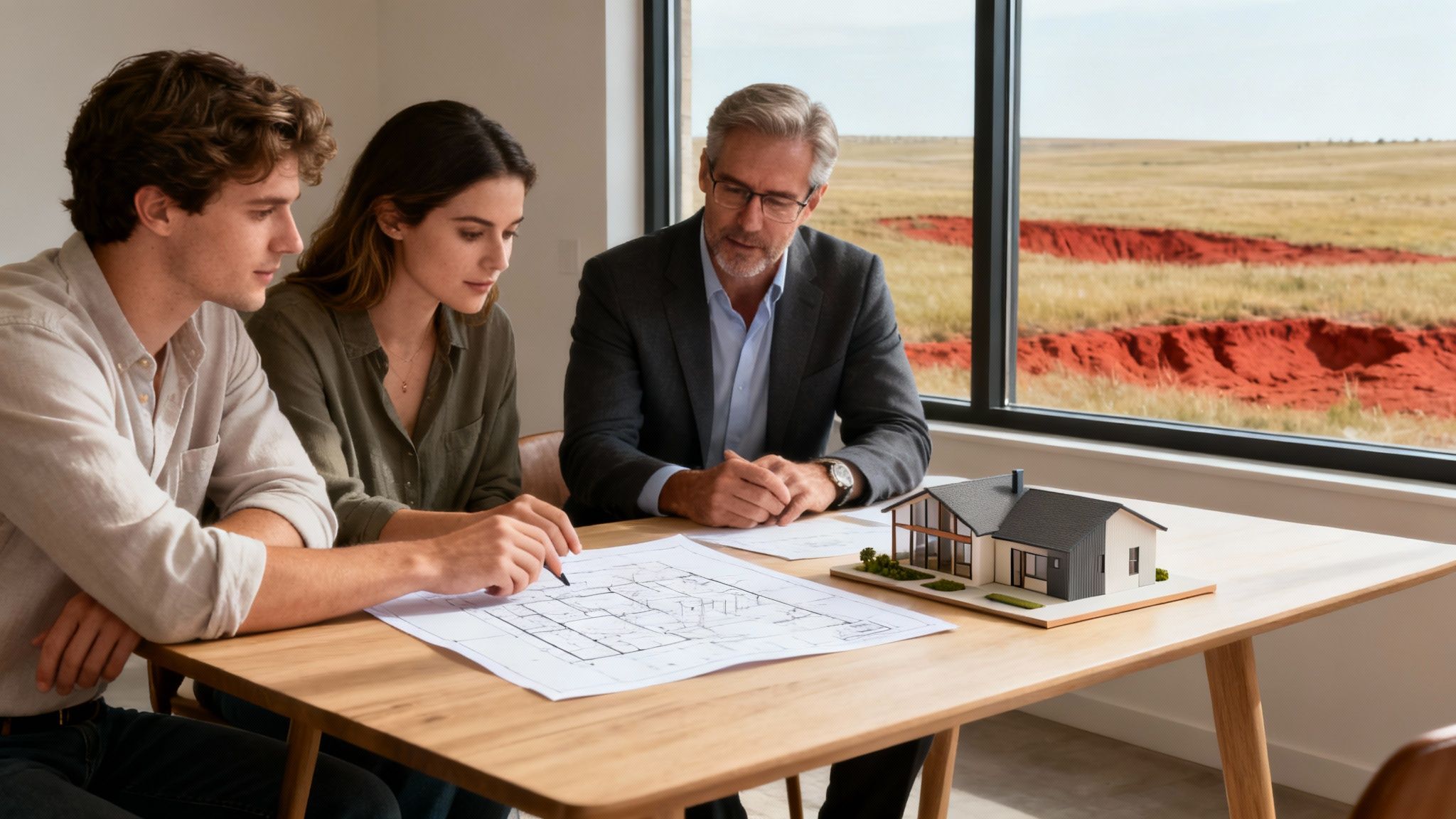
Think of your plan as the North Star for the entire project. It keeps everyone—from the architect to the construction team—on the same page. A great plan for custom home planning in OK goes beyond just the layout; it tackles Oklahoma-specific challenges head-on.
Here’s what a successful plan must include:
- Lifestyle Integration: How do you actually live? Do you need a dedicated home office, a big mudroom for red dirt and rainy days, or an open-concept living area for family get-togethers?
- Site-Specific Design: Your home must work with your land. That means accounting for Oklahoma’s expansive clay soil, planning for proper drainage to handle spring downpours, and positioning the house to maximize energy efficiency.
- Future-Proofing: A good design thinks about your life now and where you might be in five or ten years.
"They took our scattered ideas and created a cohesive plan that felt like us." That's the whole point, as one of our past clients shared.
This guide walks you through these crucial first steps, from evaluating your lot to understanding the budget. Getting a handle on what a custom home is and what the process involves is the best way to start building with confidence.
Laying the Groundwork: Evaluating Your Oklahoma Property
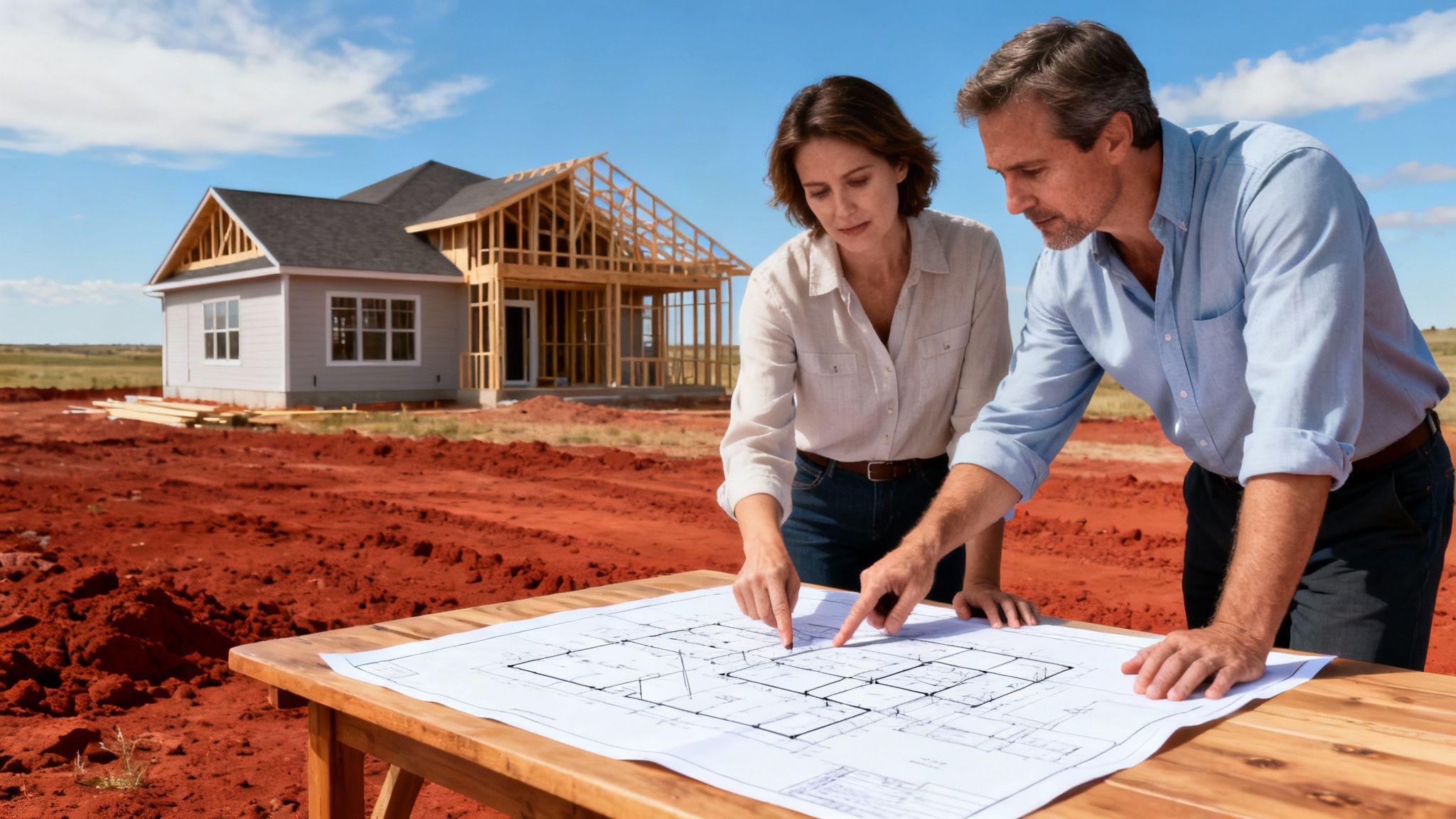
Before you think about a floor plan, your home’s success starts with the ground it's built on. It's easy to fall in love with a view in Guthrie or a quiet lot in Deer Creek, but a thorough site evaluation is about understanding what your land can—and can't—do for your home. This is where so many future homeowners get lost and make costly mistakes.
At ACET Custom Homes, we believe the property should dictate the design. Building in Oklahoma means dealing with unique challenges like our infamous red clay soil and spring storms that demand smart drainage. Getting this evaluation right from the start ensures your foundation is solid and you won’t get hit with budget-busting surprises.
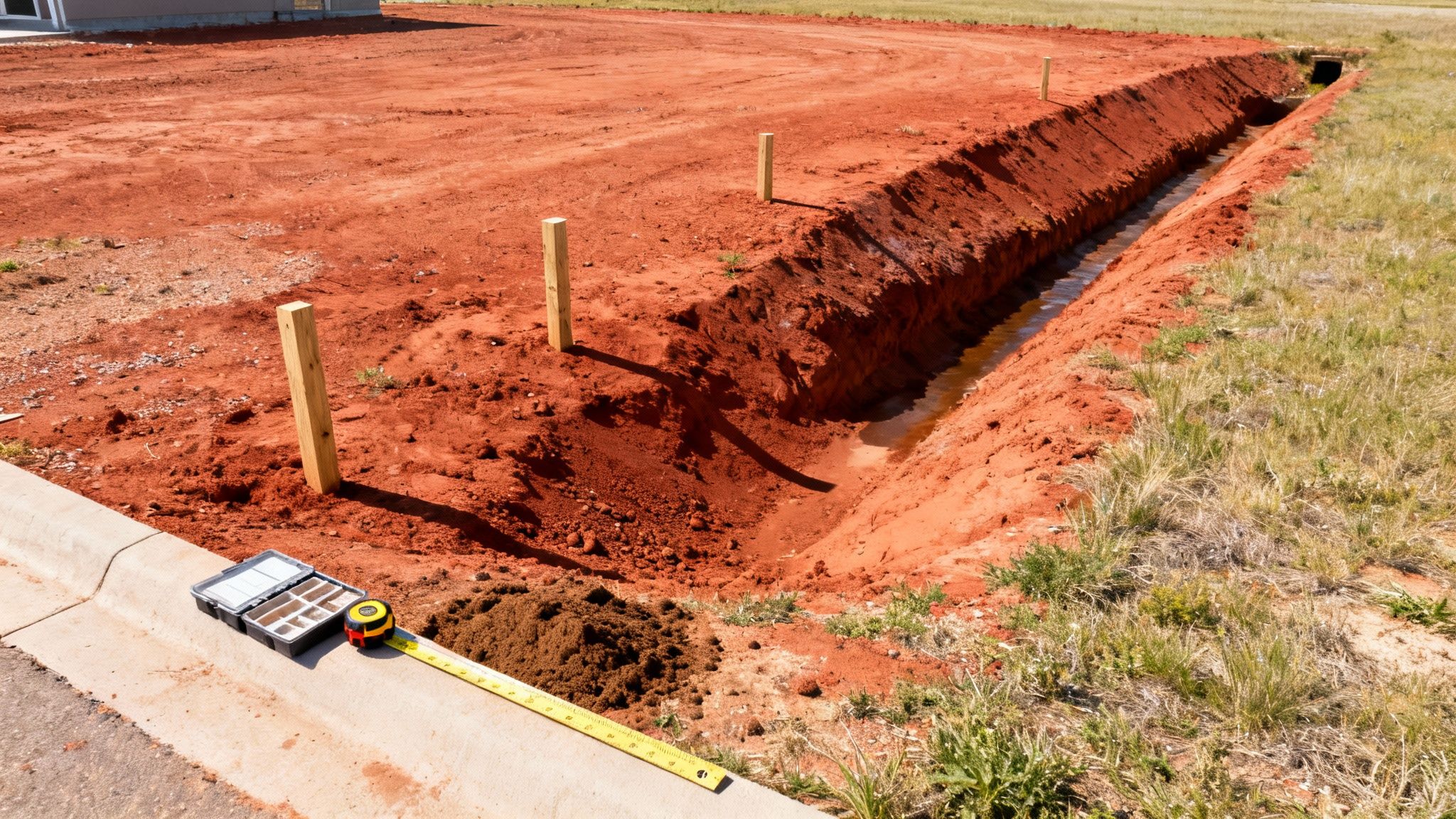
Your Oklahoma Lot Evaluation Checklist
Walk the property with an experienced builder before you buy. This initial diligence can save you a world of headaches. Whether your land is in an Edmond neighborhood or a rural tract near Elmore City, use this checklist.
- Soil Composition: Is it sandy loam or expansive red clay? Oklahoma’s clay soils swell and shrink, requiring a specific foundation like a post-tension slab to prevent cracks.
- Drainage and Topography: When a big storm hits, where will the water go? Proper grading and drainage are non-negotiable to protect your foundation. A sloped lot isn't a problem; it's an opportunity for a walk-out basement.
- Utility Access: This is a big one for rural properties in Macomb or Shawnee. Are utilities nearby? Pin down the costs for connecting to electricity, water (or drilling a well), and installing a septic system. These are often overlooked expenses.
- Zoning and Covenants: What are the rules? Know the local setback requirements (how far your house must be from property lines) and any neighborhood covenants that control architectural style.
- Home Orientation: How can you position the home to get the most out of natural light? In Oklahoma, orienting living spaces to catch morning sun while shielding them from harsh afternoon heat makes a huge difference in your cooling bills.
"Don’t fight the land—work with it. A smart builder sees a sloped lot not as an obstacle, but as an opportunity for a unique, multi-level design that blends seamlessly with the environment." - Bono, Project Manager, ACET Custom Homes
Understanding Key Technical Steps
You’ll hear two terms a lot: "survey" and "geotechnical report." Don't let the jargon intimidate you.
- A boundary survey officially marks your property lines so you don't accidentally build on your neighbor's land.
- A geotechnical report involves a soil engineer taking core samples to see what’s underground. This report tells your builder and engineer what kind of foundation design is required. It’s a small investment that prevents catastrophic foundation failure.
Our guide on building a house on your own land digs into these preliminary steps in more detail.
Designing a Home That Fits Your Oklahoma Lifestyle
You’ve found the perfect piece of land. Now, the most exciting part begins: turning your vision into a real, buildable blueprint. This is where your ideas about open kitchens, sun-drenched reading nooks, and practical storage finally take shape. The fear of making the wrong design choice can be paralyzing, but a collaborative team makes all the difference.
The modern, streamlined way is the design-build model. At ACET Custom Homes, our designers and builders work as one team from day one. This means your architect’s creativity is always grounded by real-world construction costs and Oklahoma’s building codes. No surprises, no budget blowouts.
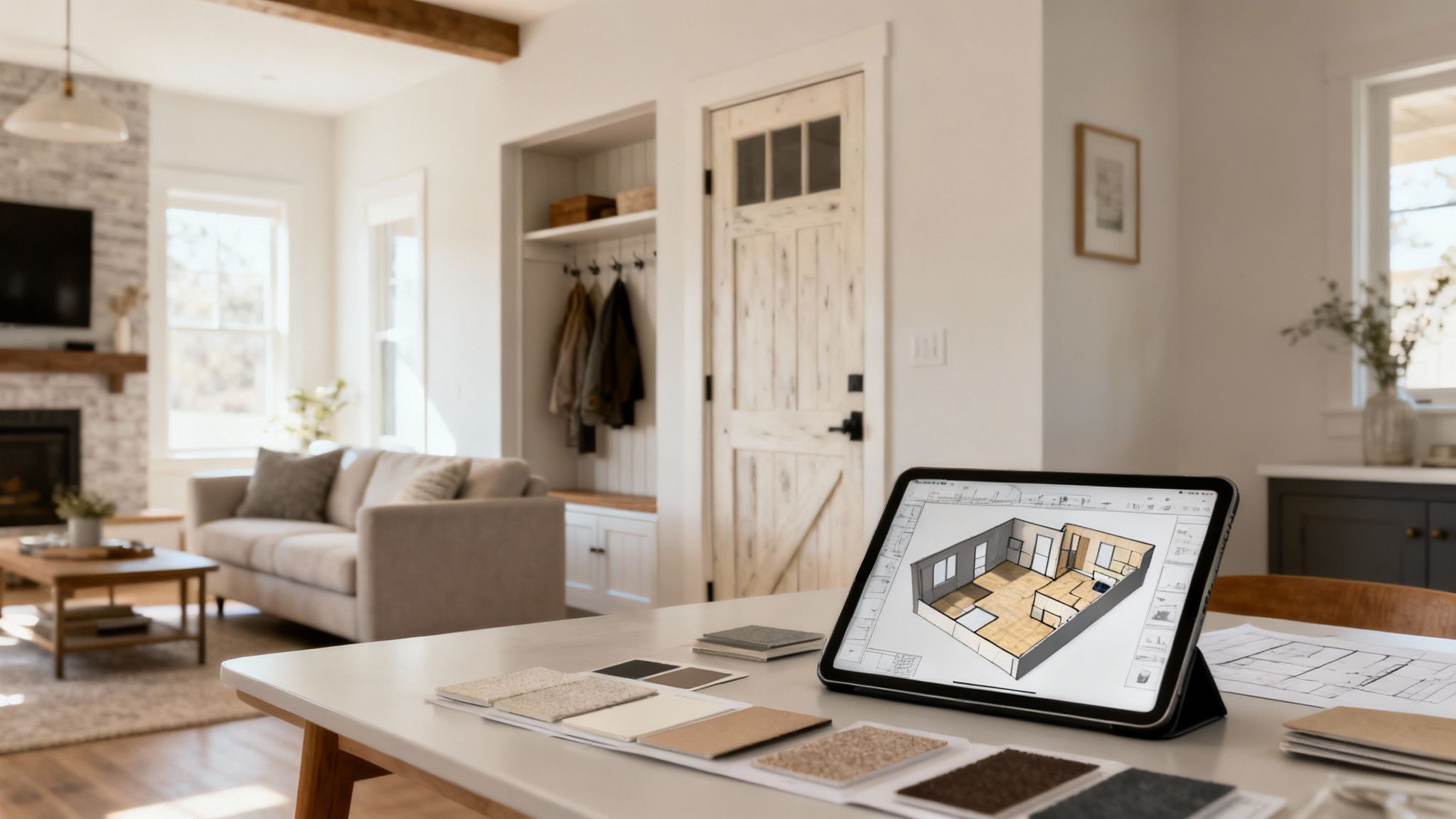
Translating Your Life into a Layout
The best floor plans are a direct reflection of how you actually live. Do you spend weekends on a farm near Chickasha and need a serious mudroom? Or are you working from home in the OKC metro and need a quiet, dedicated office?
Here are a few practical design points we discuss with our clients:
- Open-Concept Living: Great for entertaining, but we use furniture placement, ceiling details, and flooring to create defined "zones" so your great room doesn't feel like a gymnasium.
- Dedicated Flex Spaces: A spare room can be a home gym today and a nursery in a few years. Planning for versatility ensures your home grows with you.
- Oklahoma-Ready Features: We live in Tornado Alley. Integrating a reinforced safe room into the foundation, garage, or master closet is a common-sense decision that provides incredible peace of mind.
Custom Design vs. Pre-Designed Floor Plan
One of the first big decisions is whether to start from a blank slate or modify a proven floor plan. There's no wrong answer—it's about what you prioritize.
Ultimately, both paths lead to a home that is uniquely yours. We'll help you choose the one that aligns with your goals.
Seeing Your Home Before It's Built
It’s hard to visualize a space from a 2D floor plan. That's why we rely on 3D interior design. We create photorealistic renderings that show you exactly how the kitchen cabinets will look with your flooring or how light will hit the living room in the afternoon.
These modern custom home design services in Oklahoma are a game-changer. They give you the confidence to make decisions and prevent expensive, last-minute changes.
Getting Real About Budgets and Bids in the Oklahoma Market
Let's talk about the heart of any successful custom home project: the money. This is where dreams meet financial reality, and a crystal-clear budget is essential. The fear that a custom home budget is a moving target is common, but with a true design-build partner, the opposite is true. We provide a transparent, line-item budget from the start so you know exactly where every dollar is allocated.
What Goes Into an Oklahoma Building Budget?
Your total investment breaks down into a handful of primary categories, whether you're building in a new Edmond addition or on acreage past Shawnee.
- Land & Site Prep: This includes the lot price, clearing trees, grading for drainage, and running utilities.
- Foundation: This is a critical line item in Oklahoma. Our expansive clay soils mean a robust post-tension slab is often required to prevent shifting and cracking.
- Framing & Structure: The skeleton of your home—lumber, labor, and engineering for walls, floors, and the roof.
- Exterior Finishes: Everything that protects your home from Oklahoma weather—roofing, windows, doors, and siding (brick, stone, etc.).
- Interior Systems ("Rough-Ins"): The vital organs behind the drywall—HVAC, electrical, plumbing, and insulation.
- Interior Finishes & Selections: Where your personal style shines. This covers flooring, cabinets, countertops, paint, light fixtures, and appliances.
Spotting the "Hidden" Costs
What often trips people up are the smaller, unexpected costs. A seasoned builder anticipates these and includes them in the initial budget.
"A budget isn't just a number; it's a plan. We always build in a contingency fund—usually around 10%—for the unknowns. You can't predict hitting a massive rock shelf during excavation, but you can prepare for it. That's the difference between a bump in the road and a project derailment." - Bono, Project Manager, ACET Custom Homes
Keep an eye out for these easily overlooked costs:
- Utility Connection Fees: Fees to tap into main lines.
- Permits and Impact Fees: Charged by cities like OKC and Norman.
- Landscaping and Driveways: Often budgeted separately.
- Temporary Utilities: Power and water for the construction crew.
Getting the Right Financing for Your Build
Financing a custom home requires a construction loan. This is a short-term loan that covers building costs and is paid out in stages (or "draws"). Once your home is finished, it usually rolls over into a standard mortgage. The home building industry is a massive part of the economy, projected to hit $166.9 billion in 2025 according to IBISWorld. In a booming market like Oklahoma City, having a builder who can connect you with trusted local lenders is a huge advantage.
The loan process can feel complicated, which is why we created a detailed guide. Learn the specifics of how Oklahoma construction loans work in our dedicated article.
From Foundation to Final Walkthrough
With plans finalized and permits in hand, the real fun begins—watching your home take shape. This is where blueprints become bedrooms. The construction phase is a carefully sequenced process, and in Oklahoma, the weather always gets a vote. An experienced builder in areas like Edmond or Deer Creek knows how to work around rain delays, keeping the project moving without cutting corners.
The Major Phases of Construction: A Step-by-Step Breakdown
- Laying the Groundwork: First, we prep the site and pour the foundation. The crew clears the lot, grades it for drainage, and digs for the foundation and utility lines. In Oklahoma, this almost always means a post-tension concrete slab, engineered to handle our expansive clay soils and protect your home’s structural integrity.
- Framing (The Skeleton Goes Up): Once the foundation cures, the walls, floor joists, and roof trusses go up with surprising speed. This is when you can finally walk through the rooms and get a true feel for the space.
- The "Rough-In" Stage: With the frame up and the roof "dried-in," we install the vital systems: plumbing, electrical wiring, and HVAC ductwork. Before any drywall goes up, you’ll do a walkthrough to confirm every outlet and switch is exactly where you want it. It’s much easier to move a plug now than after the walls are finished.
- Insulation and Drywall: High-quality insulation is installed for energy efficiency against Oklahoma's hot summers and chilly winters. Then, drywall is hung, turning the structure into rooms.
- Exterior and Interior Finishes: While the inside takes shape, work continues outside with brick, stone, or siding. Inside, cabinets, countertops, flooring, and paint transform the space.
- The Final Stretch: The last light fixtures and appliances are installed. You and your project manager will do a final walkthrough to create a "punch list" of any small items needing a final touch. Once complete, the home is professionally cleaned, and you're ready for closing.
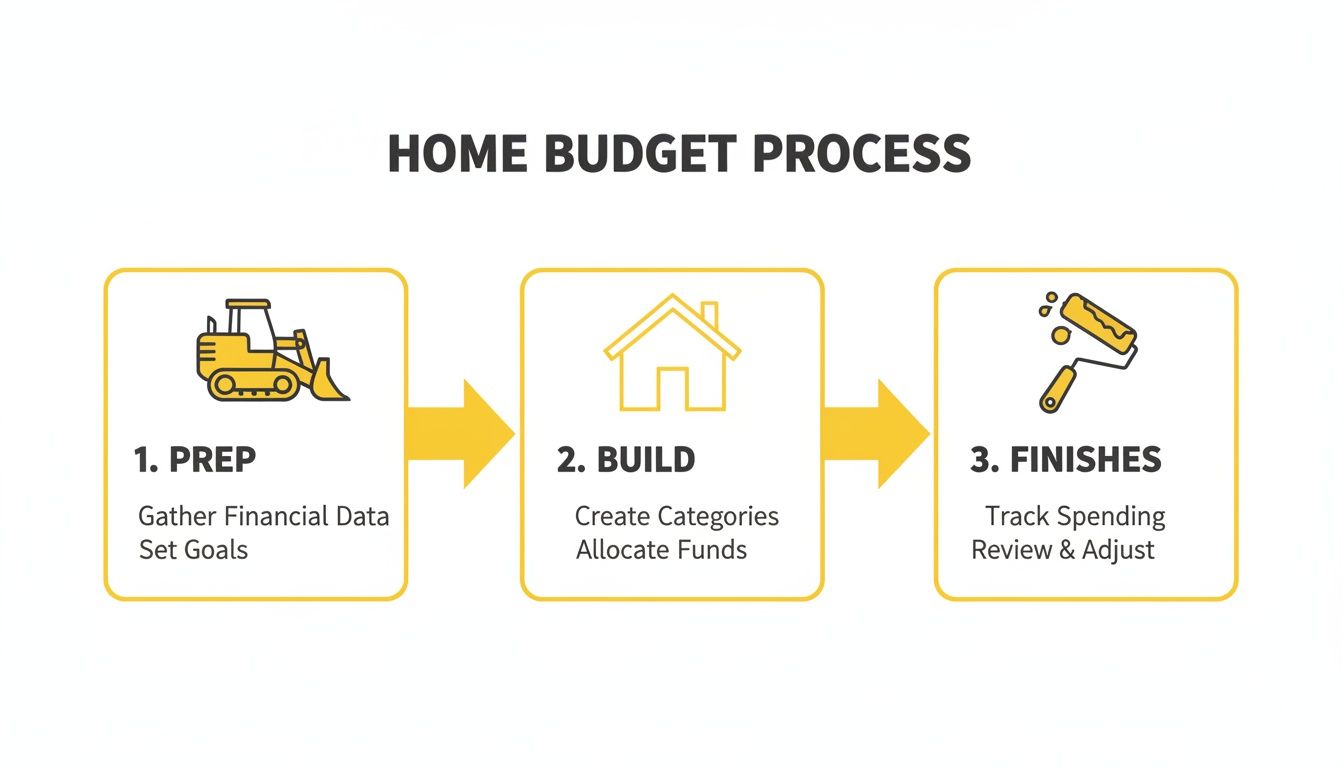
This graphic simplifies the journey, showing how a structured approach keeps the schedule and budget on track.
"Our clients are partners in the build. Consistent, clear communication removes the anxiety from the process. They know what’s happening this week, what’s coming next week, and what decisions we need from them." - Bono, Project Manager, ACET Custom Homes
Our commitment doesn't stop at move-in. Every ACET home is backed by a comprehensive warranty, giving you peace of mind. For a deeper dive, explore our guide on the custom home building process.
FAQ: Your Oklahoma Custom Home Questions Answered
When you decide to build a custom home in Oklahoma, a lot of questions come up. Here are straightforward answers to what we hear most often from clients in OKC, Edmond, and surrounding areas.
How long does it really take to build a custom home in Oklahoma?
A realistic timeline is 12 to 18 months from the first design sketch to getting your keys. The complexity of your design, permitting times, and our unpredictable Oklahoma weather can shift this timeline. A completely custom architectural plan will take longer than modifying one of our proven floor plans.
What is the average cost to build a house in Oklahoma?
There is no "average" cost. The price is tied directly to your choices in finishes, the complexity of the design, and site prep needs. That's why we provide a detailed, line-item budget. You see exactly where every dollar is going, from the essential post-tension slab to the high-end finishes you’ve been dreaming about. You are in complete control.
As a recent client from the OKC metro told us, "ACET was transparent about every cost from day one. We knew exactly where our money was going, which gave us incredible peace of mind throughout the build."
What should I expect for a construction loan down payment?
Most lenders look for a down payment of 20% to 25% of the total project cost. Your personal financial situation and the lender’s policies can affect this number, but it’s a solid figure to plan for. We connect our clients with trusted local lenders who know the Oklahoma construction market.
Can I just tweak a pre-designed floor plan?
Absolutely. It’s one of the smartest and most popular ways to get the home you want. You get a thoughtfully designed layout with the freedom to make it fit your life perfectly. Common customizations include enlarging the master closet, adding a third garage bay, building in a dedicated storm shelter, or creating a home office. This approach gives you a huge head start on your project.
Ready to design your custom home? Schedule a free consultation with ACET Custom Homes today.
Consultation Today!