.png)
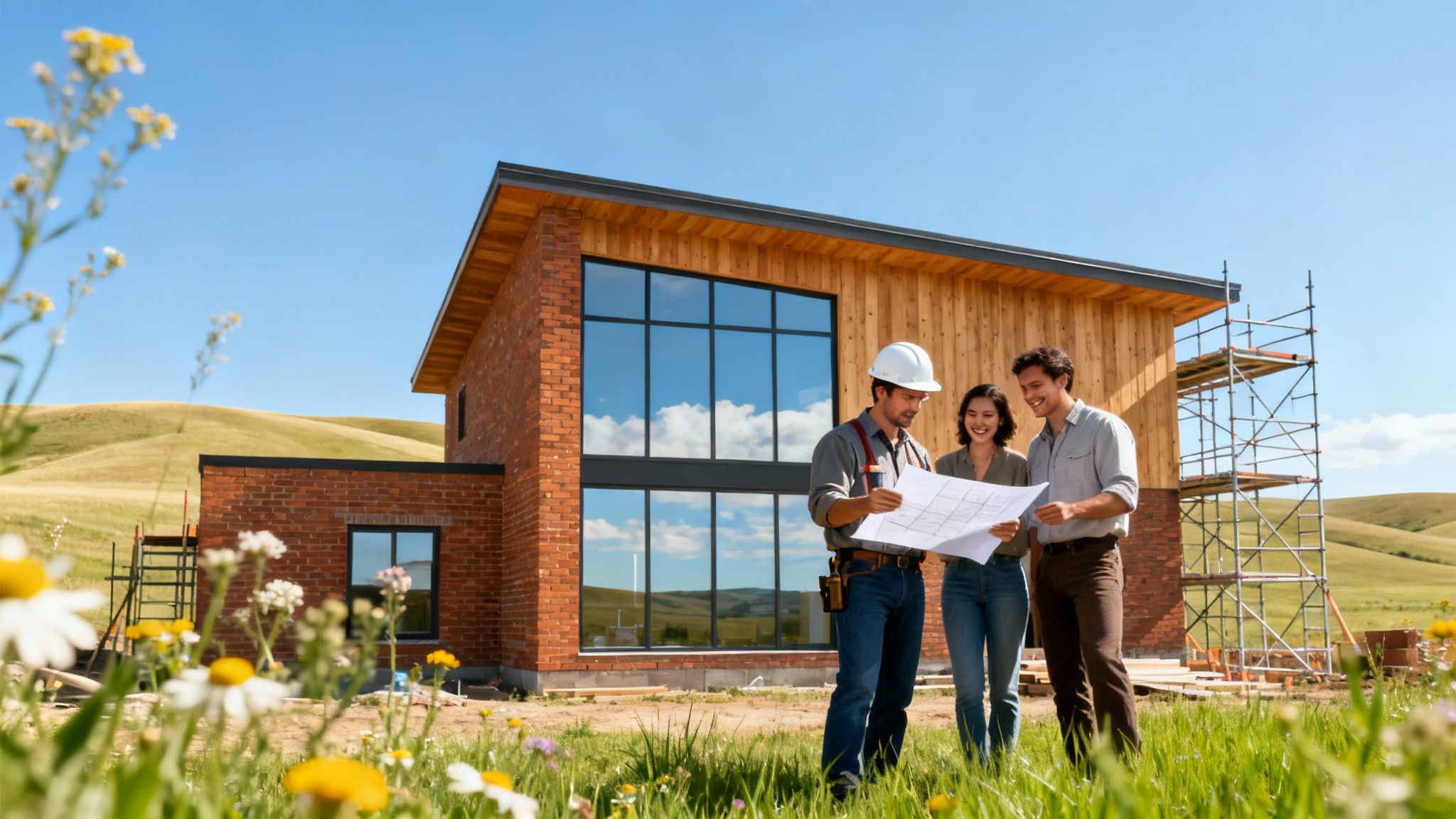
Imagine standing on a piece of Oklahoma land, picturing the exact home you've always wanted. That feeling—the mix of excitement and maybe a little bit of fear—is the start of an incredible journey. But turning that vision into a real, tangible home hinges on one critical decision: choosing the right custom home builder in Oklahoma. This guide is your roadmap to finding a true partner, not just a contractor.
The dream of a custom home in Oklahoma City, Edmond, or even a quiet rural town like Macomb can feel overwhelming. You’re not just building a house; you’re creating a space for your family’s future. The right builder makes that process feel empowering and exciting, while the wrong one can turn it into a nightmare. Let’s break down exactly how to find a builder you can trust.
Why Building a Custom Home in Oklahoma is a Smart Move
Deciding to build a custom home in Oklahoma is about taking control. Instead of compromising on a pre-existing house, you get to design a space that fits your life perfectly. Every detail, from the layout of the kitchen to the view from your bedroom window in Norman, is your choice.
This is your chance to create something that is uniquely yours. We'll explore the perks of building in Oklahoma's growing market, whether you're in a bustling suburb like Moore or seeking peace in the countryside near Guthrie or Shawnee.
The Power of Total Customization
The core reason people choose a custom home is freedom. You're not limited to a handful of options; you are the architect of your own living experience.
- Floor Plans Designed for You: Create a layout that matches your family's rhythm. Do you need a sprawling open-concept living area for entertaining guests or a dedicated home office tucked away from the chaos? You decide.
- Finishes That Define Your Style: You hand-pick every material. From the gleaming quartz countertops to the rustic tile in the master bath, each selection ensures your home is a true reflection of you.
- A Design That Honors Your Land: A great custom builder helps you maximize your property's best features. The design can orient your home to capture the best natural light and views, whether your lot is in Deer Creek or out near Elmore City.
Building in a Booming State
Oklahoma’s home building industry is thriving. With the market projected to grow significantly, new construction is a powerful driver of our local economy. This growth is a clear signal of high demand and builder confidence, especially as people seek out the attractive cost of living in Oklahoma.
While other parts of the country face housing shortages, Oklahoma has seen a 2.8% jump in single-family home starts. This makes finding a reliable builder like ACET Custom Homes even more crucial. For a deeper look, you can explore reports on Oklahoma's thriving home builder market. That feeling of creating a space that’s truly yours is powerful, and an experienced builder ensures the journey is as rewarding as the final result.
The Custom Home Building Process: From Dirt to Doorstep
Building a custom home can seem daunting, but a great builder follows a clear, step-by-step plan. Think of your builder as a trusted guide with a map, leading you from an empty lot to the front door of your dream home. Let’s demystify the journey so you know exactly what to expect.
The process begins long before any construction. It starts with your vision and ends with you holding the keys. We’ll cover everything from initial design sketches and evaluating your land in Norman or Deer Creek, to developing architectural plans and selecting materials, all the way to the final walkthrough.
This visual illustrates the growing demand for new homes in Oklahoma. In a busy market, a builder with a structured process is essential.
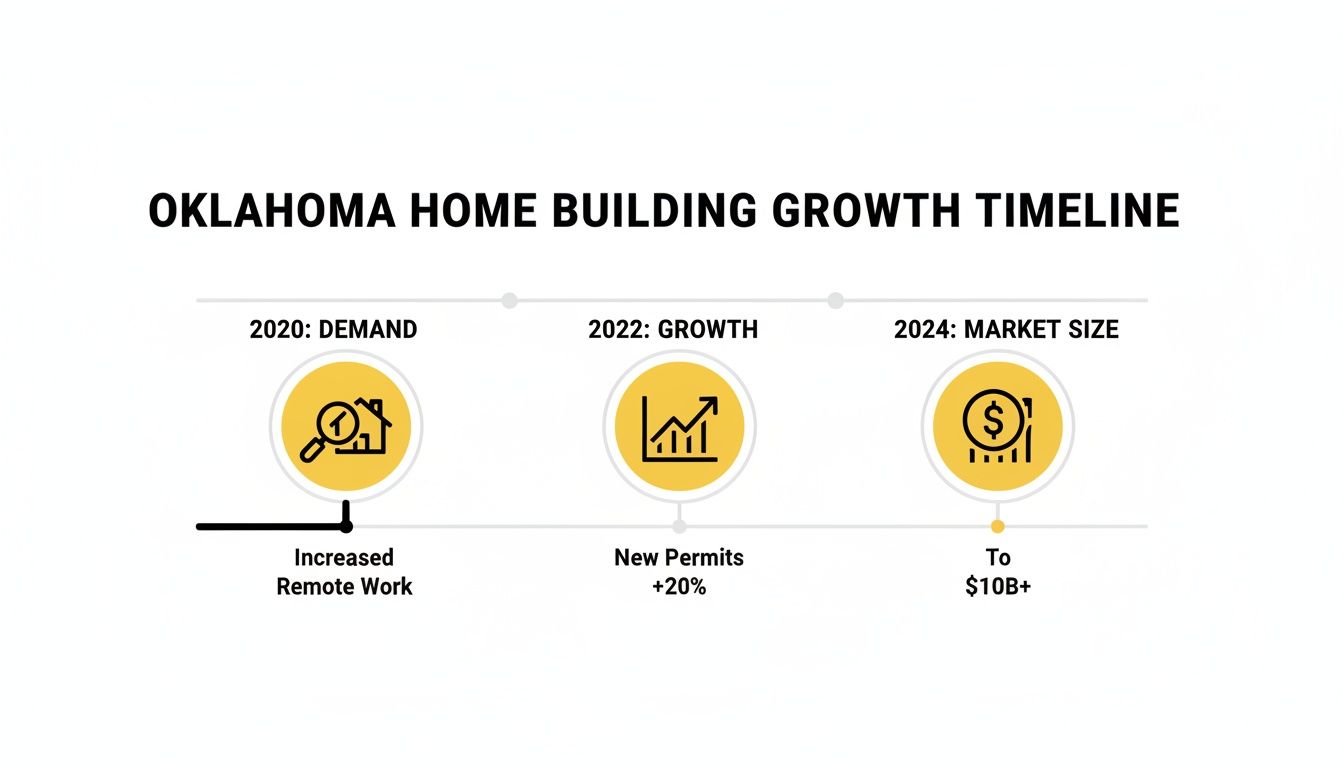
A builder with a clear, proven process is your key to a build that is exciting, not stressful.
Stage 1: Pre-Construction and Planning
This is where your dream takes shape on paper. It's the most critical phase, where your ideas, budget, and property specifics merge into a cohesive blueprint. A great builder doesn’t just build; they guide you through these crucial first decisions.
- Discovery and Design: It starts with a conversation. You’ll sit down with the design team to discuss your lifestyle, needs, and aesthetic vision. This is where you dream up everything from the number of bedrooms to the perfect open-concept kitchen.
- Site Evaluation: Oklahoma land is unique. Your builder will assess your lot for critical factors like soil type (our expansive clay is a big deal), drainage, optimal orientation for sunlight, and utility access. Prepping a rural lot in Macomb is completely different from a suburban spot in Edmond.
- Architectural Plans and Budgeting: As your ideas become preliminary blueprints, a detailed budget is created alongside them. This ensures the design aligns with your financial goals before moving forward, eliminating surprises.
Builder Insight: "The success of a project is determined in pre-construction. Meticulous planning here prevents costly changes and delays later. We invest significant time to get every detail right before we even think about breaking ground." - ACET Custom Homes, with over 15 years of experience.
Stage 2: Construction and Building
Once permits are secured and plans are finalized, the magic begins. You'll see daily progress as your home rises from the ground. A seasoned custom home builder in Oklahoma manages this complex coordination of timelines and tradespeople with precision.
- Foundation: First, the site is cleared, graded, and the foundation is poured. Depending on your soil report, this could be a monolithic slab or a post-tension slab engineered for Oklahoma’s unique conditions.
- Framing: Suddenly, it looks like a house! The structural skeleton—walls, floors, and roof—goes up quickly. This is often the first time you can walk through the rooms and get a true feel for the space.
- Exterior and Rough-Ins: Next, we make it weatherproof by installing windows, doors, siding, and roofing. Simultaneously, plumbers, electricians, and HVAC crews run pipes, wires, and ductwork through the interior walls.
Stage 3: Interior Finishes and Final Touches
If framing is the skeleton, this stage gives your home its personality. The focus shifts from structure to the fine details you’ll interact with every day.
You’ll finalize every selection, from paint colors and flooring to light fixtures and cabinet hardware. For a deeper dive into this part of the journey, our guide to the custom home building process is a fantastic resource.
Here’s how the final pieces come together:
- Drywall and Paint: Walls are insulated, drywalled, textured, and painted with your chosen colors.
- Flooring and Cabinetry: Your hardwood, tile, or carpet is installed, along with kitchen and bathroom cabinets.
- Fixtures and Finishes: This is the grand finale. Countertops are set, light fixtures are hung, faucets are installed, and appliances are put in place.
- Final Walkthrough: Before handing over the keys, your builder will walk you through the finished home to create a "punch list" of any final adjustments, ensuring everything is perfect for move-in day.
This step-by-step process replaces uncertainty with confidence, empowering you to navigate your build like an expert.
Custom Build vs. Production Build Timeline Comparison
A true custom build operates on a different timeline than a standard production home. This table breaks down the typical phases to set clear expectations.
The extended timeline of a custom project directly reflects the level of personalization and quality control involved. We're not just building a house; we're building your house.
How to Budget for Your Oklahoma Custom Home
Let's address the elephant in the room: "What will this actually cost?" Budgeting for a custom home is more than just a price-per-square-foot calculation. It’s about building a complete financial plan so you can move forward with confidence. This section will demystify the numbers and give you the tools to create a realistic budget, whether you're building in Edmond or on acreage near Elmore City.
Hard Costs vs. Soft Costs: The Two Sides of Your Budget
Every custom home budget has two categories: hard costs and soft costs. Understanding the difference is crucial for accurate planning.
Hard costs are the tangible items—the physical materials and labor that create the structure. You can see and touch these things.
- Materials: Lumber, concrete, drywall, roofing, windows, and flooring.
- Labor: Wages for the skilled crews who frame the house, install plumbing, and wire the electrical systems.
- Site Work: Excavation, land grading, and pouring the foundation.
- Major Systems: Your HVAC unit, plumbing fixtures, and electrical panels.
Soft costs are the essential services and fees that make the project happen. They are less visible but just as important.
- Architectural and Design Fees: Paying professionals to draw your unique blueprints and interior plans.
- Permits and Inspection Fees: Payments to local municipalities in OKC, Norman, or other towns.
- Utility Hookups: The cost to connect your home to water, sewer/septic, electricity, and gas.
- Landscaping and Driveways: These are often handled separately but are a key part of the total project cost.
Builder Insight: "First-time builders often focus only on the hard costs. But soft costs—like needing a new septic system on a rural lot or significant grading for drainage—can blindside them. A great builder plans for everything from the start."
Your Actionable Pre-Construction Budget Checklist
To build a comprehensive budget, you have to think like a builder. Use this checklist to cover all your bases before breaking ground.
- Land Acquisition Costs: If you don't own your lot, this is your first major expense.
- Site Preparation: Does your lot in Guthrie require extensive tree clearing? Does your Chickasha lot need special drainage solutions? These costs vary significantly.
- Soil Testing and Surveying: This is non-negotiable in Oklahoma. Our expansive clay soils demand the correct foundation, and you can't guess at it.
- Utility Connection Fees: Research the cost to run electricity, water, and gas lines to your build site, especially in rural areas.
- Financing and Closing Costs: Account for bank fees, appraisals, and other costs associated with your construction loan.
- Landscaping and Exterior Finishes: Budget for your driveway, walkways, sod, and any planned patios or decks.
- Contingency Fund: Set aside 10-15% of your total construction cost for unexpected issues. It's a safety net that provides incredible peace of mind. For more homeowner resources, the National Association of Home Builders (NAHB) is an excellent external resource.
At ACET Custom Homes, our process is built on transparency. We start with a detailed budget that anticipates these variables from day one. With over 15 years of experience, we help you craft a solid financial plan that brings your vision to life without surprises. Explore our floor plans to see how great design and smart budgeting come together.
Building an Energy-Efficient Home for the Oklahoma Climate
Oklahoma’s weather is no joke. Between scorching summer heat and bitter winter winds, an energy-efficient home isn't a luxury—it's a necessity. A home designed for sustainability not only slashes your utility bills but also creates a more comfortable living space and boosts your property's resale value.
This is a priority for any top-tier custom home builder in Oklahoma. A forward-thinking approach means building a home that performs as beautifully as it looks.
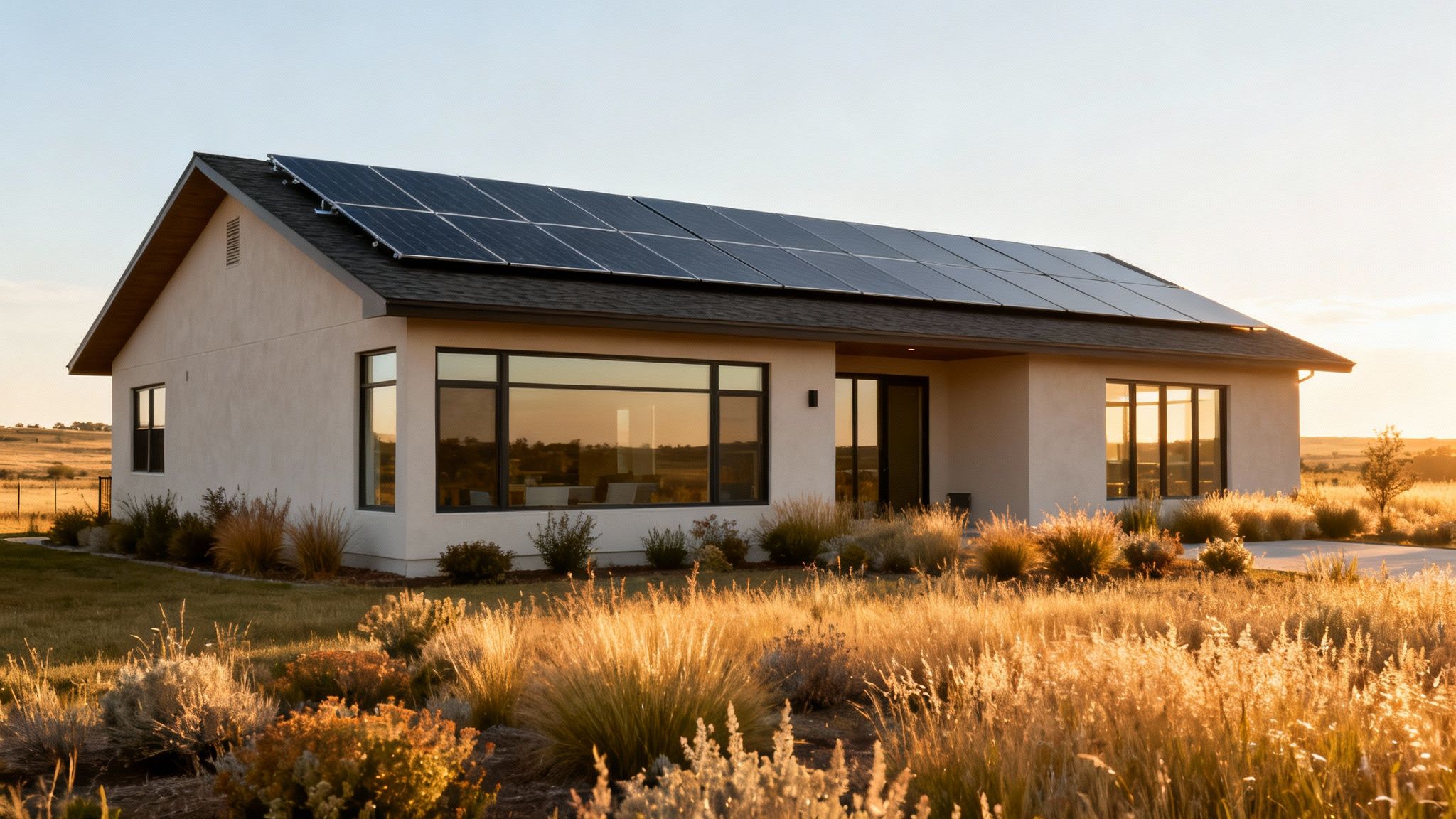
As builder confidence in our state hits a 12-year high, more families are choosing Oklahoma and demanding homes built for the long haul. They want quality, efficiency, and real savings. You can read more about Oklahoma's high builder confidence and current market trends.
What is the HERS Index?
The industry standard for measuring a home's energy performance is the Home Energy Rating System (HERS) Index. Think of it like a car's MPG sticker but for your house. It's a simple, nationally recognized score that tells you exactly how efficient a home is.
A lower HERS score is better. A standard new home typically scores around 100. A home with a score of 70 is 30% more efficient. The homes we build at ACET Custom Homes often achieve scores far below that standard, translating into significant annual savings for our clients.
Top Energy-Saving Investments for Oklahoma Homes
Achieving a great HERS score is about creating a complete system. Here are the investments that make the biggest impact in an Oklahoma custom home, whether you're in the OKC metro or near Chickasha.
- High-Performance Insulation: This is your home's thermal shield. Spray foam insulation is an excellent choice as it creates an airtight seal, eliminating drafts and keeping conditioned air inside.
- Energy-Efficient Windows: Modern windows are essential. We recommend Low-E (low-emissivity) coated, double- or triple-pane windows that reflect heat, keeping your home cooler in the summer and warmer in the winter.
- High-Efficiency HVAC Systems: Your heating and air conditioning unit is the largest energy consumer in your home. Upgrading to a modern, high-SEER (Seasonal Energy Efficiency Ratio) system dramatically reduces electricity usage.
- An Airtight Building Envelope: This is a sign of true craftsmanship. It involves meticulously sealing every gap and joint in the home’s exterior to prevent energy loss. A tight home is an efficient home.
Builder Insight: "We had a client building in Edmond who was hesitant about the upfront cost of full spray foam insulation. A year after moving in, he told us his highest summer electric bill was less than half of what he paid in his old house. That's the real-world payback of building it right from the start."
Comparing Energy-Efficient Features
This table breaks down the key benefits of common upgrades to help you decide where to invest.
Combining these elements creates a high-performance home that is beautiful, comfortable, and affordable to live in for decades. To learn more, check out our guide on top energy-efficient home features.
How to Choose the Right Custom Home Builder: A Checklist
Of all the decisions you'll make, none is more important than who you choose to build your home. The right choice leads to an exciting, collaborative journey. The wrong choice can turn your dream into a nightmare. This section provides actionable steps to vet and select the best custom home builder in Oklahoma for your project.
We’ll give you the exact questions to ask and the red flags to watch for. The goal is to empower you to find a true partner who will treat your investment with the care it deserves.

Actionable Steps to Vet Your Builder
Before signing a contract, sit down with potential builders and have a frank conversation. Pay close attention not just to what they say, but how they say it.
Step 1: Verify Credentials
- Ask for their Oklahoma State license number and proof of general liability insurance and workers' compensation. This is non-negotiable and protects you from liability.
Step 2: Assess Their Communication Process
- Ask: "How do you handle communication and updates?" Look for a clear plan. Do they use a project manager, an online portal, or scheduled calls? A great builder keeps you informed.
Step 3: Review Their Contracts and Warranties
- Ask: "Can I see a sample contract and warranty?" A solid contract is detailed and transparent. The industry standard is a 1-2-10 warranty: one year for workmanship, two for systems, and ten for major structural issues.
Step 4: Understand Their Project Management
- Ask: "How do you manage project timelines and potential delays?" A professional has contingency plans for weather, supply chain issues, and other unexpected events.
Red Flags to Watch For
Knowing what to look for is only half the battle; you also need to know what to avoid. If you spot these warning signs, proceed with caution.
- Vague Contracts: Avoid contracts that are fuzzy on material specifics, timelines, or payment schedules.
- High-Pressure Tactics: A builder should be your advocate, not a salesperson. Feeling rushed is a major red flag.
- Reluctance to Provide References: A builder with happy clients will be eager for you to speak with them.
- The Lowest Bid: An unusually low bid often means corners are being cut with cheap materials or uninsured labor. Quality has a fair price.
Builder Insight: "A builder's transparency in the first meeting sets the tone for the entire project. If they are open, detailed, and patient with your questions, you're in good hands. If they are evasive, it’s time to find someone else."
As Oklahoma's luxury real estate market continues to grow, so does the demand for skilled builders. At ACET Custom Homes, we have spent over 15+ years building our reputation on trust and transparency. For more guidance, read our in-depth article on how to choose a home builder.
FAQ: Your Top Questions About Building a Custom Home in Oklahoma
It’s completely normal to have questions when embarking on a custom home build. As a long-standing Oklahoma home builder, we've answered just about everything. This FAQ section provides clear, straightforward answers to help you feel confident in your decisions.
How long does it take to build a custom home in Oklahoma?
Once we break ground, a typical custom home in Oklahoma takes 9 to 15 months to complete. However, the pre-construction phase—which includes design, site evaluation, and permitting—can take an additional 3 to 6 months. Rushing the planning phase is the #1 cause of delays and budget overruns later on.
What is a realistic cost per square foot?
A simple price-per-square-foot figure can be misleading for a custom home. The true cost depends on three key factors: design complexity, finish level, and site conditions. A modern home with a simple roofline will cost less to frame than an intricate design. Likewise, high-end appliances and custom cabinetry impact the budget differently than standard options. A rural lot in Macomb requiring a well and septic system will have different prep costs than a ready-to-build lot in a Moore subdivision.
Do I need to own land before talking to a builder?
No, and in fact, we recommend against it. Bringing a builder in before you buy land is a smart move. At ACET Custom Homes, we offer site evaluation services. With our 15+ years of experience, we can walk a property with you and identify potential issues like poor soil quality or high utility connection costs that could dramatically impact your budget. This expert input can save you from a costly mistake. Our guide to the custom home building process explains this in more detail.
What is the process for making changes during construction?
We use a formal Change Order system. When you request a change, we calculate the impact on the budget and schedule. Nothing proceeds until you sign off, ensuring you remain in complete control with no financial surprises.
What kind of warranty is offered on a new home?
We provide a comprehensive "1-2-10" warranty. This covers 1 year for workmanship and materials, 2 years for major systems (like plumbing and electrical), and 10 years for major structural components, giving you long-term peace of mind. For official information on building standards, the U.S. Department of Housing and Urban Development (HUD) is an excellent resource.
Ready to design your custom home? Schedule a free consultation with ACET Custom Homes today by visiting https://acethomes.com.
Consultation Today!