.png)
How to Hire the Right Custom Home Builder in Oklahoma
Dreaming of building a home on your own piece of Oklahoma land? To turn that vision into a reality, you need more than just a contractor; you need a true partner. This guide will show you exactly how to find and hire a custom home builder who can navigate Oklahoma’s unique challenges and bring your dream to life. At ACET Custom Homes, we’ve spent over 15 years helping families do just that, and we’re here to give you the blueprint for success.
What Does a Custom Home Builder Actually Do?
It’s easy to lump all builders together, but a custom home builder is in a league of their own. Unlike a production builder who develops entire neighborhoods with a limited set of floor plans, a custom builder focuses on a single, unique project: yours. With over 15+ years of experience building homes across Oklahoma—from metro areas like Edmond and OKC to rural towns like Macomb and Elmore City—we at ACET Custom Homes live and breathe this distinction.
The role of a custom builder is to be the master orchestrator of your project. They are your project manager, creative collaborator, and logistics expert, coordinating every detail from evaluating the land to passing the final inspections.
Key Responsibilities of a Custom Builder
A real custom builder manages the entire lifecycle of your home's creation, ensuring a smooth, cohesive process.
Here’s a checklist of their core duties:
- Actionable Step: Provide your builder with your land survey and any deed restrictions you have.
- Site Evaluation and Preparation: They walk your land, analyzing its topography, Oklahoma's clay soil conditions, and access to utilities to ensure your home is built on a solid foundation.
- Design Collaboration: Your builder works hand-in-hand with you and architects to turn your ideas into functional blueprints. Some firms, like ours, even offer in-house design services. You can learn more in our guide on what a design-build firm is.
- Budgeting and Estimating: You'll get detailed cost breakdowns for materials, labor, and permits. Transparency is key to a successful project.
- Permitting and Compliance: Navigating the maze of local building codes in places like Deer Creek or Shawnee is their job. They handle securing all necessary permits.
- Full Construction Management: From foundation to finish, they oversee everything—scheduling subcontractors, ordering materials, and ensuring quality control.
The demand for personalized homes isn't going away. The custom home building sector has shown incredible resilience, with starts totaling 34,000 homes in the first quarter of 2025 alone—a stable figure that highlights the market's strength. A custom home builder is your single point of contact responsible for turning an empty lot into a home that is a true reflection of you.
Choosing Your Path: Custom vs. Spec vs. Production Homes
Before you start pinning dream kitchens, you must decide how your home gets built. The first critical step is understanding the difference between a custom home builder, a spec builder, and a production builder.
Each path offers a different blend of creative freedom, cost, and convenience. For example, building a one-of-a-kind home on your acreage near Macomb, where you’ve planned every window to frame the perfect sunrise—that's the custom route. In contrast, finding a new neighborhood in Edmond and picking your favorite model from a handful of designs—that’s the production path.
What is a Production Home Builder?
Production builders create large-scale communities. They buy huge tracts of land and build entire neighborhoods at once, offering a limited menu of pre-designed floor plans.
Their model is built on efficiency and volume, which keeps costs down and timelines predictable. The trade-off is personalization; your dream has to fit inside their box.
Understanding the Spec Home Builder
Spec home builders occupy a unique middle ground. The name comes from "speculative" because they build a home speculating that a buyer will come along. They build with popular features to appeal to the widest audience.
For a buyer, this means you can walk through a finished product before purchasing, taking the guesswork out of the equation. You'll see plenty of spec homes in growing areas like Deer Creek, offering a fast track to new construction.
The True Custom Home Builder Experience
Working with a true custom home builder like ACET Custom Homes is a partnership. This is the only path where you get total control to design and build a home from a blank slate, on your own land.
Every detail is up to you—from the type of foundation best for Oklahoma’s tricky clay soil to the exact model of dishwasher.
With over 15 years of experience, we've learned that a true custom home is more than just a house; it's a direct reflection of the family who lives there. Our design-build process ensures your vision leads every decision, creating a space that is uniquely and authentically yours.
This personalized approach takes more time and a larger investment, but the result is a home that fits your family perfectly.
Comparison Table: Custom vs. Spec vs. Production
To figure out which path is right for you, this table breaks down the key differences.
Ultimately, there's no single "best" option—only the one that best aligns with your budget, timeline, and vision.
The Custom Home Building Journey Step by Step
Building a home from the ground up is a journey with a clear roadmap. A professional custom home builder is your guide through every phase, turning a complex process into manageable steps.
Here’s a breakdown of what to expect when you partner with a builder like ACET Custom Homes.
Phase 1: Land Evaluation and Feasibility
Everything starts with your land. Whether it's a sprawling lot near Elmore City or a parcel in the growing Deer Creek area, a thorough site evaluation is non-negotiable.
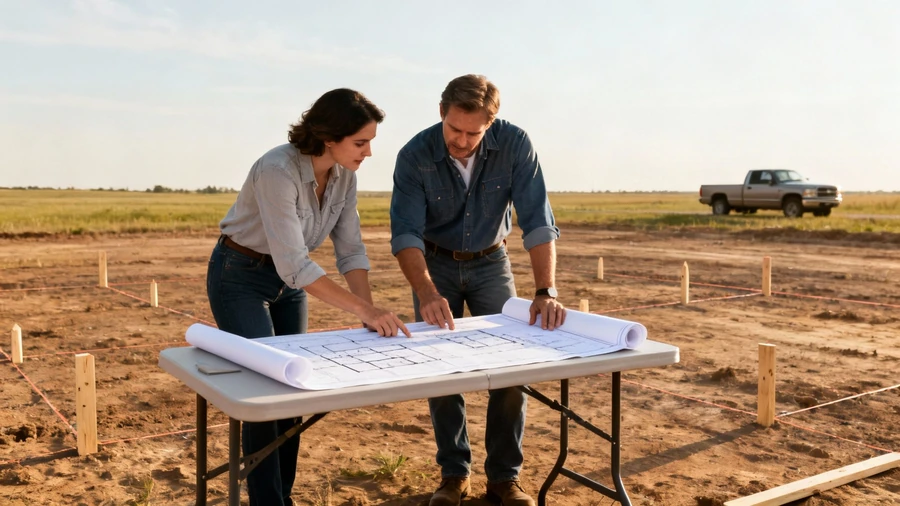
Our team will walk the property with you to analyze topography, check for proper drainage, and investigate access to utilities. This is especially important for rural builds in places like Macomb. We also dive into local zoning laws and deed restrictions.
Builder Insight: Oklahoma's expansive clay soil requires specific foundation engineering. A soil test during this phase is one of the most important investments you can make—it dictates the design of a stable, long-lasting foundation.
Phase 2: Architectural Design and Engineering
This is where your vision takes shape. Working with architects, you’ll translate your ideas into detailed construction plans. Every room and window placement gets carefully considered.
During this stage, you'll lock in key decisions on:
- Floor Plan Layout: Finalizing the size, number, and flow of rooms.
- Exterior Style: Choosing the architectural look.
- Structural Engineering: An engineer ensures the home’s integrity is sound and built to code.
Phase 3: Selections and Budget Finalization
Now you select the materials and finishes that define your home's character. You get to choose everything from flooring and countertops to light fixtures and paint colors.
Once all selections are made, we provide a final, fixed-price construction agreement. This transparency means no surprises.
Phase 4: Permitting and Pre-Construction
Your builder submits your finalized plans to the local municipality—whether that’s Oklahoma City or a smaller town like Shawnee—to obtain all building permits.
Simultaneously, we're scheduling our subcontractors, ordering materials, and creating a detailed construction timeline.
Phase 5: The Construction Process
This is when you see your home start to rise from the ground. The construction phase is broken down into several key milestones, with regular updates and site meetings.
Step-by-Step Construction Breakdown:
- Site Work & Foundation: The land is cleared, graded, and the foundation is poured. This is the bedrock of your home.
- Framing: The home’s skeleton goes up. You can finally walk through the rooms and get a feel for the space.
- Rough-in Mechanicals: Plumbers, electricians, and HVAC technicians install all behind-the-walls systems.
- Exterior & Interior Finishes: Siding, roofing, drywall, and flooring are installed, bringing the structure to life.
- Final Finishes: Cabinets, countertops, fixtures, and paint are added, completing the home's personality.
This hands-on approach to homebuilding is gaining traction nationwide. Custom home building has seen steady year-over-year growth, with 54,000 custom building starts in the second quarter of 2025 alone—a 4% increase from the previous year.
Phase 6: Final Walkthrough and Handover
As construction wraps up, we’ll conduct a meticulous final walkthrough with you. We'll inspect every detail together and create a "punch list" of any final adjustments needed.
Once the punch list is complete and we have the Certificate of Occupancy, we hand you the keys to your new home. Our comprehensive warranty program ensures we’re here to support you long after you’ve moved in.
For a deeper dive, check out our guide on how to build a custom home.
Building a Home That Can Handle Oklahoma
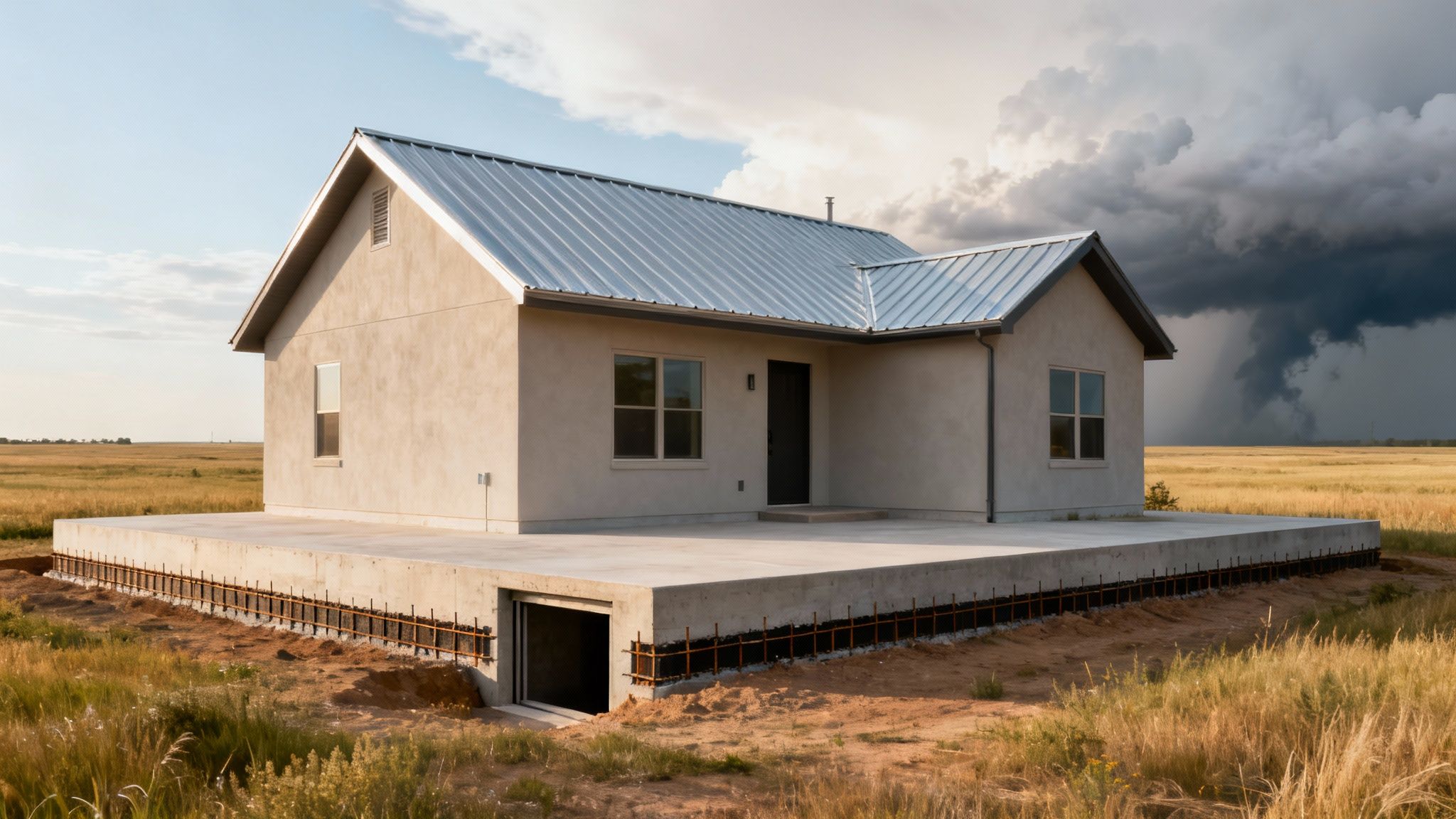
Building a home in Oklahoma isn’t like building anywhere else. Our state’s unique climate and geology demand more than a standard set of blueprints. A truly experienced custom home builder understands that a house here needs to be engineered to handle everything from violent storms to shifting soil and punishing temperature swings.
Foundations Built for Oklahoma Soil
One of the biggest challenges is our expansive clay soil. This soil type swells dramatically when wet and shrinks when dry, which can wreak havoc on a poorly designed foundation.
- Red Flag: A builder who suggests a one-size-fits-all "monolithic slab" for every lot isn't accounting for soil volatility.
- Best Practice: Insist on a post-tension slab. This foundation is reinforced with high-strength steel cables that are tightened after the concrete cures, creating a stronger, more flexible slab that can resist the movement of Oklahoma’s soil.
Builder Insight: We've seen firsthand how the wrong foundation can lead to costly repairs. After 15+ years of building here, we insist on a geotechnical soil report for every project. This analysis tells us exactly what’s underground, letting us engineer a foundation for a stable base for decades.
Designing for Extreme Weather
Oklahoma's weather is famous for its intensity. Blistering summer heat, frigid winter winds, massive hail, and tornadoes mean your home must be a fortress.
These are a few non-negotiables for any true Oklahoma build:
Maximizing Energy Efficiency Year-Round
Dealing with 100°F summer days and freezing winter nights puts a massive strain on your home’s HVAC system. Smart design and material choices are critical for creating a comfortable and cost-effective home.
For anyone planning to build on your lot in areas from Edmond to Shawnee, site-specific energy planning is a must. A skilled builder will orient the home to take advantage of natural light, implement a complete thermal envelope with high-R-value insulation, and use meticulous air sealing.
How to Vet and Choose Your Home Builder
Picking the right custom home builder is the most important decision you'll make. A great builder is your partner and advocate. The wrong one can turn your dream into a nightmare. This is your no-nonsense guide to vetting builders like a pro.
Your Vetting Checklist: Essential Questions to Ask
Before signing a contract, you need to interview any potential builder. Their answers will tell you everything you need to know.
Actionable Step: Use this checklist during your interviews.
- Licensing and Insurance: "Can you provide a copy of your Oklahoma state license, proof of general liability, and workers' compensation insurance?" Never work with an uninsured builder.
- Experience and Portfolio: "How many custom homes have you built in this area? Can I see your portfolio and visit a current job site?" A builder with deep local roots—like our 15+ years building everywhere from Edmond to Elmore City—understands the local challenges.
- Client References: "Could I get contact info for three recent clients?" Actionable Step: Actually call them. Ask about communication, budget, and how they handled problems.
- Communication and Process: "Who will be my main point of contact? How often will I get updates?" A clear communication plan is a must.
- Warranty Program: "What does your warranty cover, and for how long?" A builder who is proud of their work will stand behind it with a clear, written warranty.
Critical Red Flags to Watch Out For
The home building industry is projected to hit $166.9 billion in the US by 2025, and that kind of money can attract some less-than-reputable players. Learn more about the home building industry's growth.
Watch for these warning signs:
- Vague Contracts: Your contract should be incredibly detailed. If a builder hands you a vague, one-page agreement, walk away.
- High-Pressure Sales Tactics: A true professional gives you time to make a thoughtful decision.
- Suspiciously Low Bids: If one bid is drastically lower than others, it almost always means they're cutting corners on materials, insurance, or skilled labor.
- Refusal to Provide References: A builder with happy clients will be eager for you to talk to them. Hesitation is a major red flag.
Builder Insight: A huge red flag is a builder demanding a very large upfront deposit. A professional payment schedule is tied to construction milestones. Asking for a huge chunk of the total cost before breaking ground can be a sign of financial trouble.
Making the Final Decision
After your interviews, compare the builders not just on price, but on their transparency, communication style, and quality of work. You are choosing a partner for one of the biggest investments you'll ever make.
FAQ: Your Custom Home Questions Answered
Taking the leap into a custom home build brings up a lot of questions. As Oklahoma’s trusted custom home builder for over 15 years, we’ve put together answers to the most common ones.
How much does it cost to build a custom home in Oklahoma?
The final price depends on the home's size, location, design complexity, and finish level. The cost per square foot is typically higher than a production home because every element is custom. Key cost factors include land preparation (especially on rural lots near Elmore City or Shawnee), foundation type (a post-tension slab is often needed for Oklahoma's soil), and your choices for materials and interior finishes.
How long does the custom home building process take?
A realistic timeline is 12 to 18 months. This schedule is broken down into three main stages: Pre-Construction (3–6 months for design, selections, and permitting), Construction (8–12 months for the physical build), and Post-Construction (1 month for final walkthroughs and closing).
Can I use my own architect or floor plan?
Yes, absolutely. A true custom builder can work with your existing plans and architect. However, many clients find a significant advantage in using a design-build firm like ACET Custom Homes, where the design and construction teams are integrated. This creates a more seamless, efficient process and prevents miscommunications.
What kind of warranty do custom home builders offer?
A reputable builder provides a written warranty. The industry standard is a "2-10 warranty," which typically covers:
- One-Year Workmanship Warranty: For defects in materials and labor (e.g., drywall, paint).
- Two-Year Systems Warranty: For major systems like plumbing, electrical, and HVAC.
- Ten-Year Structural Warranty: For major structural components like the foundation and framing.
Ready to design your custom home? Schedule a free consultation with ACET Custom Homes today. https://acethomes.com
Book Your Project Consultation