.png)
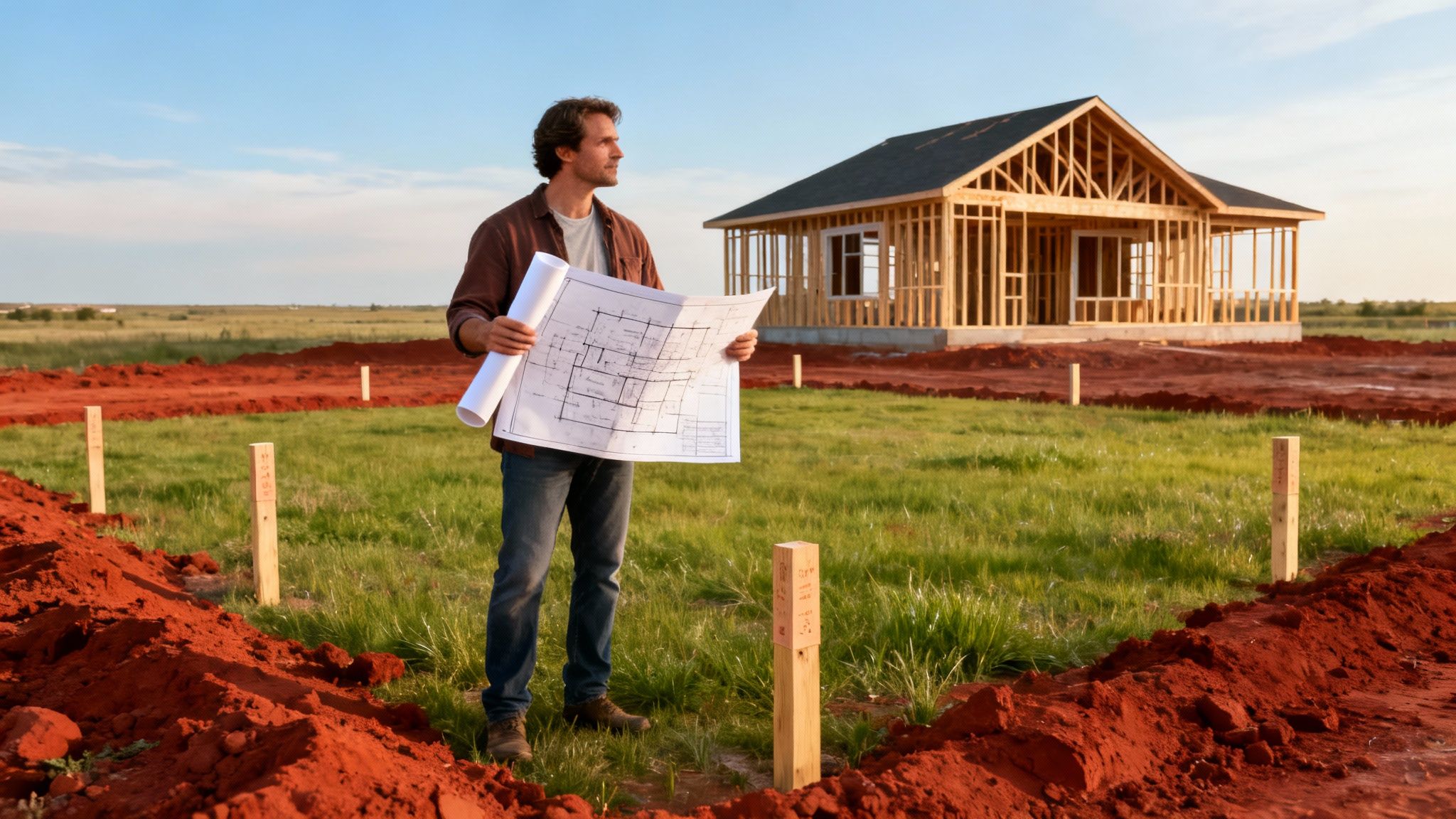
So, you have a piece of Oklahoma to call your own—a blank canvas just waiting for your dream home. It’s an exciting thought, but it always starts with one big question: "Can I build a house on my land?"
The short answer is almost always yes. But turning that raw piece of earth into a place you can call home is a journey with critical checkpoints. This guide is your roadmap, built from over 15 years of experience helping Oklahomans navigate this exact process. At ACET Custom Homes, we’ve turned that question into a beautiful reality for families from OKC and Edmond to rural towns like Macomb and Elmore City.
One of our clients captured the feeling perfectly in a recent Google review: "ACET made a complex process feel simple and took the guesswork out of building on our lot." That's our goal for you. This article provides an actionable path so you can take the first step with confidence.
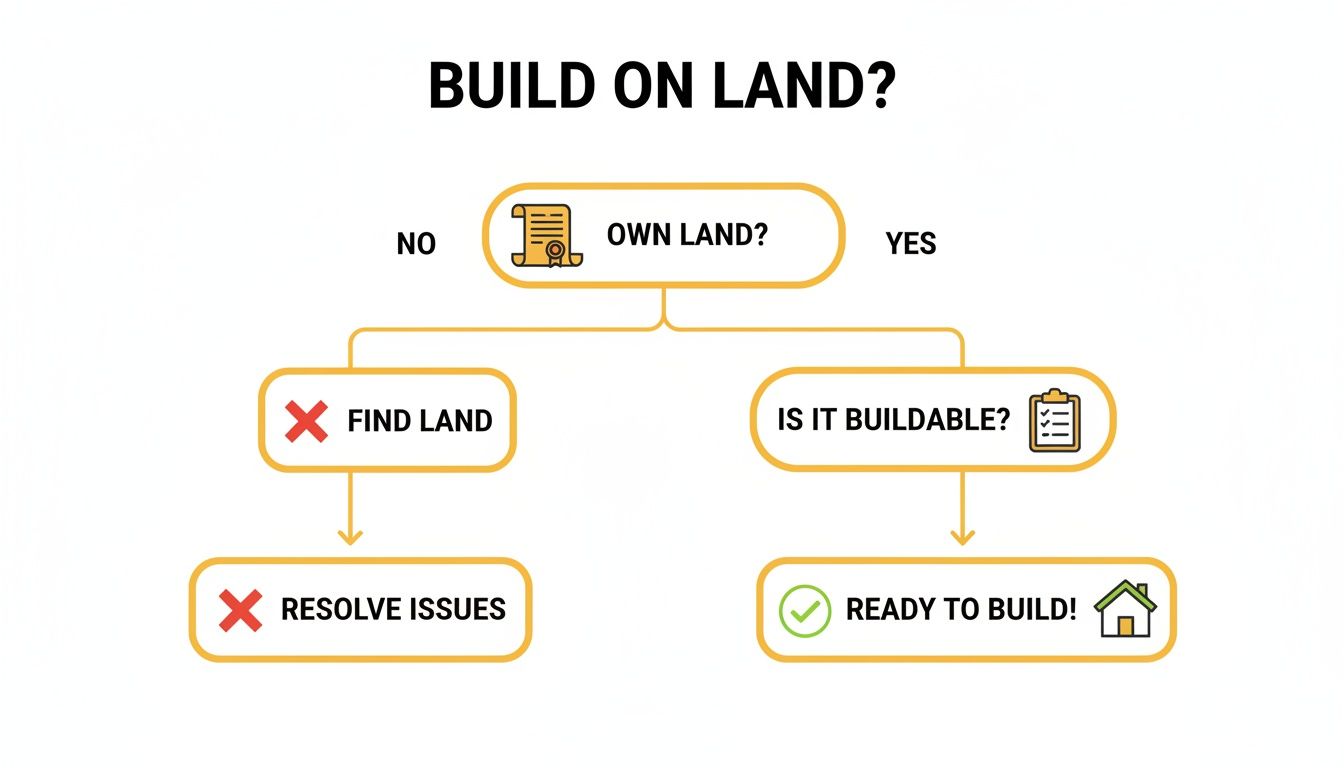
As you can see, ownership is just the starting line.
From navigating tricky zoning laws to planning for a new septic system, every step is crucial. This guide breaks down those complexities into manageable, easy-to-understand tasks. For a complete overview, check out our detailed guide on building on your land from dream to reality.
We’ll cover the essential checkpoints you need to clear before a single shovel hits the dirt, ensuring your project starts on a solid foundation of knowledge and preparation.
1. Decode Your Land's Legal DNA: Zoning, Covenants, and Restrictions
Before you dream about floor plans, you must uncover the invisible rules that govern your property. This is the make-or-break moment when asking, “Can I build a house on my land?” It's like checking the land's legal DNA—a set of built-in instructions that dictates what’s possible.
These rules, from city zoning laws to private neighborhood covenants, apply everywhere—from a coveted lot in Oklahoma City to a quiet, rural acreage out in Guthrie. Getting a handle on them now saves you from serious headaches and budget-busting surprises.

Actionable Steps:
- Residential (R): Ideal for homebuilding, often broken down into R-1 (single-family) or R-2 (duplexes).
- Agricultural (A): Usually allows for a home but may have minimum acreage requirements.
"We once worked on a project where the client’s beautiful design was nearly derailed by a forgotten covenant requiring a side-entry garage. Checking the deed first saved them from a major redesign and potential legal issues." - Bono, Project Manager, ACET Custom Homes
Key Legal Checks Before You Build
This table summarizes the most critical legal and regulatory factors to investigate for your property.
If digging through deeds sounds daunting, you're not alone. Our team helps clients navigate these early hurdles. Learn more in our guide to the build-on-your-lot process.
2. Evaluate if Your Land is Physically Ready for a Home
Once you’ve cleared the legal maze, the next question is practical: is your land physically ready to support a home? This is where we shift from paperwork to the tangible qualities of your property. The dirt, the slopes, and the water flow tell a story you must listen to before breaking ground.
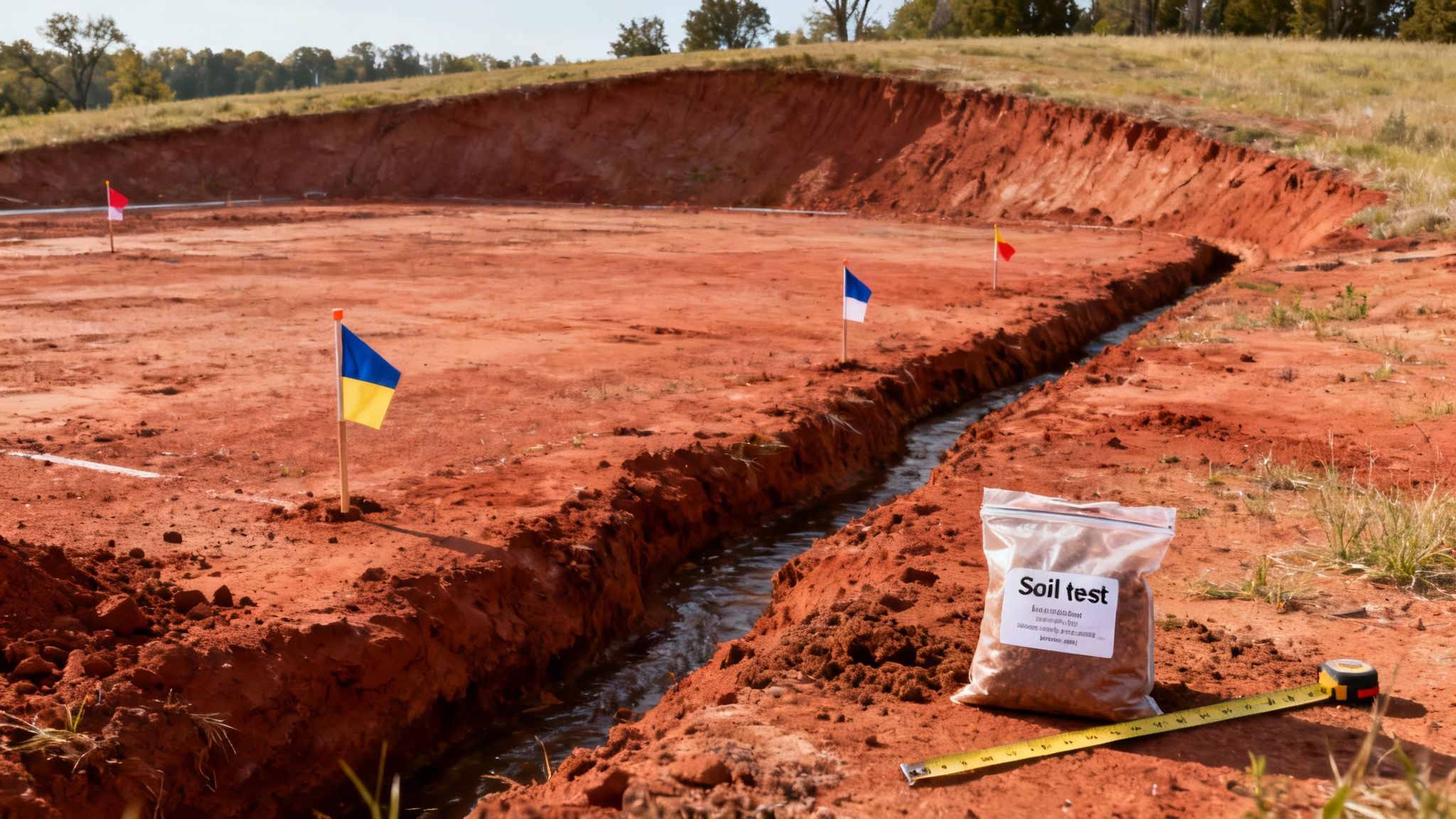
Here in Oklahoma, the land itself can throw unique curveballs. From the infamous red clay soils to the rolling hills around Shawnee and Chickasha, what you can’t see on the surface often has the biggest impact on your budget and your home’s long-term stability.
Actionable Steps:
- Step 1: Order a Geotechnical Survey (Soil Test). Oklahoma's expansive clay soil swells when wet and shrinks when dry, putting immense pressure on foundations. A soil test is non-negotiable; it tells your engineer exactly how to design a foundation that will last.
- Step 2: Analyze the Topography. The slope of your land is a huge factor in site prep costs. A steep grade requires extensive excavation, while a low-lying lot demands careful grading to ensure water flows away from your home, not toward it.
- Step 3: Check FEMA Flood Maps. Visit the FEMA Flood Map Service Center online to see if your property is in a designated floodplain. Building in a high-risk zone often requires special permits, elevated foundations, and mandatory flood insurance, significantly increasing costs.
"Ignoring a soil test in Oklahoma is like building a house on a sponge. We’ve seen other builders cut corners, only for the homeowner to face five-figure foundation repairs years later. A proper analysis lets us engineer a foundation that works with the soil, not against it." - Bono, Project Manager, ACET Custom Homes
With our 15+ years of experience, we've seen how smart grading and drainage can turn a soggy, challenging lot into a perfect homesite. Learn more about how we tackle these issues in our article on site preparation for building a house.
3. Get Connected: Utilities and Infrastructure
A piece of land isn't a homesite until you can flip a switch and turn on the water. The next big question is how you'll get essentials—power, water, and waste management—to your property. This is where your budget can change dramatically.
The process for a lot in a suburban neighborhood like Deer Creek is worlds apart from setting up services on acreage out in Elmore City. On a rural property, you essentially become your own utility provider.
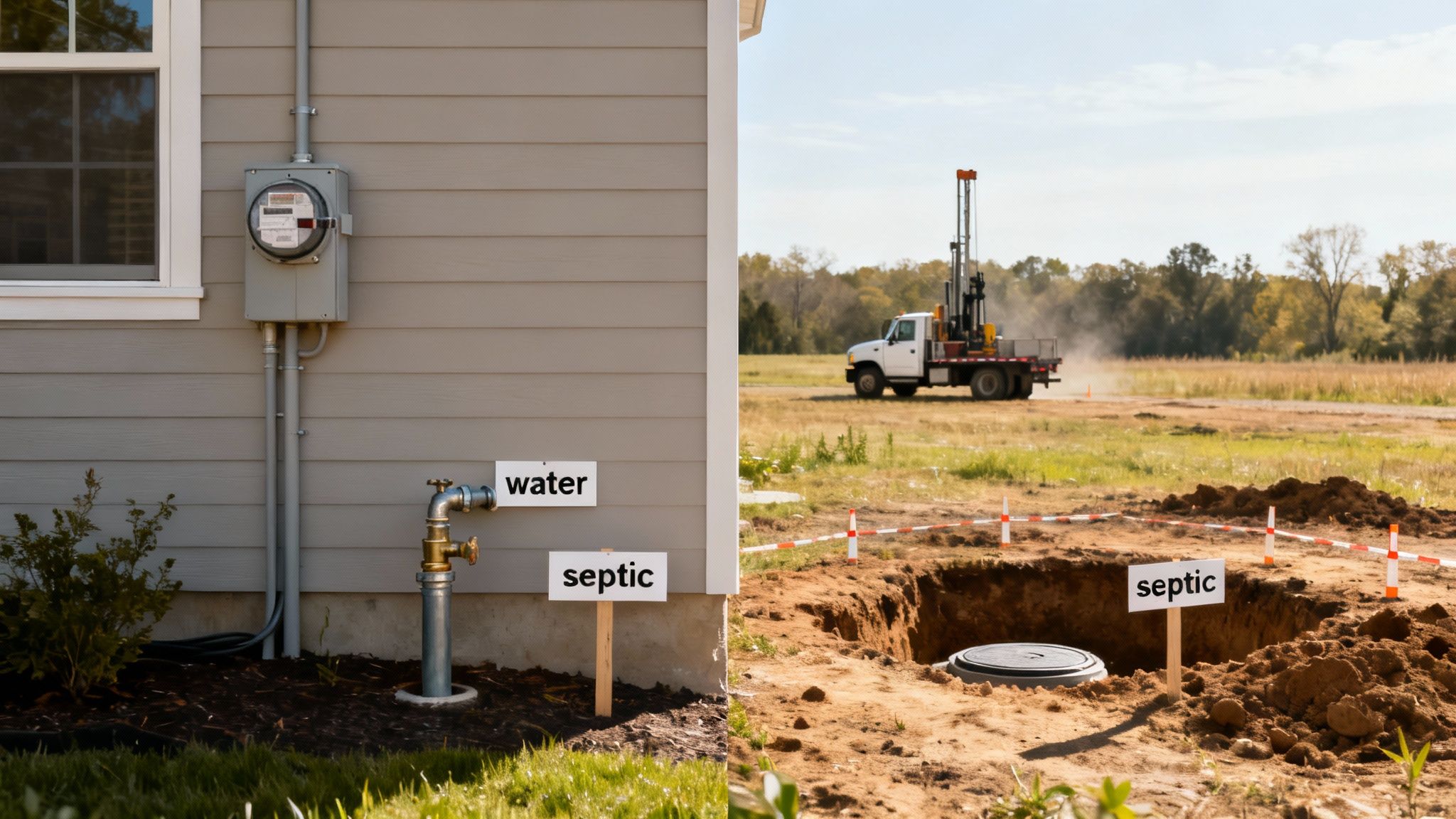
Actionable Steps:
- Step 1: Contact Local Utility Providers. If you are in a metro area like OKC or Norman, call the providers for electricity, gas, water, and sewer to get estimates for tap fees and connection costs.
- Well Drilling: A private well in Oklahoma can cost $5,000 to $15,000+.
- Septic System Installation: This private sewer system typically costs $6,000 to $20,000+.
- Electricity Line Extension: Bringing power from the nearest road can cost $5,000 to $25,000+.
Urban vs Rural Utility Hookup Costs in Oklahoma
This table provides a rough estimate comparing the costs of connecting utilities on a standard suburban lot versus a rural property.
Disclaimer: These are general estimates. Your actual costs will vary based on your specific location and the unique conditions of your land.
To get a better handle on the entire journey, check out our guide to building a house on land.
4. Navigate the Building Permit and Approval Process
You’ve cleared the major hurdles—zoning, utilities, and the physical land. Now you’re at the final administrative checkpoint before breaking ground: securing the building permit. This is the official green light from your local authorities, confirming your plans are safe and up to code.
This is where your vision truly starts to become reality. Whether you’re building in Oklahoma City or a smaller town like Edmond, the fundamental requirements are the same. Your job is to give the building department a crystal-clear, comprehensive picture of what you intend to build.
Actionable Steps:
- Architectural Plans: Detailed blueprints of the home.
- Site Plan: A bird's-eye view of the property showing the house, driveway, and septic system placement.
- Structural Engineering Reports: Stamped proof that your foundation and framing are designed for local conditions.
- Utility Plans: Details on your proposed electrical, plumbing, and HVAC systems.
- Foundation Inspection: Before concrete is poured.
- Framing Inspection: After the structure is up but before drywall.
- Rough-In Inspections: For plumbing, electrical, and HVAC.
- Final Inspection: The last step before you receive your Certificate of Occupancy.
"A huge tip is to get your structural engineering approved before submitting plans to the city. Having that engineer’s stamp on day one shows the plan reviewer you've done your due diligence and can shave weeks off the permit approval time." - Bono, Project Manager, ACET Custom Homes
5. Budget Your Build: Uncovering the True Costs
To truly answer "Can I build a house on my land?" you need more than a blueprint—you need a realistic, rock-solid budget. The cost-per-square-foot of the house itself is just one piece of a much larger financial puzzle.
When you build on a private lot, you're not just the homeowner; you're also the developer. That means you’re on the hook for all the essential infrastructure.
Actionable Steps:
- Land Preparation: Tree clearing, grading, and excavation.
- Foundation Work: Engineered foundations for Oklahoma's expansive clay soil.
- Utility Hookups: Can range from a few thousand to $40,000+ for rural lots.
- Permits & Fees: Can range from $1,000 to $25,000 depending on the project.
- Driveway & Landscaping: Often adds another 5% to 10% to the total cost.
Navigating these financial waters can feel intimidating. For a clearer picture, look at our detailed guide on obtaining Oklahoma construction loans.
Frequently Asked Questions (FAQ)
How long does it really take to build a house on my land?
From finding the land to getting the keys, a realistic timeline in Oklahoma is 12 to 18 months. This includes 3-6 months for design/planning, 1-3 months for permitting, and 7-12 months for the actual construction.
How do I find a good custom home builder in Oklahoma?
Look for a builder with a strong local portfolio, transparent processes, and happy clients. As one of our homeowners said on our Google Business Page, "ACET Custom Homes was communicative and transparent from day one, which made all the difference."
Can I be my own general contractor to save money?
We strongly advise against this. A professional GC brings a vetted network of subcontractors and deep knowledge of local codes. Any money you think you're saving can vanish quickly through costly mistakes, delays, and stress.
I inherited land. What is the very first thing I should do?
Congratulations! Your first steps are to verify the title at the county clerk's office, get a professional survey to mark your property lines and identify easements, and then schedule a site evaluation. Give ACET Custom Homes a call, and we can perform an initial walk-through to assess zoning, utility access, and general site conditions to see what’s possible.
Ready to design your custom home? Schedule a free consultation with ACET Custom Homes today.
Consultation Today!