.png)
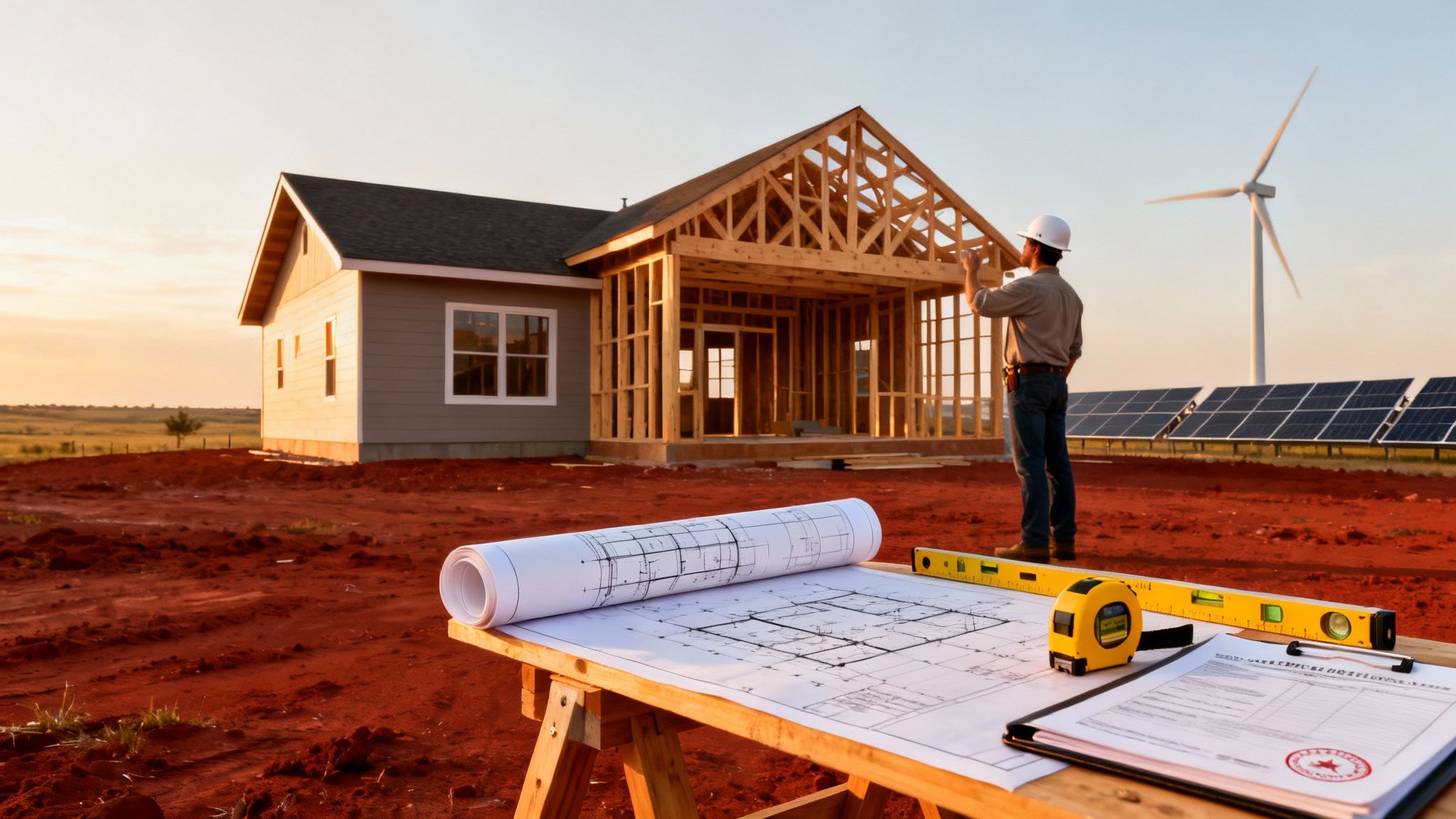
Embarking on the journey of building a house in Oklahoma is an exciting venture, but the dream of a perfect home can quickly turn into a nightmare without a deep understanding of local challenges. From the expansive red clay soils in rural towns like Shawnee and Macomb to the severe weather threats across the entire OKC metro, the Sooner State presents unique obstacles. Overlooking these critical factors leads to budget overruns, foundation failures, and a home that simply isn't built to last.
This guide provides the solution: a clear, actionable roadmap for your project. Drawing on over 15 years of experience crafting luxury homes, ACET Custom Homes will break down the 8 most critical factors you must navigate. You'll gain practical checklists, learn to identify red flags, and understand the key decisions needed to transform your vision into a durable, efficient, and beautiful reality. We'll cover everything from site evaluation to navigating local building codes, ensuring your home is built with confidence and precision.
1. Understanding Oklahoma's Climate and Weather Patterns
Building a house in Oklahoma means preparing for some of the most dynamic weather in the nation. Your home's design isn't just about aesthetics; it's about resilience against blistering heat, hail storms, and tornadoes. A structure that can withstand high winds and extreme temperature swings is non-negotiable for safety, comfort, and long-term value.
When constructing a custom home in areas like Edmond, Norman, or rural Guthrie, every choice must be filtered through a climate-conscious lens. This is where an experienced local builder like ACET Custom Homes proves invaluable, integrating structural integrity directly into the design phase to ensure your beautiful home is also a secure one.
Builder Insight: "We don't just build to code; we build for Oklahoma's reality. That means recommending wind-resistant roof designs with a 4:12 pitch or steeper and specifying impact-rated windows. Every engineering plan has our state's weather as a top consideration."
Actionable Checklist for Climate-Resilient Design:
- Choose Impact-Resistant Materials: Opt for Class 4 impact-resistant roofing and durable siding like brick, stone, or fiber cement.
- Select a Robust HVAC System: Pick a high-efficiency system rated to handle Oklahoma’s extreme temperature cycles.
- Incorporate Wind-Resistant Features: Work with your builder to include hip roofs and reinforced garage doors.
- Design a Storm Shelter: Integrate a dedicated safe room into your floor plan for ultimate peace of mind.
2. Navigating Oklahoma's Building Codes and Permitting Process
Successfully building a house in Oklahoma demands a thorough understanding of the state's intricate web of building codes and permitting procedures. These regulations, which vary significantly between cities like OKC and Moore, are in place to ensure your home is safe and structurally sound. Overlooking this step can lead to costly delays and failed inspections.
From Oklahoma City's pre-submission conferences to Edmond's specific architectural review boards, each municipality has its own rulebook. An experienced local builder navigates this bureaucracy smoothly, ensuring your project moves forward without unnecessary hurdles.
Builder Insight: "We treat the permitting office as a partner. By engaging them early with professionally sealed plans from Oklahoma-licensed engineers, we prevent 99% of potential issues. Our internal review ensures every plan meets or exceeds the International Building Code before it ever leaves our office."
Actionable Steps for a Smooth Permitting Process:
- Engage Early: Consult with the local building department during the design phase to clarify requirements.
- Budget for Time: Realistically budget 6 to 12 weeks in your project timeline for permitting.
- Ensure Professional Sealing: Verify all architectural and structural plans are sealed by professionals licensed in Oklahoma.
- Choose a Local Expert: Select a builder with a proven track record in your specific municipality.
3. Soil Testing, Site Grading, and Foundation Design for Oklahoma Terrain
The long-term integrity of your home rests on its foundation, and in Oklahoma, that starts with understanding the ground beneath it. The state's diverse terrain, from expansive red clay to solid limestone, means one-size-fits-all solutions lead to disaster. Failing to properly analyze your specific lot can cause catastrophic foundation issues and costly repairs.
Before finalizing any design, a comprehensive site evaluation with geotechnical soil testing is essential when building a house in Oklahoma. This ensures the foundation is engineered specifically for your land's conditions, safeguarding your investment. Learn more about the critical steps from land purchase to foundation pouring on acethomes.com.
Builder Insight: "We insist on a geotechnical report for every project. It’s non-negotiable. This report tells us everything: soil type, moisture content, and load-bearing capacity. With that data, we confidently design a foundation that prevents future movement, cracking, and water intrusion."
Actionable Checklist for Site and Foundation Planning:
- Order a Geotechnical Soil Analysis: Hire an Oklahoma-licensed engineer to provide a detailed soil report before finalizing your home design.
- Select a Specialized Foundation: Based on the soil report, consider options like post-tension slabs or pier-and-beam for lots with expansive clay.
- Create a Comprehensive Site Grading Plan: Work with your builder to create a grading plan that directs all water away from the foundation.
- Budget for Site Work: Allocate funds for potential challenges like importing fill dirt or rock excavation.
4. Energy Efficiency and HVAC Design for Oklahoma's Climate
Given Oklahoma’s dramatic temperature swings, an energy-efficient home is a financial and comfort necessity. An intelligently designed thermal envelope and a high-performance HVAC system work together to drastically reduce utility costs, enhance indoor air quality, and ensure consistent comfort year-round.
When constructing a custom home, every element from window placement to insulation R-value impacts its performance. By analyzing how a home in Edmond or Guthrie will interact with the sun and seasons, you can optimize its efficiency from the ground up, making sustainability a core component of the home’s DNA.
Builder Insight: "We advise clients to view the 'building envelope' as a single unit. This means high-performance windows, meticulous air sealing, and properly sized, high-SEER HVAC systems. A blower door test isn't just a code requirement for us; it's a quality assurance check to prove the home is as airtight and efficient as we designed it to be."
Actionable Checklist for an Energy-Smart Home:
- Prioritize Superior Insulation: Insist on R-38 to R-49 insulation in attics. Consider spray foam for excellent air sealing.
- Install a High-Performance HVAC: Select a system with a SEER 16+ rating for air conditioning.
- Choose Strategic Windows: Use double or triple-pane, low-E coated windows to minimize heat gain and loss.
- Focus on Air Sealing: Ensure all gaps are sealed and ductwork is tested for leaks.
Learn more about energy-efficient home features on acethomes.com for a deeper dive.
5. Water Management, Well Systems, and Septic Considerations
When building outside major municipal grids in areas like Guthrie or Macomb, water and waste management become top priorities. Private well and septic systems are often required, and understanding the logistics, costs, and regulations is a critical step that impacts your site selection and budget.
Successfully navigating these requirements involves a deep understanding of Oklahoma's geology for well drilling and the specific soil conditions needed for effective septic systems. An experienced builder coordinates the necessary soil tests, certified installers, and regulatory approvals to ensure your systems are reliable and compliant.
Builder Insight: "Never purchase a lot without a well and septic feasibility study. We bring in our certified partners to conduct soil tests and assess water tables. It's about ensuring you have clean, reliable water and a septic system that won't fail in five years. We plan for these systems from day one."
Actionable Checklist for Water and Waste Planning:
- Conduct Pre-Purchase Testing: Make your land offer contingent on successful well and septic tests.
- Budget Accordingly: Plan for a combined cost of $8,000 to $15,000+ for a standard well and septic system.
- Hire Certified Professionals: Only use Oklahoma Department of Environmental Quality (ODEQ)-certified contractors for septic system installation.
- Test Water Quality: After a well is drilled, conduct comprehensive water quality testing.
6. Property Access, Utilities Infrastructure, and Easement Navigation
A beautiful plot of land is only viable for building if it has proper access and connections to essential services. Navigating utility infrastructure, access rights, and legal easements is a fundamental step that precedes any architectural design. Overlooking these details can lead to significant delays and unexpected costs.
Whether your lot is in a new Edmond development or a rural parcel near Guthrie, you must verify access to water, sewer, electricity, and broadband. An experienced builder performs a thorough site evaluation early on, identifying potential roadblocks like shared driveway agreements or costly utility trenching.
Builder Insight: "Always get feasibility letters from utility providers before closing on land. This written confirmation clarifies service availability and potential costs. We’ve seen amazing properties that were nearly unbuildable due to the extreme cost of extending an electrical line. A five-minute call can save you a five-figure headache."
Actionable Checklist for Utility and Access Planning:
- Verify Legal Access: Confirm access rights if your property uses a shared private road.
- Locate Existing Utilities: Before designing, call 811 to have all existing underground utility lines marked.
- Review All Easements: Thoroughly examine the property’s title report for any utility, drainage, or access easements.
- Contact Utility Providers: Confirm service availability, connection fees, and requirements with local companies.
7. Customization Options, Material Selection, and Architectural Flexibility
Building a custom home in Oklahoma offers the unique opportunity to create a space that is a true reflection of your personality and lifestyle. This involves tailoring floor plans, selecting every material, and choosing an architectural style that suits your taste. True customization requires a builder with deep supplier relationships and architectural versatility.
Whether you envision a sleek modern home in Nichols Hills or a classic farmhouse in Guthrie, your builder must execute your vision flawlessly. A skilled design-build firm translates your ideas into a tangible, livable space, using 3D design software to help you visualize every choice before construction begins.
Builder Insight: "Customization is about intelligent design, not just endless options. We guide clients through a curated selection process, helping them balance their dream features with their budget. Our 3D design service is a game-changer; it eliminates guesswork and ensures the final product is exactly what they envisioned."
Actionable Checklist for Design and Material Selection:
- Establish Your Priorities: Decide on your "must-haves" versus "nice-to-haves" early to guide your budget.
- Visualize with 3D Renderings: Leverage your builder's 3D software to walk through your home virtually before construction begins.
- Select for Oklahoma's Climate: Choose durable materials like high-quality stone, brick, and engineered wood.
- Lock in Selections Early: Finalize material choices as early as possible to prevent supply chain delays and keep your project on schedule.
8. Timeline Management, Construction Scheduling, and Project Completion Expectations
A realistic schedule is a carefully orchestrated sequence of events that accounts for design, permitting, weather, and logistics. A custom home project in areas like Shawnee or Chickasha can range from 10 to 18 months. Misaligned expectations about project duration can lead to unnecessary stress, making transparent timeline management essential.
This timeline accounts for every critical phase, including potential delays from spring storms and municipal inspection schedules. A professional design-build firm manages this complexity by establishing a clear, upfront schedule and maintaining consistent communication.
Builder Insight: "We build a 4- to 6-week contingency into every project schedule from day one. In Oklahoma, you have to plan for weather delays. By setting this expectation upfront and providing weekly progress updates, we ensure our clients always know where we stand and what's next."
Actionable Checklist for Managing Your Build Timeline:
- Finalize Selections Pre-Construction: Lock in all major design decisions and materials before construction starts to prevent change orders.
- Establish Communication Protocols: Agree on a regular meeting schedule with your builder to review progress.
- Understand Inspection Delays: Be aware that municipal inspections can create bottlenecks in the schedule.
- Plan Your Living Arrangements: Align your temporary housing plan with a realistic completion estimate.
For more detail, explore our guide on how long it takes to build a custom home in Oklahoma.
Building a House in Oklahoma — 8-Point Comparison Table
Frequently Asked Questions About Building a House in Oklahoma
What is the average cost to build a house in Oklahoma?
The cost can vary widely based on location, size, and finishes, but generally ranges from $150 to $250+ per square foot. A custom home in the OKC metro with luxury finishes will be on the higher end of that spectrum.
How long does it take to build a custom home in Oklahoma?
From initial design to final walkthrough, a realistic timeline is typically 10 to 18 months. This accounts for design, permitting, potential weather delays (especially during Oklahoma's stormy spring), and construction.
What type of foundation is best for Oklahoma's soil?
For areas with expansive clay soil, which is common in Oklahoma, a post-tension slab or a pier-and-beam foundation is often recommended. A geotechnical soil report is essential to determine the best design for your specific lot.
Do I need a storm shelter in my new Oklahoma home?
While not always required by code, it is highly recommended. Integrating a safe room or storm shelter into your new home's design during the planning phase is the most cost-effective way to ensure your family's safety during severe weather.
Ready to design your custom home? Schedule a free consultation with ACET Custom Homes today.
Consultation Today!